



A Journey Through Hell: One Man’s Fight for Justice After Wrongful Detention
From Seeking Asylum to Surviving CECOT Prison
Neiyerver Adrián Leon Rengel’s story reads like a nightmare that should never happen in a country built on the principles of justice and due process. The 28-year-old Venezuelan man undertook the perilous journey through the dangerous Darién Gap and multiple Latin American countries, seeking safety and opportunity in the United States. In 2023, he did everything by the book—using the Biden administration’s CBP One program to enter the country legally at an official port of entry. He had permission to be there. He was building a life, working as a barber, waiting for his scheduled immigration court hearing set for April 2028. Then, in March 2025, everything changed. Without a deportation order and despite having an active immigration case, Leon Rengel was swept up in the Trump administration’s controversial deportation campaign targeting Venezuelan men allegedly connected to the Tren de Aragua gang. What followed were four months that Leon Rengel describes as “total hell”—a period so traumatic that he contemplated ending his own life with the sheet prison guards gave him.
The Basis for Deportation: A Barber’s Tattoo Mistaken for Gang Affiliation
The evidence used to brand Leon Rengel as a dangerous gang member? A tattoo on his left hand depicting a lion with a hair clipper in its mouth—a symbol of his profession as a barber, not his allegiance to any criminal organization. “I’ve never been a gang member, nor a member of a criminal group,” Leon Rengel emphatically stated. “Never.” Beyond a single misdemeanor conviction for possession of drug paraphernalia—found in a car he says wasn’t his and for which he paid a small fine—Leon Rengel had no criminal history. Yet the Department of Homeland Security labeled him a “public safety threat” and a “confirmed associate” of Tren de Aragua, though the agency has refused to provide any evidence supporting this claim, citing national security concerns. This pattern wasn’t unique to Leon Rengel. A joint investigation by “60 Minutes” and CBS News revealed that many of the over 200 Venezuelan men deported alongside him had no criminal records at all, and the majority lacked any charges or convictions for violent offenses. Like Leon Rengel, many were accused of gang membership based solely on their tattoos—personal artwork that represented their lives, families, or professions, not criminal affiliations.
Four Months of Torture in El Salvador’s Notorious CECOT Prison
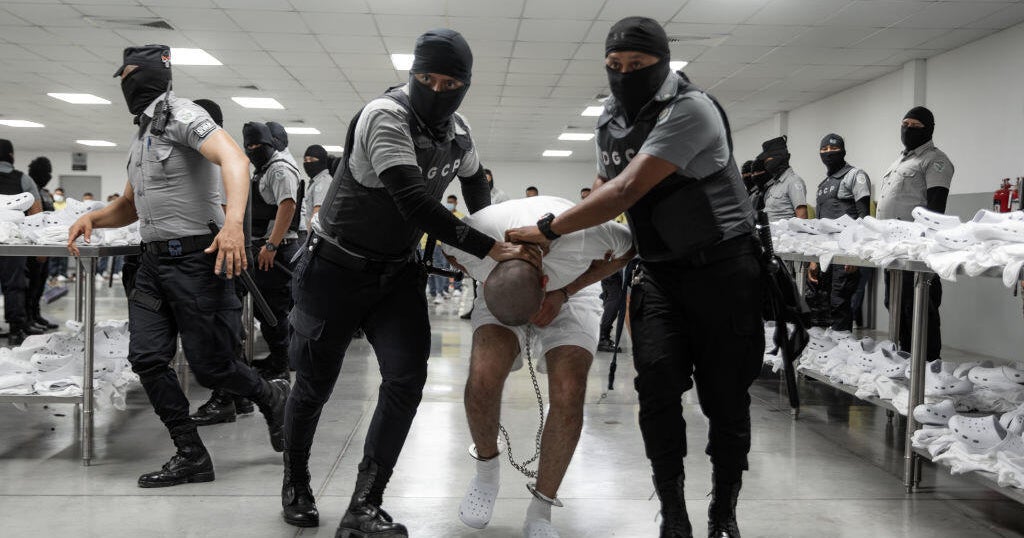
Leon Rengel and his fellow deportees weren’t sent to a standard detention facility—they were delivered to CECOT, El Salvador’s maximum-security prison designed specifically to house the country’s most dangerous gang members. The conditions they encountered there defy basic human dignity. Leon Rengel recounts constant beatings and mistreatment at the hands of prison guards. The men were forced to drink the same contaminated water they bathed in. Overcrowding was extreme, and adequate medical care was nonexistent. Perhaps most psychologically damaging, the guards told Leon Rengel he would remain imprisoned for 90 years. Cut off entirely from the outside world—unable to contact family, legal counsel, or anyone who might help—the men existed in a state of complete isolation and despair. The psychological torture became so unbearable that Leon Rengel reached a breaking point where suicide seemed like the only escape from his suffering. A comprehensive report by Human Rights Watch documented the systematic abuse these prisoners endured, including physical violence, psychological torment, and even cases of sexual assault. The organization’s researchers concluded that the treatment amounted to “arbitrary detention” and “torture” under international law—serious violations that should never be sanctioned by a democratic government claiming to uphold human rights and the rule of law.
A Groundbreaking Lawsuit Seeking Justice and Accountability
Now safely back in Venezuela after being freed in a prisoner swap in July 2025, Leon Rengel has become the first known former CECOT prisoner to take legal action against the United States government. On Tuesday, with support from the League of United Latin American Citizens (LULAC) and the Democracy Defenders Fund, he filed a federal lawsuit in U.S. District Court for the District of Columbia. The lawsuit seeks at least $1.3 million in damages for false imprisonment and intentional infliction of emotional distress. “For four months, Plaintiff languished in CECOT, during which time he was beaten by guards, subjected to inhumane and overcrowded conditions as well as extreme psychological trauma, denied adequate medical care, and held without contact with his family or any legal counsel,” the groundbreaking lawsuit states. Filed under the Federal Tort Claims Act, this legal action follows an administrative complaint submitted to the Department of Homeland Security last year. Juan Proaño, LULAC’s chief executive officer, minced no words about the gravity of what happened: “What happened to Adrián Rengel is government-sanctioned torture and a failure to recognize his humanity because he happened to be an immigrant. He deserves his day in court.” The lawsuit represents not just Leon Rengel’s personal quest for justice, but potentially opens the door for hundreds of other men who suffered similar fates to seek accountability and compensation for their ordeal.
The Legal Questions Surrounding the Alien Enemies Act
The Trump administration’s deportation of Leon Rengel and more than 200 other Venezuelan men rested on controversial legal ground—the invocation of the Alien Enemies Act, a wartime law dating back to 1798. This archaic statute allowed the administration to bypass normal immigration procedures and due process protections, expediting removals without the hearings and appeals typically afforded to immigrants facing deportation. The administration defended these actions by characterizing all the deportees as violent, dangerous criminals and members of the Tren de Aragua gang—claims that investigative journalism has largely debunked. The legality of using this 227-year-old wartime authority to summarily expel people continues to wind through federal courts. A federal judge in Washington, D.C., recently ruled in favor of the deportees, finding that they were indeed denied the due process guaranteed by law. The judge ordered the Trump administration to facilitate the return of those Venezuelan men deported under the Alien Enemies Act, starting with those who ended up in third countries like Colombia, so they could receive proper legal proceedings in the United States. Predictably, the Justice Department has appealed this order, ensuring the legal battle will continue. For immigration advocates and constitutional scholars, the case raises fundamental questions about the limits of executive power, the rights afforded to non-citizens on American soil, and whether centuries-old emergency powers can be wielded against immigrants in peacetime without Congressional authorization or judicial oversight.
Moving Forward: Clearing His Name and Warning Others
Despite the federal court order that might allow his return to the United States, Leon Rengel has made his position clear—he has no interest in going back to the country that subjected him to such trauma. His focus now is on clearing his name and obtaining recognition that what happened to him constituted a gross violation of human rights. “We went to the United States, a country where all laws are followed, and they were obligated to follow the legal process,” Leon Rengel said, his disappointment evident. The gap between America’s self-image as a nation of laws and his actual experience could hardly be wider. His lawsuit isn’t primarily about the money—it’s about accountability, about forcing the government to acknowledge that what happened was wrong, and about ensuring such abuses don’t happen to others. Leon Rengel’s case highlights the dangerous intersection of anti-immigrant rhetoric, rushed enforcement actions, and inadequate safeguards that can transform the immigration system into a mechanism for injustice rather than security. His story serves as a cautionary tale about what happens when governments prioritize deportation numbers over individual rights, when accusations replace evidence, and when the humanity of immigrants gets lost in political calculations. As his lawsuit moves through the federal court system, it will test whether America’s judicial system can provide remedy and accountability when other branches of government fail to protect the rights of the most vulnerable. For Leon Rengel and the hundreds of men who shared his ordeal, the answer to that question will determine whether the justice system truly applies to everyone—or only to those with the right documentation, the right appearance, and the right tattoos.