
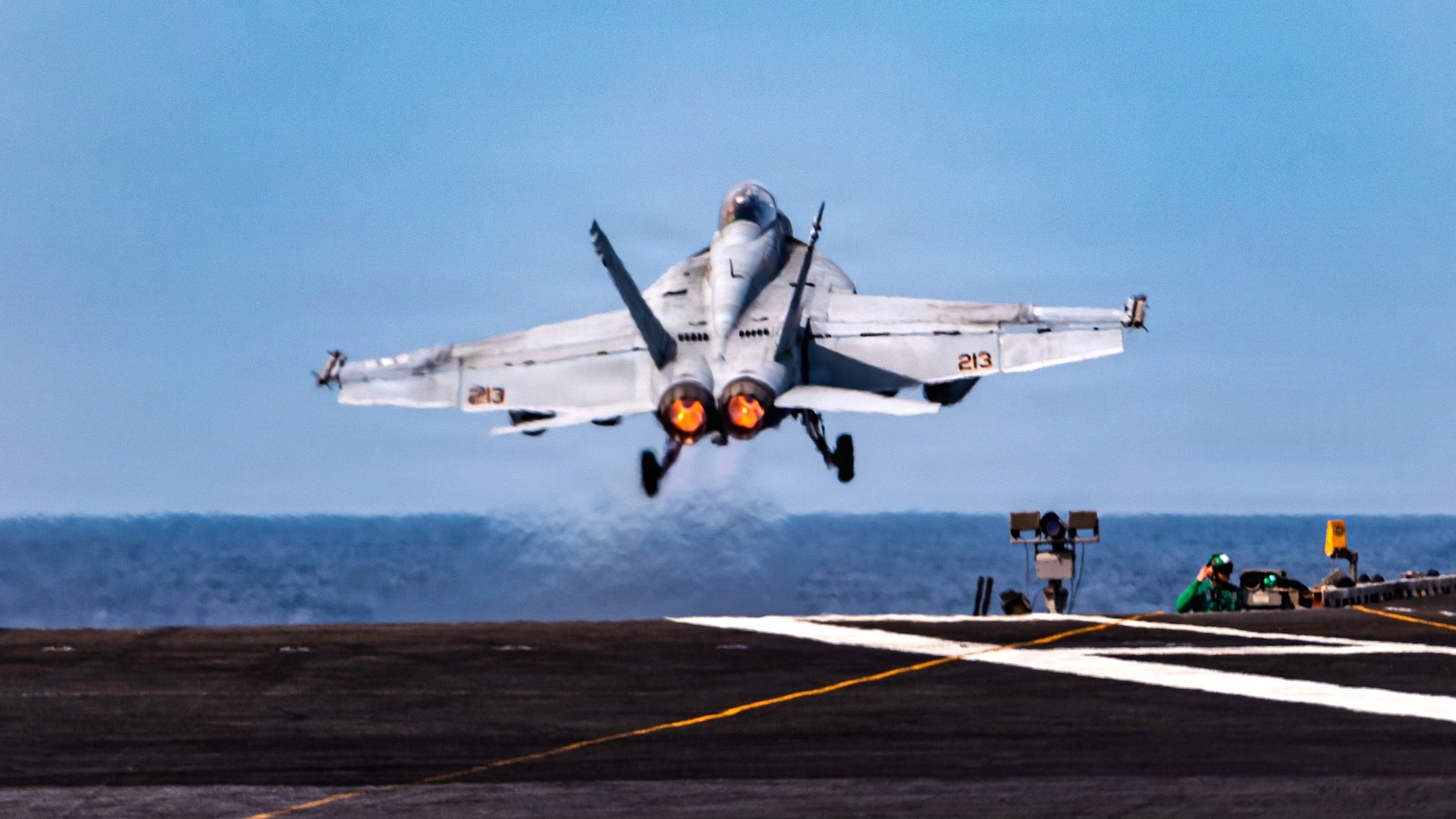

Close Call Over Iran: U.S. Fighter Jet Narrowly Evades Missile Strike
Iranian State Media Releases Dramatic Footage
The skies over southern Iran became the scene of a harrowing close call when dramatic footage emerged showing what appears to be a U.S. Navy F/A-18 fighter jet barely escaping an Iranian surface-to-air missile. The videos, which quickly spread across social media platforms and international news outlets, were initially circulated by Iranian state-controlled media organizations. PressTV, Iran’s English-language news network, announced on Thursday through their X (formerly Twitter) account that the Islamic Revolutionary Guard Corps had “successfully targeted” an American F/A-18 flying over Chabahar, a strategic port city in southeastern Iran. While the exact date of the incident remains unclear, the footage has raised serious questions about the escalating tensions between the United States and Iran, as well as the dangerous cat-and-mouse game being played in Iranian airspace. The videos have been independently geolocated to Chabahar, lending credibility to the claims about where this dangerous encounter took place.
What the Videos Reveal
The footage obtained and verified by ABC News presents a chilling sequence of events that highlights just how close this incident came to becoming a major international crisis. In the videos, which appear to have been filmed from the ground, viewers can clearly see a U.S. Navy F/A-18 fighter jet maneuvering through the air when suddenly a surface-to-air missile detonates in frighteningly close proximity to the aircraft. The missile explodes just behind the jet, creating a burst of fire and smoke that momentarily engulfs the area where the fighter had been mere seconds before. What makes the footage particularly striking is how the F/A-18 appears to successfully evade the missile through what was likely a combination of skilled piloting, evasive maneuvers, and possibly electronic countermeasures. As the smoke clears in the video, the American fighter can be seen flying away from the explosion site, apparently intact and under control. Critically, no visible damage to the jet can be observed in any of the footage that has been released, suggesting that the pilot’s evasive actions were successful in preventing what could have been a catastrophic hit.
Official Responses and Confirmations
The response from U.S. military officials has been measured but telling. U.S. Central Command, which oversees American military operations in the Middle East, took to social media platform X to clarify that no U.S. fighter jets have been shot down by Iranian forces. This statement, while technically accurate, doesn’t tell the complete story of what happened in the skies over Chabahar. A source familiar with the matter, speaking to ABC News on condition of anonymity, provided additional context that paints a more concerning picture. While this source stopped short of confirming the authenticity of the specific videos circulating online, they did acknowledge that an F/A-18 operating in the region did indeed narrowly dodge an Iranian surface-to-air missile over southern Iran within recent days. The careful wording from both official channels and unofficial sources suggests a delicate balancing act—acknowledging the reality of what happened while trying to avoid inflammatory rhetoric that could escalate an already tense situation. The fact that officials are willing to confirm the general outline of events lends significant credibility to the footage, even as they decline to verify every specific detail.
A Broader Pattern of Escalation
This incident over Chabahar doesn’t exist in isolation but rather represents part of a troubling pattern of escalating military confrontations between American and Iranian forces. Just last week, in a separate but potentially related incident, an F-35 stealth fighter—one of America’s most advanced and expensive military aircraft—was forced to make an emergency landing. According to a person familiar with that incident, the F-35 is believed to have been struck by Iranian fire, marking a significant and sobering milestone in the ongoing tensions. If confirmed, this would represent the first time that an American military aircraft involved in air operations over Iran has actually been hit by enemy fire. The F-35, known for its stealth capabilities and advanced technology designed specifically to avoid detection and targeting, being struck sends a powerful message about Iran’s improving air defense capabilities and their willingness to engage American aircraft. These two incidents together—the near-miss with the F/A-18 and the apparent strike on the F-35—suggest that the operational environment over and around Iran has become significantly more dangerous for U.S. military personnel. It also raises questions about the rules of engagement, the strategic objectives of these flights, and whether the risk to American pilots and extremely expensive military hardware is justified by whatever intelligence or strategic goals these missions are meant to achieve.
Strategic and Geopolitical Implications
The location of these incidents is itself significant from both a strategic and geopolitical perspective. Chabahar, where the F/A-18 incident occurred, sits on Iran’s southeastern coast along the Gulf of Oman, making it a crucial location for monitoring maritime traffic and regional security. The city and its port have long been of strategic interest to multiple nations, and Iran has worked to develop it as a counterbalance to other regional ports. The fact that Iranian forces were able to track, target, and nearly strike an American fighter jet in this area demonstrates a level of air defense capability that may have been underestimated by Western military planners. It also sends a clear message from Tehran that they consider their airspace sovereign and are willing to defend it aggressively, even against the world’s most powerful military. For the United States, these incidents present a complex challenge. On one hand, maintaining the ability to conduct reconnaissance and potential strike operations in and around Iran is considered strategically vital. On the other hand, the loss of pilots or aircraft could dramatically shift public opinion and political calculations about military engagement with Iran. The use of both F/A-18s and F-35s in these operations indicates the high priority the U.S. places on whatever missions these aircraft are conducting, but the escalating Iranian response suggests that the cost-benefit analysis may need to be reconsidered.
Looking Ahead: Tensions and Consequences
As these videos circulate globally and the details of both incidents become more widely known, the international community watches with concern about what might come next. The narrow escape of the F/A-18 pilot and the apparent strike on the F-35 represent dangerous escalations in a region already fraught with tension and the potential for miscalculation. Each close call increases the risk that the next encounter won’t end with a pilot safely returning to base but rather with casualties that could trigger a wider conflict neither side may actually want but both might feel compelled to engage in. The willingness of Iranian state media to publicize these incidents also speaks to the domestic and regional audience Tehran is trying to reach—demonstrating strength and the ability to challenge American military power even as Iran faces its own economic and political challenges. For American military planners, these incidents will undoubtedly prompt serious discussions about tactics, risk assessment, and whether the intelligence gained from these flights justifies the increasing danger to personnel and assets. The coming weeks and months will be critical in determining whether these frightening close calls serve as a wake-up call that prompts both sides to step back from the brink, or whether they represent the opening chapters of a more serious military confrontation that could have devastating consequences for the region and beyond.