
Escalating Middle East Conflict: A Comprehensive Overview of the Iran-Israel War
Unprecedented Military Confrontation Engulfs the Region
The Middle East has plunged into one of its most dangerous crises in recent memory as Iran and Israel, along with the United States, engage in an increasingly devastating military exchange that threatens to destabilize the entire region. What began as targeted strikes has rapidly evolved into a multi-front conflict involving not just the primary combatants but also drawing in neighboring countries and proxy forces across the area. The human cost is mounting alarmingly, with Iran’s Red Crescent Society reporting at least 555 deaths within Iranian borders from the combined U.S.-Israeli military campaign, while Israeli authorities confirm 11 fatalities on their side. More than 130 Iranian cities have experienced attacks, demonstrating the extensive reach of the offensive operations. The conflict took a particularly concerning turn when the U.S. Embassy compound in Kuwait City came under fire, with witnesses reporting flames and smoke rising from inside the facility. Kuwait’s defense ministry added another troubling dimension to the crisis by announcing that several American warplanes had crashed within their territory, though they provided limited details about what caused these incidents or exactly how many aircraft were involved. The pilots, fortunately, were recovered and taken to hospitals where they remain in stable condition, but the U.S. military has yet to provide an official comment on these developments.
Economic Warfare: Targeting the Region’s Energy Lifeline
Perhaps the most strategically significant escalation has been Iran’s decision to expand its military operations beyond purely military targets to include critical energy infrastructure throughout the Gulf region—the economic heartbeat of the area and a vital component of global oil supply. Saudi Arabia’s massive Ras Tanura oil refinery, one of the world’s largest facilities with a capacity exceeding half a million barrels of crude oil daily, came under drone attack with defensive systems managing to down the incoming aircraft. Despite the successful interception, debris from the destroyed drones sparked fires visible in online videos showing thick black smoke billowing from the site, forcing authorities to temporarily shut down operations as a precautionary measure. This wasn’t an isolated incident; earlier the same day, Kuwait’s Ahmadi oil refinery suffered injuries to two workers when debris from shot-down drones fell on the facility. These attacks represent a calculated strategy by Iran to impose severe economic consequences not just on its immediate adversaries but on the global economy. Torbjorn Soltvedt, an analyst with the risk intelligence company Verisk Maplecroft, characterized the Ras Tanura attack as “a significant escalation, with Gulf energy infrastructure now squarely in Iran’s sights,” warning that “an extended period of uncertainty lies ahead” as Iran targets tankers, regional energy infrastructure, trade routes, and U.S. security partners. The threat extends to the Strait of Hormuz, the narrow passageway through which approximately one-fifth of all traded oil passes, where Iran has been threatening vessels and several ships have already been attacked.
Nuclear Concerns and the Expanding Theater of Operations
Adding another layer of complexity and concern to the conflict, Iran’s Ambassador to the International Atomic Energy Agency, Reza Najafi, accused the U.S. and Israel of targeting Iran’s Natanz nuclear enrichment site on Sunday, calling it an attack on “peaceful safeguarded nuclear facilities” and dismissing justifications about Iran’s nuclear weapons ambitions as “simply a big lie.” While neither Israel nor the United States has officially acknowledged strikes on this particular facility, Israel has been open about its general objectives of targeting “leadership and nuclear infrastructure” within Iran, though they haven’t publicized specific targets. This echoes similar strikes during the previous 12-day conflict between the nations in June, when U.S. forces bombed the same site, part of a broader campaign that significantly degraded Iran’s air defenses, military leadership, and nuclear program. The current military operations have also pulled in Iranian-backed militias across the region, with the Lebanese militant group Hezbollah firing missiles from Lebanon into Israel in response to what they described as “repeated Israeli aggressions” and the killing of Iranian Supreme Leader Ali Khamenei. Israel’s retaliatory strikes on Lebanon proved devastating, killing at least 31 people and wounding 149 others according to Lebanon’s Health Ministry, with approximately two-thirds of casualties occurring in the country’s southern regions. In Iraq, the Shiite militia Saraya Awliya al-Dam claimed responsibility for drone attacks targeting U.S. troops at Baghdad’s airport and previously at a U.S. base in Irbil in northern Iraq, while even Cyprus found itself drawn into the conflict when a drone struck a British air base on the Mediterranean island nation.
Leadership Vacuum and Political Implications
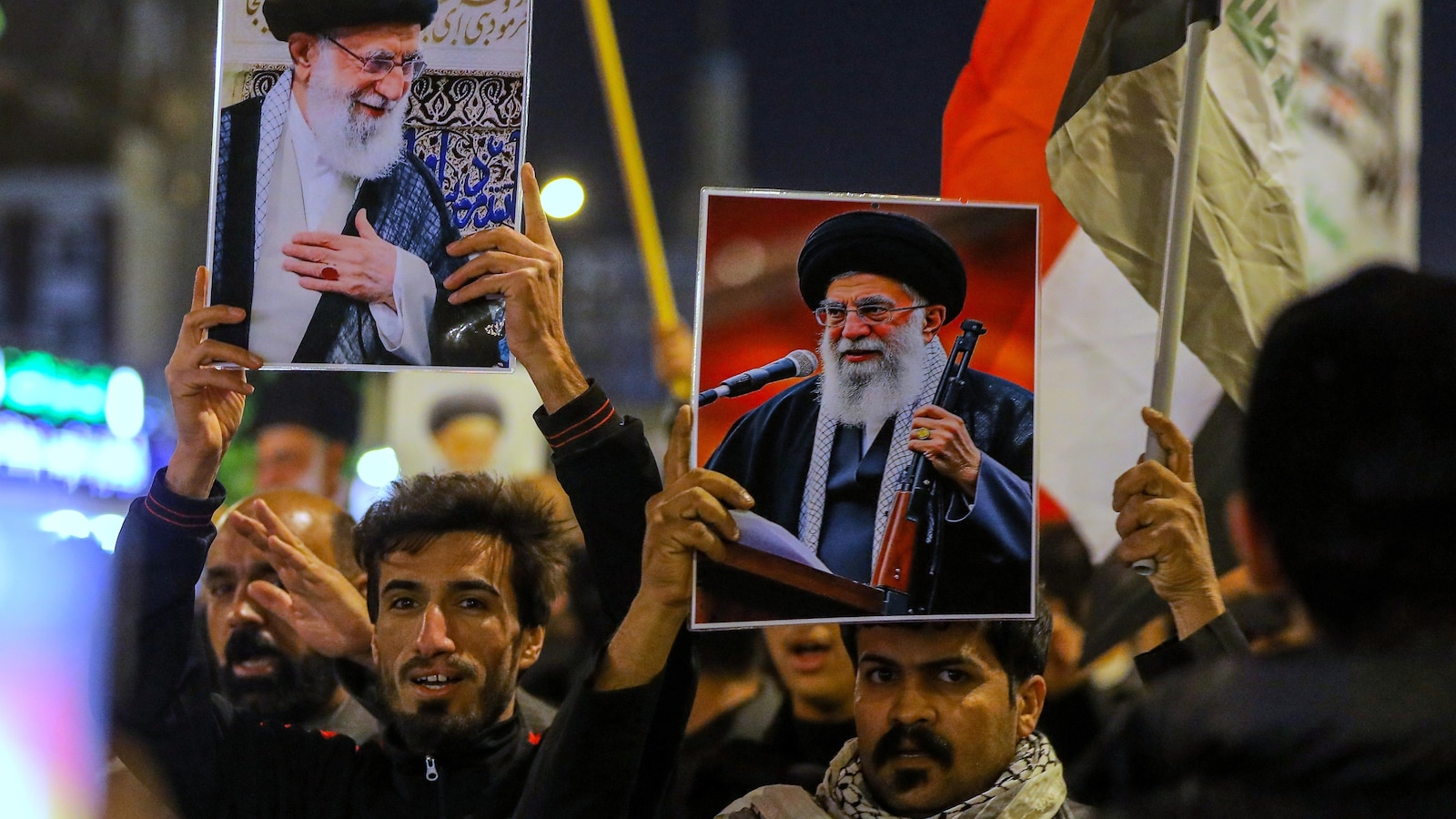
The assassination of Iran’s Supreme Leader Ali Khamenei, who ruled the Islamic Republic for more than three decades, has created an unprecedented leadership vacuum that analysts warn significantly increases the risk of regional instability and unpredictable responses from Iranian forces and their proxy networks. Top Iranian security official Ali Larijani’s defiant declaration on social media that “we will not negotiate with the United States” suggests a hardening of positions that makes diplomatic resolution increasingly unlikely in the immediate term. President Donald Trump has responded to the crisis with characteristic bluntness, promising to “avenge” the deaths of three American service members killed in Kuwait while grimly predicting more casualties ahead, stating, “Sadly, there will likely be more before it ends. That’s the way it is.” In a video message, Trump indicated no imminent end to military operations, saying “Combat operations continue at this time in full-force, and they will continue until all of our objectives are achieved,” though he notably declined to elaborate on what those specific objectives entail. The U.S. military has deployed its most sophisticated weaponry, including B-2 stealth bombers striking Iranian ballistic missile facilities with 2,000-pound bombs, while Trump claimed via social media that nine Iranian warships had been sunk and the Iranian navy’s headquarters “largely destroyed.”
Civilian Impact and International Response
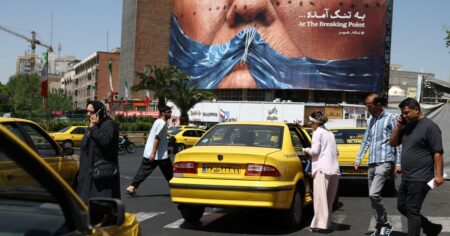
The human dimension of this conflict extends far beyond military casualties, with civilian populations across multiple countries experiencing the terror and devastation of modern warfare. In Iran’s capital of Tehran, streets have become largely deserted as residents shelter from airstrikes, while the paramilitary Basij force—known for its role in suppressing domestic protests—has established checkpoints throughout the city. A student in the northern Iranian city of Babol, speaking anonymously for fear of retribution, captured the conflicted emotions many Iranians are experiencing: “We don’t know whether to be happy about the elimination of the criminals who oppress us or to remain silent in the face of the U.S. and Israel’s war against the country and its interests and the terror that is taking place.” In Israel, Iranian missiles have struck multiple locations including Jerusalem and devastatingly, a synagogue in Beit Shemesh where nine people were killed and 28 wounded in a single strike. The Persian Gulf states that have long marketed themselves as safe regional business hubs have also suffered, with three people killed in the United Arab Emirates and one each in Kuwait and Bahrain, mostly from missiles that penetrated defensive systems or debris from intercepted projectiles. The World Health Organization has issued urgent appeals for the protection of civilians and healthcare facilities, with regional director Hanan Balkhy emphasizing that “The protection of civilians and health care must be absolute” and calling on all parties to ensure medical facilities remain protected.
Global Implications and Uncertain Future
This escalating conflict represents the second time in just eight months that the United States and Israel have combined forces against Iran in what many observers see as a startling display of military coordination, particularly given President Trump’s election on an “America First” platform with explicit promises to avoid “forever wars.” The international community’s response has been cautious, with most nations staying out of direct involvement while pressing for diplomatic solutions, though Britain, France, and Germany have indicated readiness to work with the United States specifically to help stop Iran’s attacks. The broader implications for global markets are already being felt, with oil prices soaring and financial markets rattled by the uncertainty surrounding Middle Eastern energy infrastructure and shipping routes. Defense analyst Sascha Bruchmann from the International Institute for Strategic Studies in Bahrain explained that Iran’s strategy in targeting energy infrastructure aims to “cause global backlash and impose costs” on the U.S. administration, though he noted that so far the damage falls short of “the wholesome destruction of critical infrastructure the Iranian regime seeks.” As combat operations continue with no clear endpoint in sight and casualties mounting on all sides, the international community faces the frightening prospect of a protracted regional war with potentially catastrophic humanitarian and economic consequences that could resonate far beyond the Middle East itself.