
Navigating the Strait of Hormuz: A Dangerous Journey to One of the World’s Most Strategic Waterways
Weeks of Planning for a Risky Mission
Getting into the Strait of Hormuz required careful preparation that stretched over several weeks. The planning process wasn’t something that could be rushed or taken lightly. Maps were carefully studied, potential scenarios were discussed and debated, and contingency plans were developed for every possible outcome. The team needed to figure out how they would enter this highly restricted area, how they would safely exit, and most importantly, who they could contact if things went sideways. They also had to consider what might happen if they encountered trouble during their journey. Their specific goal was ambitious yet simple: reach one of the narrowest points of the strait to witness firsthand the massive backup of oil tankers and cargo ships that had been stranded there for weeks due to escalating tensions between Iran and the United States.
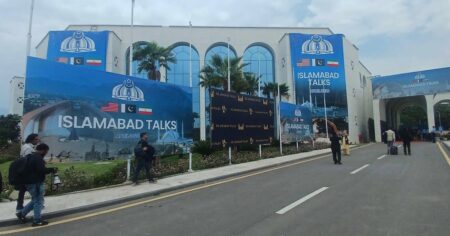
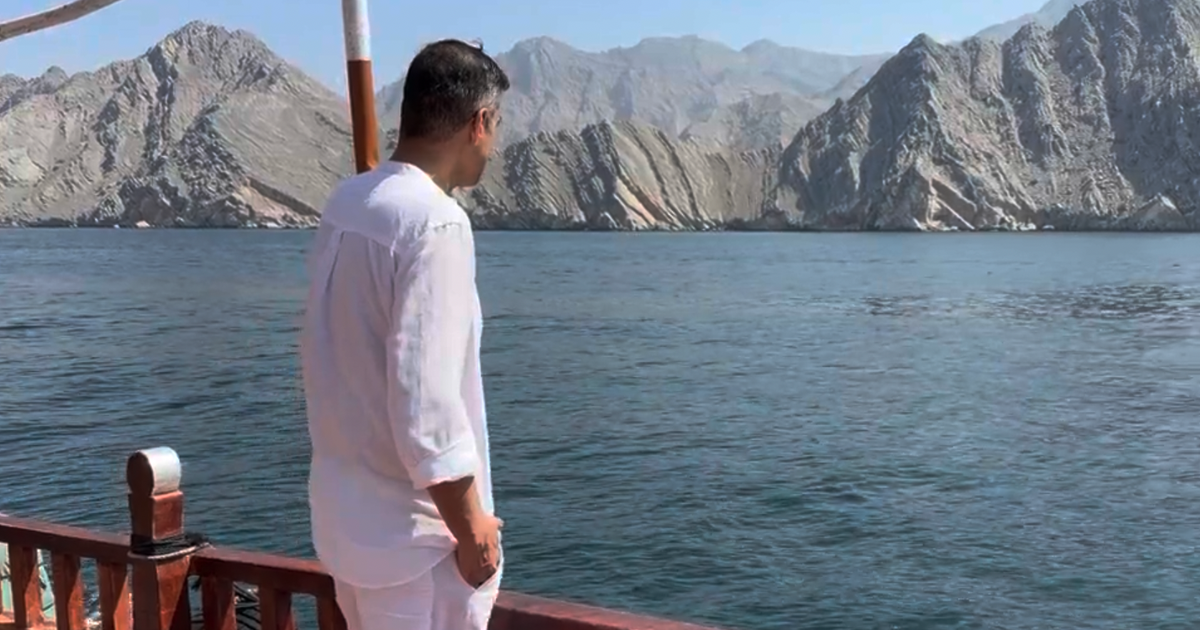
The decision to proceed came when a ceasefire was brokered by Pakistan between the United States, Israel, and Iran. Although the initial round of diplomatic talks in Islamabad hadn’t produced lasting results, the temporary truce was holding relatively well, and for a brief moment, the risk seemed manageable enough to attempt the journey. After crossing from one Gulf country into another, the team found themselves traveling along a coastal road that presented a striking contrast—breathtakingly beautiful scenery set against the backdrop of dangerous geopolitical tensions playing out just offshore. On one side of the road, barren mountains jutted dramatically from the earth without a single trace of vegetation. On the other side, crystal-clear blue water stretched endlessly into the Gulf. Then, as the road curved around a bend, the reality of the situation became visible: not just one or two ships, but dozens upon dozens of vessels sitting completely still, waiting in uncertainty.
The Strategic Importance and Restrictions of the Strait
When you look at this particular stretch of water, it’s easy to forget just how crucial it is to the global economy. Approximately 20% of the world’s oil supply passes through the Strait of Hormuz under normal circumstances, making it one of the most strategically important waterways on the planet. As tensions between the United States and Iran escalated into what many feared could become a wider conflict, the strait transformed from a busy shipping lane into a pressure point with the potential to choke the entire global economy. Since the violence intensified, access to this waterway has been severely restricted and tightly controlled by both Iranian and international forces. Journalists, in particular, are explicitly forbidden from being in these waters, which made the team’s mission all the more sensitive and potentially dangerous.
Undeterred by the official restrictions, the team decided to find another way to access the strait. At a small, relatively quiet port, they posed as ordinary tourists and began asking around discreetly for someone who might be willing to take them out on the water. That’s where they encountered Sharif—not his real name, which is being protected for his safety. Originally from Egypt, Sharif had spent decades working along this coastline and knew these waters intimately. He explained that during normal, peaceful times, tourists would line up for the opportunity to take boat trips with him to explore the beautiful Gulf waters. Now, with the military tensions and restrictions, there were almost no customers. The beaches were empty, the tourism industry was suffering, and people who made their living from the sea were struggling. After some careful negotiating and building trust, Sharif agreed to take the team out on the water. They paid him $120 for a two-hour trip—a transaction that was simple on the surface but carried significant risk for everyone involved.
A Deceptively Calm Journey into Dangerous Waters
Sharif’s vessel was a traditional dhow—a wooden boat painted brown, showing the wear of years spent on the water, but still sturdy and seaworthy. These types of boats have been used in Gulf waters for countless generations, representing a connection to maritime traditions that stretch back centuries. Inside, embroidered cushions lined the seats, providing a touch of comfort and local color. As the team climbed aboard and Sharif pushed away from the dock, the first thing that struck them was how deceptively calm everything felt. The sea was remarkably flat, without the choppy waves you might expect in such a strategically contested area. The dramatic coastline remained still and quiet. For a brief moment, it was genuinely difficult to reconcile the peaceful beauty of what they were seeing with everything they knew about the dangerous military and political situation unfolding in these very waters.
Then something unexpected happened—dolphins appeared. They came up alongside the boat playfully, staying with the vessel as it moved through the water. The dolphins weaved gracefully through the wake, rising and dipping in the bright sunlight, creating a moment of natural beauty that seemed almost surreal given the circumstances. Beyond the dolphins, however, the evidence of the crisis became impossible to ignore. The ships appeared on the horizon, and the team didn’t have to travel far to see them clearly. Within just minutes of leaving port, massive tankers and cargo vessels came into view, all sitting completely idle in the water. The team was careful not to approach too closely, as a police vessel was clearly visible patrolling in the distance, and they didn’t want to draw unwanted attention or create an international incident. At one point, a crewman standing on what appeared to be a cargo ship noticed their small dhow and raised his hand in greeting. The team waved back in a moment of human connection across the tense waters. Then the crewman flashed a peace sign—a simple gesture that somehow captured the hope that ordinary people on all sides hold for a resolution to the crisis.
The Complex Reality Beneath the Surface Calm
The apparent calm visible on the surface of the Strait of Hormuz tells only part of the story and doesn’t accurately reflect the complicated and dangerous reality underneath. In recent weeks, Iran has made aggressive moves to assert control over who can and cannot pass through this vital waterway. Intelligence reports suggest that Iranian forces have placed mines in parts of the strait, creating invisible dangers for any vessel that might attempt to pass without permission. At the same time, the United States has imposed a comprehensive naval blockade specifically targeting ships that are attempting to enter or leave Iranian ports. This blockade is part of a broader American strategy to apply economic pressure on Tehran by restricting Iran’s ability to export its own energy resources, particularly after diplomatic negotiations broke down without producing an agreement.
The result of these competing military and political pressures isn’t a simple, complete closure of the strait. Instead, it’s created something far more complicated and unpredictable. Some ships are managing to move through the waterway, while others remain at anchor, waiting for clearer guidance or safer conditions. Many vessel operators are hedging their bets, deliberately delaying their journeys, or turning back altogether rather than risk becoming caught in the middle of a military confrontation. For the interconnected global economy, even this level of partial disruption matters tremendously. A narrow waterway that normally carries roughly one-fifth of the world’s oil supply doesn’t need to completely shut down to send shockwaves through international energy markets, affect fuel prices worldwide, and create economic uncertainty that ripples across industries and continents.
Temporary Agreements Amid Ongoing Uncertainty
When the team’s two hours on Sharif’s dhow came to an end, they turned the boat back toward shore, their mission accomplished but their minds full of what they had witnessed. They thanked Sharif for his courage in taking them out, paid him for his services, and watched as he prepared his boat to head out again in case another customer appeared—though in these uncertain times, that seemed unlikely. On the drive back from the coast, the team’s phones suddenly started lighting up with breaking news alerts. Iran’s foreign minister, Abbas Araghchi, had just announced that the strait would be fully reopened to commercial shipping during a ceasefire period linked to fighting in Lebanon. This agreement—a ten-day pause between Israel and Lebanon—represented part of a broader international attempt to prevent the various Middle Eastern conflicts from spreading further and potentially igniting a wider regional war.
However, almost simultaneously, President Trump signaled that American pressure on Iran, including the ongoing naval blockade, would remain firmly in place unless a more comprehensive deal could be reached that addressed broader security concerns. This mixed messaging created confusion about what the actual situation would be for ships wanting to transit the strait. Some vessels have indeed started moving again, their captains willing to take the calculated risk of passage. But as the team reflected on what they had witnessed, it became clear that movement through the strait doesn’t necessarily mean genuine stability or anything close to a return to normal operations. The waterway may technically be open, at least for the moment, but passage remains controlled, restricted, and subject to change without notice. The underlying risks that created this crisis haven’t disappeared—they’ve simply been temporarily managed through fragile diplomatic agreements. The various ceasefires that are currently holding this tense situation together are explicitly temporary, with expiration dates that loom ominously on the near horizon.
The Fragile Future of a Vital Waterway
If diplomats and world leaders manage to pull together a broader, more comprehensive agreement that addresses the underlying political and military tensions, historians may look back on this moment as the peak of one of the most volatile periods for global energy security in many years. The images of dozens of ships sitting idle in the water, the naval vessels patrolling with weapons ready, and the international diplomatic scrambling may become footnotes in the story of how the world pulled back from the brink of a crisis that could have had devastating global economic consequences. However, if these diplomatic efforts fail and the temporary ceasefires collapse, what the team witnessed out on the water during their risky journey may instead become the new normal for international shipping and global energy markets.
In that darker scenario, the world would have to adjust to a reality where ships are constantly waiting in uncertainty, others are moving through the strait with extreme caution and at great risk, and everyone involved in global shipping and energy trading is forced to adjust their operations in real time based on rapidly changing political and military developments. Maritime insurance rates would skyrocket, making it economically unfeasible for some shipping companies to operate in the region. Oil and gas prices would remain volatile and elevated, affecting everything from transportation costs to manufacturing to home heating bills for ordinary families around the world. Alternative shipping routes would be explored and developed, but none could fully replace the efficiency and strategic importance of the Strait of Hormuz. The lesson from this journey is profound and somewhat unsettling: in the Strait of Hormuz, even the calmest, most beautiful water can sit directly atop something far more fragile and dangerous than what’s visible on the surface. The peace sign from that unknown crewman, the playful dolphins, and the clear blue water all mask a geopolitical powder keg that could ignite at any moment, with consequences that would be felt in every corner of the globe.