
Iran Appoints Mojtaba Khamenei as New Supreme Leader Amid Escalating Conflict
A Succession Under Fire
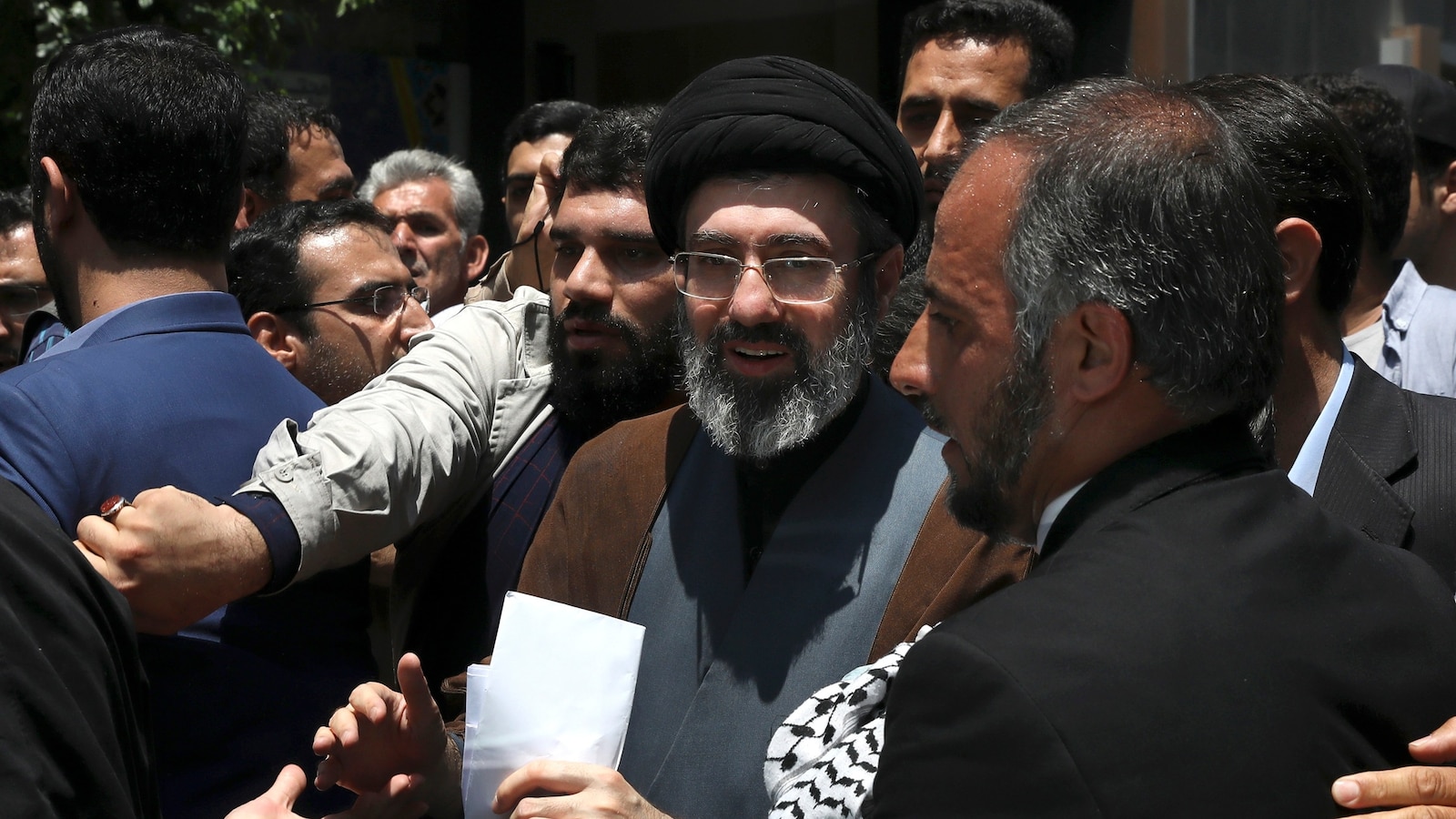
In a dramatic turn of events that has sent shockwaves through the Middle East, Iran has appointed Mojtaba Khamenei, the 56-year-old son of the recently assassinated Supreme Leader Ayatollah Ali Khamenei, to succeed his father. The announcement came through Iranian state media on Sunday, following a selection process conducted by the country’s 88-member Assembly of Experts. This succession occurs at perhaps the most perilous moment in the Islamic Republic’s history, as the nation faces what many are calling an existential threat from a coordinated U.S.-Israeli military campaign. The elder Khamenei was killed just days earlier in airstrikes that targeted Tehran, marking the beginning of what appears to be a broader operation aimed at regime change. The strikes didn’t just claim the supreme leader’s life—they also killed his wife, Mojtaba’s wife, and one of Mojtaba’s sons, devastating the family at the very heart of Iranian power. It remains unclear whether Mojtaba himself was present during the attack, but the tragedy has thrust him into leadership during what may be Iran’s darkest hour since the Islamic Revolution of 1979.
A Controversial Choice in Dangerous Times
Mojtaba’s appointment hasn’t been without controversy, even within Iran’s clerical establishment. Experts and analysts have long pointed to two significant concerns about his candidacy: his lack of adequate religious credentials for such a high spiritual office, and the uncomfortable optics of establishing what essentially amounts to a dynastic succession in a revolutionary Islamic republic. Despite these reservations, he had long been considered a frontrunner for the position, largely due to his proximity to power and his deep connections within Iran’s security apparatus. The selection process itself took place under extraordinary circumstances, with the Assembly of Experts meeting despite the ongoing threat of U.S.-Israeli attacks. The danger wasn’t theoretical—on Tuesday, Israeli warplanes bombed the Assembly building in the holy city of Qom, demonstrating the reach and determination of Iran’s adversaries. Against this backdrop of violence and intimidation, the Assembly pushed forward, with Ayatollah Mohsen Qomi telling Iran’s semiofficial Mehr News agency on Thursday that they were entering the final stages of the selection process. The speed of the decision reflects both the urgency of the moment and perhaps a recognition that Mojtaba, despite his shortcomings in religious scholarship, possessed the security credentials and hardline reputation needed to lead a nation under siege.
International Threats and Defiance
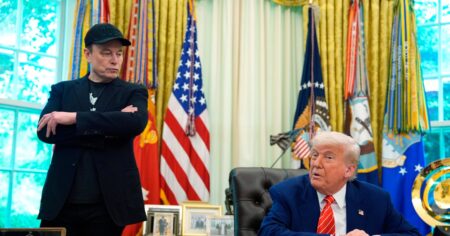
The international response to Mojtaba’s appointment has been swift and threatening. The Israel Defense Forces made clear on Sunday that any new leader—and indeed any member of the Assembly of Experts who participated in choosing that leader—would be considered legitimate targets in their ongoing campaign against Iran. This unprecedented threat against an entire religious and political institution demonstrates the extent to which normal diplomatic boundaries have collapsed in this conflict. Even more ominously, President Donald Trump weighed in on Sunday with his characteristic bluntness, declaring that the new leader “is not going to last long” unless the Iranians first secure his approval. This remarkable statement, suggesting that Iran’s leadership choices require American permission, represents a direct challenge to Iranian sovereignty that would have been unthinkable in previous eras. For the Islamic Republic, which was founded on principles of independence from foreign interference, particularly from the United States, such statements only reinforce the narrative of a nation under assault from imperial powers. The threats against Mojtaba and the Assembly members who selected him have likely hardened resolve within Iran’s leadership, transforming what might have been a purely internal succession matter into a test of national will and resistance to foreign domination.
From Battlefield to Behind the Scenes
Understanding Mojtaba Khamenei requires looking back at his formative experiences and the path that brought him to this moment of supreme authority. Born in 1969 in the northeastern city of Mashhad, he arrived in the world a decade before the Islamic Revolution that would transform Iran and elevate his father to the pinnacle of power. His youth coincided with the devastating Iran-Iraq war of 1980-1988, and like many young men of his generation, he served in the military as a member of the elite Habib ibn Mazahir al-Asadi Battalion. This conflict, which pitted the young Islamic Republic against Saddam Hussein’s Iraq, is regularly cited by experts as a defining experience that shaped the character of Iran’s post-revolutionary regime. The war helped cement a particular fusion of clerical authority and militant nationalism that continues to define the Islamic Republic today. It also served as a launching pad for battlefield heroes to achieve political power, primarily through the expanding role of the Islamic Revolutionary Guard Corps (IRGC) in running the country. Mojtaba’s service in this elite battalion forged connections with other veterans who would go on to occupy key positions in Iran’s security establishment—relationships that would prove invaluable in his later rise to power. Vali Nasr, a professor at Johns Hopkins University who discussed Mojtaba in his recent book “Iran’s Grand Strategy,” identified these twin pillars of family ties and military service as crucial sources of his political influence and vital connections with the IRGC and other parts of the country’s powerful security apparatus.
The Man Behind the Curtain
After the war, Mojtaba’s path took him deeper into the heart of Iran’s political and religious establishment. In 1999, he moved to Qom, the holy city south of Tehran that serves as the center of Shiite Islamic scholarship in Iran. There he became a cleric and religious teacher, studying under Ayatollah Taqi Mesbah Yazdi, whom Suzanne Maloney of the Brookings Institution described as “an extremist hard-line cleric.” This education shaped Mojtaba’s ideological orientation, aligning him with the most uncompromising elements of Iran’s clerical establishment. Following his time in Qom, Mojtaba returned to Tehran to work in his father’s Office of the Supreme Leader. According to a 2023 report by Chatham House researchers Saeid Golkar and Kasra Aarabi, “Over time, Khamenei, the elder, would train his son to lead his office,” suggesting a deliberate grooming process for succession. Mojtaba also became actively involved in electoral politics, working on the presidential campaigns of Mahmoud Ahmadinejad in 2005 and 2009. The 2009 campaign, in particular, proved to be a turning point. That election sparked massive anti-government protests, with demonstrators citing electoral irregularities and alleging vote rigging. The subsequent crackdown was brutal, with security forces crushing the Green Movement demonstrations. Analysts and observers identified Mojtaba as a key figure in shaping that crackdown, a role that simultaneously established his hardline credentials and his willingness to use force to maintain the regime. As Golkar and Aarabi noted, “Since then, with his father’s full backing, Mojtaba has emerged as the man behind the curtain controlling the Office of the Supreme Leader, with heavy involvement in decision-making across the Islamic Republic.”
A Hardliner for Hard Times
Mojtaba’s profile as a hardline operator with deep security connections may prove to be exactly what Iran’s establishment believes it needs at this moment of existential crisis. Analysts have broadly characterized him as a powerful figure who has maintained relatively low public and international profiles, preferring to operate behind the scenes while exercising major influence over policy decisions. Western media reports have also suggested that Mojtaba used his position to amass enormous personal wealth, with some estimates placing his financial empire in the billions of dollars—though such claims are difficult to verify and may be influenced by propaganda considerations. What seems clear, however, is that his hardline reputation and militarized approach to governance align well with the current threat environment facing Iran. As Suzanne Maloney wrote last month, even before the current crisis, “The recent uprising and intensifying U.S. military presence in the region have reportedly strengthened Mojtaba’s hand.” Now, with foreign airstrikes having killed his father and much of his immediate family, and with American and Israeli officials openly threatening his life, Mojtaba takes power as a leader forged in conflict and hardened by loss. Whether this background will enable him to navigate Iran through its current crisis, or whether it will lead to further escalation and confrontation, remains one of the most consequential questions facing the Middle East. What is certain is that Iran has chosen a leader whose entire life has prepared him not for peace and reconciliation, but for resistance and struggle against what the Islamic Republic views as imperialist aggression.