


The Hidden Tragedy: Iran’s Brutal Crackdown on Protesters
A Family’s Unbearable Loss
The vibrant life of 23-year-old Robina Aminian was cut tragically short on January 8th when she was shot and killed by Iranian security forces during protests in Tehran. Her aunt, Hali Norei, speaking from Norway, remembers her niece as someone “full of art, full of color” – a young woman with dreams of becoming a fashion designer. In what would become a haunting memory, Robina had recently offered her aunt one of her last creations: a blue jean jacket decorated with colorful splashes on the sleeves. When Robina asked if she wanted it, Norei declined, thinking it looked better on her niece. Now, those words carry the weight of irreversible regret. “I wish I had taken it,” Norei said, her words heavy with the kind of sorrow that comes from losing someone whose future was just beginning to unfold. Robina’s death represents just one story among thousands as Iran continues to reckon with the aftermath of widespread anti-government demonstrations that turned deadly when authorities responded with overwhelming force.
The Protests That Shook a Nation
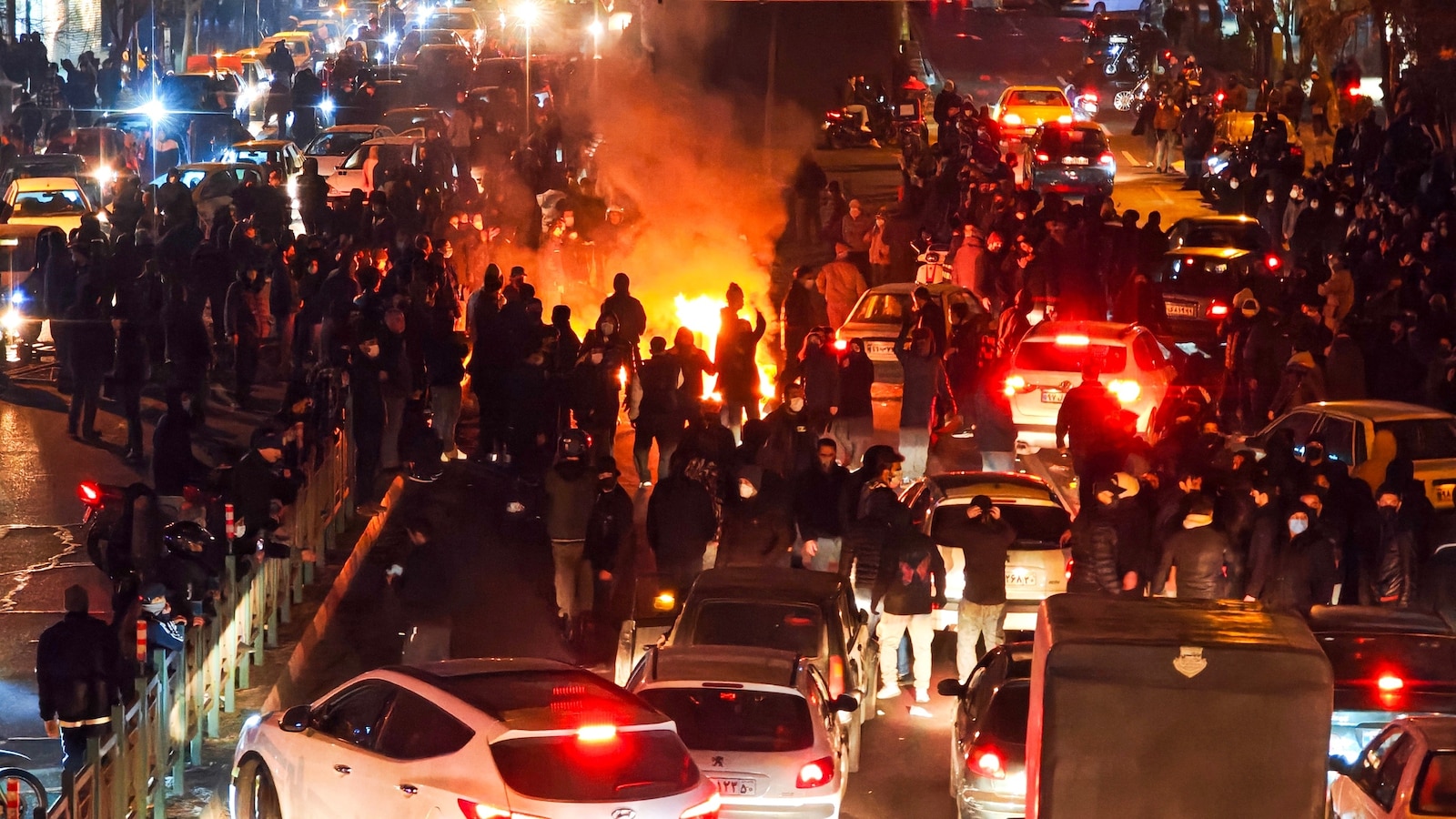
What started as demonstrations in late December over economic hardships – specifically the collapse of Iran’s currency and deteriorating living conditions – quickly evolved into something far more significant. The protests transformed from expressions of economic frustration into full-throated demands for political change, with crowds openly calling for regime change in the streets of Tehran and cities throughout the country. This political turn marked a dangerous escalation, as citizens who had initially come out to protest bread-and-butter issues found themselves united in challenging the very foundations of the government’s authority. The Iranian regime’s response was swift and brutal. According to human rights observers and activists, security forces launched a massive crackdown designed to crush the dissent through intimidation, violence, and lethal force. The scale of the government’s reaction suggested deep fear within the ruling establishment about the potential for these protests to genuinely threaten their grip on power.
The Growing Death Toll and Information Blackout
As human rights organizations continue their grim work of documenting casualties, the death toll keeps climbing, revealing the true scope of the tragedy. The U.S.-based Human Rights Activist News Agency reports having verified over 6,400 deaths, with an additional 11,000 cases still under review, awaiting confirmation through names and photographs of bodies. While ABC News cannot independently verify these staggering figures, they paint a picture of unprecedented violence against civilians. The difficulty in obtaining accurate numbers stems largely from the Iranian government’s deliberate strategy to control information. The regime has imposed a communications blackout across the country, severely restricting what information can flow in or out of Iran. Roya Boroumand, executive director of the Abdorrahman Boroumand Center for Human Rights in Iran, explained that this darkness is intentional: “They plunged the country in the dark. Because they know that what they’re doing is wrong, and so they try to prevent information from being disseminated.” This information control serves the dual purpose of hiding the massacres from international scrutiny while making it extremely difficult for families to locate their missing loved ones.
The Nightmare of Finding the Dead
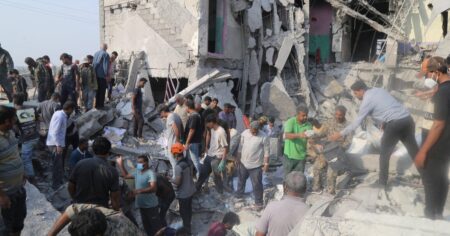
For families like Robina’s, the aftermath of the violence has meant navigating an almost incomprehensible nightmare just to locate their deceased relatives. Robina’s aunt described the ordeal her family endured in heartbreaking terms: “As my family described the scene to me, they said that it was the apocalypse in Tehran. They said that hundreds of bodies were there. She said she had to look into all those faces until she could find Robina. She said bodies had been dumped on top of each other.” The image of a grieving family member having to search through hundreds of corpses, stacked without dignity or care, speaks to the massive scale of the killing and the regime’s apparent indifference to the victims’ humanity. This horrific scene wasn’t isolated to Tehran. An eyewitness in Rasht, a northern Iranian city, shared his account of the January 8th demonstrations at the Grand Bazaar, describing what he called “a real holocaust.” According to his testimony, security forces deliberately trapped protesters inside the bazaar by blocking the main exits, then systematically shot anyone attempting to leave. “They shot everyone down. Anyone who was there was shot. Some people managed to drag those injured outside,” the witness said, requesting anonymity for his safety. Since that night, people have simply vanished, with no trace of them in morgues or jails, leading to fears that the regime may be concealing bodies in mass graves to hide the true extent of the bloodshed.
Missing Bodies and Mass Graves
The disappearance of bodies, particularly those of women, has become a disturbing pattern emerging from the chaos. Reports circulating on social media suggest that many female protesters’ bodies cannot be located, adding another layer of anguish for families desperately seeking closure. The eyewitness from Rasht expressed a chilling suspicion shared by many Iranians: “My friend and I are afraid that the regime forces have lost control after this mass killing and are trying to downplay the number of death toll, maybe they have buried our children in mass graves somewhere outside the city.” This possibility – that loved ones might be buried anonymously in unmarked mass graves – represents a final indignity and a deliberate attempt to erase evidence of state-sponsored violence. The systematic nature of the disappearances suggests coordination at high levels of government, a calculated effort not just to suppress dissent but to eliminate any accounting of how many people were actually killed. For families, this means not only grieving their dead but also being denied the fundamental human need to properly bury and mourn them. The uncertainty itself becomes a form of torture, leaving people in a perpetual state of not knowing whether to hope their loved ones might still be alive or to accept the likelihood of their death.
International Response and The Path Forward
The international community, particularly the United States under President Donald Trump, has responded with both rhetoric and action. Trump threatened consequences against Iran and deployed additional American military forces to the region as a show of strength. His administration also imposed new sanctions specifically targeting Iranian officials identified as responsible for the “brutal crackdown” on protesters. However, these measures have done little to provide immediate relief to those suffering inside Iran. Protesters and activists who spoke with ABC News expressed hope for more substantial international intervention as Iranians continue the painful work of searching for the missing and grieving their dead. Yet the situation has become more complicated with Iranian President Masoud Pezeshkian announcing that he has directed Iran’s top diplomat to “pursue fair and equitable negotiations” with the United States. This diplomatic overture has sparked outrage among many Iranians, particularly those who lost loved ones in the crackdown. Taking to social media to voice their dissatisfaction, protesters see potential talks between the two governments as a betrayal. As one Iranian protester told ABC News, “The blood of our young people is still fresh on streets and the world is going to engage in talks with their murderers.” This sentiment captures the impossible position many Iranians find themselves in – caught between a brutal regime at home and an international community that may prioritize diplomatic engagement over justice for the victims. For families like Robina’s, no negotiation or sanction can restore what was taken from them, but acknowledgment of the truth and accountability for the perpetrators remains a minimum demand that justice requires.