

Queen Maxima of the Netherlands Joins Army Reserve Amid Growing European Security Concerns
A Royal Decision Motivated by National Security
In a significant and symbolic move that underscores the changing security landscape in Europe, Queen Maxima of the Netherlands has enlisted as a reservist in her country’s armed forces. The 54-year-old Argentine-born queen’s decision comes at a time when European nations are reassessing their defense capabilities and self-reliance. According to a statement released by the Dutch royal family this week, Queen Maxima “has chosen to register now because our safety can no longer be taken for granted, and she, like many others, wants to contribute to that safety.” This powerful statement reflects a growing anxiety across Europe about regional security in the face of geopolitical tensions and shifting international alliances. The queen’s enlistment is more than ceremonial—she will undergo genuine military training at the Royal Netherlands Army and will subsequently be promoted to the rank of Lieutenant Colonel. Following her training, the royal family’s statement confirmed that “like other reservists, she will deploy where needed,” indicating that this is a substantive commitment rather than a symbolic gesture.
Training Alongside Regular Soldiers
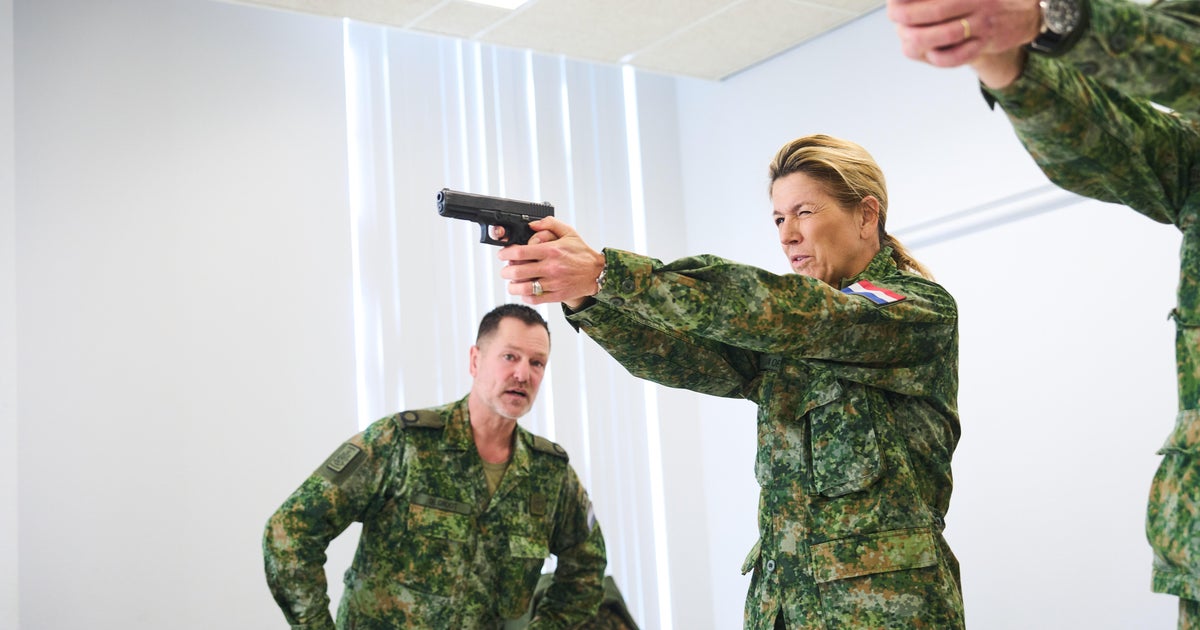
Photographs and video footage released by the Dutch Ministry of Defense show Queen Maxima actively participating in rigorous training exercises at the Royal Military Academy in Breda, located in the southern part of the Netherlands. The images depict the queen in standard green army fatigues, engaging in “Mental Skills” training and various physical exercises that are part of the standard military curriculum. In one striking photograph, she can be seen aiming a handgun, while an accompanying video set to energetic rock-dance music shows her smiling before jumping into a pool and rock climbing while wearing a helmet. These visuals send a clear message that the queen is not receiving preferential treatment but is instead participating in the same demanding training regimen required of all Dutch military reservists. The release of these images also serves an important public relations function, demonstrating to Dutch citizens that even their monarch is willing to serve and sacrifice for national security, potentially encouraging other civilians to consider similar service.
A Growing Trend Among European Royalty
Queen Maxima is by no means the first member of a European royal family to serve in their nation’s armed forces, and she joins a growing list of royal women in particular who have embraced military service in recent years. Notably, her own daughter, Princess Catharina-Amalia, recently completed her military training and was promoted to the rank of corporal, setting an example that her mother has now followed. Last year, Norway’s Princess Ingrid Alexandra completed an impressive 15-month service term as a gunner in an engineering battalion, demonstrating the serious nature of royal military commitments in Scandinavian countries. Meanwhile, Princess Leonor of Spain is currently in the final year of a comprehensive three-year training program that spans all branches of the Spanish military—the Army, Navy, and Air Force. Beyond these female royals, many members of Britain’s royal family have also served in the armed forces throughout history and in contemporary times. King Charles III served in the Royal Navy and Royal Air Force, his son Prince William trained at the Royal Military Academy Sandhurst and served as a search and rescue helicopter pilot, and Prince Harry notably served two operational tours in Afghanistan. This tradition of royal military service reinforces the connection between monarchies and their nations’ defense forces while demonstrating that royals share in the responsibilities and potential dangers faced by ordinary service members.
Europe’s Shifting Security Landscape
The broader context for Queen Maxima’s enlistment is Europe’s dramatically evolving security environment, which has been fundamentally shaken by Russia’s invasion of Ukraine and growing uncertainty about the reliability of traditional transatlantic alliances. For decades, European nations have depended heavily on NATO and particularly on the United States for their security umbrella, allowing many countries to maintain relatively modest defense budgets and smaller military forces. However, recent events have called this arrangement into question. President Donald Trump has repeatedly pushed European countries to dramatically increase their domestic defense spending, arguing that they have been too reliant on American military might while not contributing their fair share to collective defense. His administration has also created tensions within the alliance through controversial actions, such as attempting to acquire Greenland from Denmark and threatening NATO allies with tariffs before eventually backing down. These actions have reinforced European concerns about whether they can continue to count on unwavering American support in times of crisis. In response to this uncertain environment, European Union Defense Commissioner Andrius Kubilius proposed in January that the EU should consider establishing a 100,000-strong joint military force that would operate separately from NATO. “We need to start to invest our money in such a way that we would be able to fight as Europe, not just as collection of 27 national ‘bonsai armies,'” Kubilius stated, using a memorable metaphor to describe the current fragmented state of European defense capabilities.
The Netherlands Takes Action on Defense Readiness
The Dutch government itself has been taking concrete steps to bolster national defense capabilities and ensure adequate military personnel for the future. Last week, the Netherlands’ newly formed coalition government issued a statement declaring, “We refuse to remain dependent on others for our protection.” As part of this renewed focus on self-reliance, the government announced plans to require young Dutch citizens to complete a mandatory survey regarding military service. This survey will assess their willingness and ability to serve in the armed forces and will help the government gauge the level of voluntary participation in military service. However, the government made clear that if this voluntary approach “does not yield sufficient results,” they are prepared to take more decisive action, including “reintroducing selective compulsory attendance”—in other words, some form of conscription or mandatory military service for certain segments of the population. This represents a significant policy shift for a country that, like many Western European nations, moved away from conscription in favor of professional, volunteer military forces in recent decades.
The Return of Conscription Across Europe
The Netherlands is far from alone in reconsidering conscription as a tool for national defense. Currently, nine European NATO member states already maintain some form of mandatory military service: Denmark, Estonia, Finland, Greece, Latvia, Lithuania, Norway, Sweden, and Turkey. It’s notable that many of these countries either share a border with Russia or are in close proximity to it, which helps explain their emphasis on maintaining large, ready reserve forces. Beyond these nine nations, other European countries are actively moving toward reintroducing or expanding conscription programs. Croatia has announced plans to reintroduce mandatory military service this year, which will compel men between the ages of 19 and 29 to undergo two months of basic training. Several other major European powers, including France and Germany, have recently introduced new schemes and incentive programs designed to encourage young people to consider military service, even if they have stopped short of making it fully mandatory. This continent-wide trend toward conscription and expanded military service represents a fundamental shift in European thinking about defense and security. For a generation, many Europeans enjoyed what some called a “peace dividend” following the end of the Cold War, allowing governments to reduce military spending and eliminate conscription. However, current geopolitical realities have convinced policymakers across the continent that this era has ended, and that Europe must once again prioritize defense readiness and self-sufficiency. Queen Maxima’s decision to join the army reserve as a 54-year-old monarch symbolizes this broader transformation and sends a powerful message that military service is not just for the young or for career soldiers, but is a civic duty that all citizens—even queens—should be prepared to embrace in defense of their nation.