


Rafah Border Crossing Reopens: A Cautious Step Toward Hope in Gaza
A Limited but Symbolic Reopening
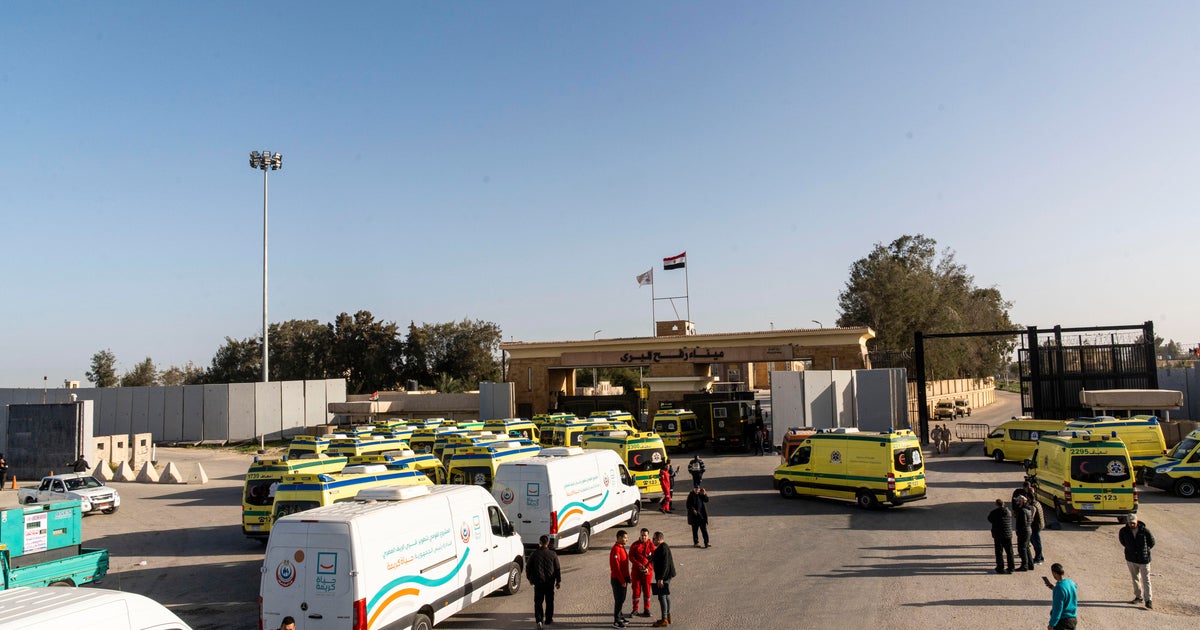
After months of closure, the Rafah border crossing between Gaza and Egypt has finally reopened for limited traffic, marking a significant milestone in the ongoing Israeli-Hamas ceasefire agreement. Egyptian and Israeli security officials confirmed on Monday that the crossing would begin operating under strict restrictions, allowing only 50 Palestinians to travel in each direction on its first day of operation. While this represents a small fraction of those desperately waiting to cross, the reopening carries profound symbolic weight for a population that has endured devastating war conditions. An Egyptian official involved in implementing the ceasefire deal shared these details with The Associated Press, speaking anonymously due to the sensitive nature of ongoing negotiations. State-run Egyptian media outlets and Israeli officials have also verified the crossing’s reopening, though they emphasize that for now, the operation remains largely symbolic rather than providing comprehensive relief to the thousands waiting on both sides of the border.
The Humanitarian Crisis at the Crossing
The human cost of the crossing’s prolonged closure becomes painfully clear when examining the numbers. According to Gaza health officials, approximately 20,000 Palestinian children and adults urgently need medical care that cannot be provided within the devastated Gaza Strip and are hoping to leave through this vital checkpoint. These individuals represent some of the war’s most vulnerable victims—children with life-threatening injuries, adults with chronic conditions that have gone untreated, and patients requiring specialized medical interventions that simply aren’t available in Gaza’s crippled healthcare system. Meanwhile, thousands of other Palestinians currently outside the territory anxiously await permission to return home, eager to reunite with family members, assess damage to their properties, and begin the long process of rebuilding their lives. Israeli Prime Minister Benjamin Netanyahu has committed to allowing 50 patients per day to exit Gaza through Rafah. An official familiar with the diplomatic discussions revealed that each patient would be permitted to travel with two relatives or caretakers, recognizing that many of those requiring medical evacuation are children or elderly individuals who cannot travel alone. Additionally, approximately 50 people who fled Gaza during the war will be allowed to return each day under this initial arrangement.
Security Protocols and Long-term Plans
The reopening comes with stringent security measures designed to address concerns from both Israel and Egypt. Both nations will conduct thorough vetting of all individuals seeking to exit or enter Gaza through the crossing, a process that involves background checks and security screenings to prevent potential threats. The operation will be supervised by European Union border patrol agents, providing an international presence intended to ensure impartiality and professional standards. A small Palestinian administrative presence will also be maintained at the crossing to facilitate coordination and address the needs of Palestinian travelers. Officials involved in planning the crossing’s reopening have indicated that the number of travelers permitted to cross is expected to increase gradually over time if the initial system proves successful and security concerns are adequately addressed. This cautious, phased approach reflects the complex political and security landscape surrounding Gaza. The Rafah crossing had been under Israeli military control since May 2024, when Israeli troops seized it as part of what they described as efforts to combat Hamas arms-smuggling operations. The crossing was briefly opened for the evacuation of critically ill medical patients during a temporary ceasefire in early 2025, but had otherwise remained closed. Israel had shown considerable resistance to reopening Rafah on a more permanent basis, but the recovery of remains of the last hostage held in Gaza last week cleared a major political obstacle, allowing negotiations to move forward.
The Ceasefire Context and Rafah’s Strategic Importance
The reopening of the Rafah crossing represents a crucial milestone as the U.S.-brokered ceasefire agreement that took effect on October 10 of last year transitions into its critically important second phase. Before the war began, Rafah served as the main crossing point for people moving in and out of Gaza, handling the vast majority of civilian traffic between the Palestinian territory and the outside world. Gaza’s handful of other border crossings are all shared directly with Israel, making Rafah uniquely important as it connects Gaza to Egypt rather than to Israeli territory. Under the current ceasefire terms, Israel’s military maintains control over the buffer area between the Rafah crossing itself and the zones where most Palestinian civilians live, creating a complex arrangement that requires coordination between multiple parties. Egypt has repeatedly expressed strong concerns that Israel could potentially use control of the crossing to forcibly push Palestinians out of Gaza and into Egyptian territory—a scenario Cairo has firmly stated it will not accept. Egyptian officials have insisted that the crossing must be genuinely open for Palestinians to both enter and exit Gaza freely, not serve as a one-way exit that could facilitate population transfer. Historically, both Israel and Egypt have maintained the practice of vetting Palestinians who apply to cross at Rafah, conducting security checks and reviewing travel documentation before granting permission.
From War to Fragile Peace
The current ceasefire brought a halt to more than two years of devastating warfare between Israel and Hamas that began with the Hamas-led attack on southern Israel on October 7, 2023. That attack killed approximately 1,200 people and resulted in around 250 being taken hostage to Gaza, triggering Israel’s massive military response. The first phase of the truce focused on immediate humanitarian concerns: the exchange of all remaining hostages held in Gaza for hundreds of Palestinians detained by Israel, a significant increase in badly needed humanitarian aid flowing into the territory, and a partial pullback of Israeli military forces from populated areas. The second phase, now beginning, presents far more complicated challenges that will test the durability of the ceasefire. This phase calls for establishing a new Palestinian governing committee to administer Gaza—a politically sensitive process given Hamas’s previous control of the territory. It also requires deploying an international security force to maintain order, disarming Hamas fighters and dismantling the group’s military infrastructure, and taking concrete steps to begin the monumental task of rebuilding Gaza’s shattered cities and infrastructure. Each of these objectives involves complex negotiations and potential points of conflict that could threaten the fragile peace.
Humanitarian Aid and the Road to Recovery
The humanitarian dimensions of the Rafah reopening extend beyond the movement of people to the critical need for supplies and reconstruction materials. Ted Chaiban, deputy executive director of UNICEF, the United Nations children’s agency, told reporters last week that there exists a significant backlog of humanitarian supplies positioned in Egypt and ready to move into Gaza whenever the crossing opens to aid traffic. “We have supplies positioned,” Chaiban explained. “We have our great staff doing good work on the ground. We have plans that can be activated immediately if access is granted.” These supplies include essential items that Gaza’s population desperately needs after years of conflict: medical equipment and medications, nutritional supplements for malnourished children, educational materials, clean water and sanitation supplies, and emergency relief items. However, Chaiban emphasized that the next phase must go beyond emergency humanitarian assistance. The international community needs to bring not only more humanitarian and commercial supplies into Gaza, but also permanent shelter materials to replace the countless destroyed homes, and equipment and materials to repair critical infrastructure including water systems, electrical grids, hospitals, and schools. The scale of destruction in Gaza is almost incomprehensible, with entire neighborhoods reduced to rubble and essential services barely functioning. The reopening of Rafah, while limited in its initial scope, represents a small but meaningful step toward addressing these massive needs and beginning the long journey toward recovery and rebuilding for Gaza’s traumatized population.