


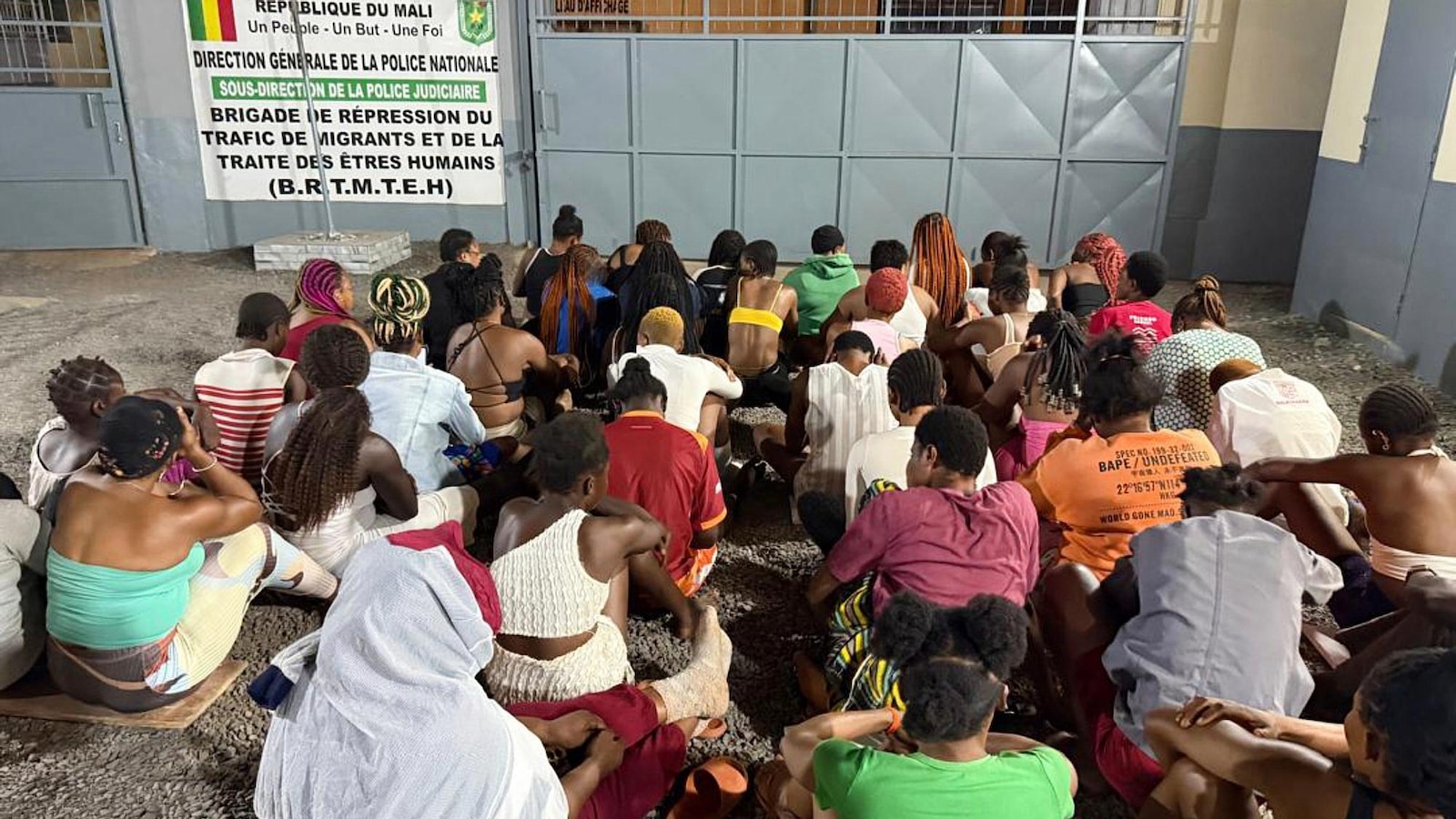

Global Operation Dismantles Human Trafficking Networks Worldwide
Major International Crackdown Yields Thousands of Arrests
In a massive coordinated effort spanning nearly two weeks, international law enforcement agencies have dealt a significant blow to human trafficking and migrant smuggling operations across the globe. Operation Liberterra III, orchestrated by Interpol between November 10 and November 21, mobilized approximately 14,000 police officers across 119 countries in what represents one of the most comprehensive crackdowns on these criminal networks in recent history. The operation’s impressive results speak to both the scale of the problem and the commitment of international authorities to combat it: more than 3,700 suspects were arrested, over 4,400 potential trafficking victims received assistance, and nearly 13,000 individuals caught up in illegal migration schemes were identified and helped.
The success of this operation demonstrates the power of international cooperation in fighting crimes that transcend national borders. Interpol, the France-based organization that facilitates collaboration among police forces in 196 member countries, coordinated this massive undertaking that required precise timing, shared intelligence, and synchronized action across multiple continents and time zones. Beyond the immediate rescues and arrests, the operation also opened at least 720 new investigations, suggesting that the fight against these criminal enterprises is far from over. These new leads will likely result in further action in the coming months as authorities continue to unravel the complex webs of trafficking networks that exploit vulnerable people seeking better lives.
Evolving Criminal Networks Exploit New Technologies and Routes
According to Interpol Secretary General Valdecy Urquiza, the landscape of human trafficking and migrant smuggling is constantly changing, with criminal organizations becoming increasingly sophisticated in their operations. These networks are no longer relying solely on traditional methods; instead, they’re exploiting digital platforms, discovering new trafficking routes, and identifying vulnerable populations with alarming efficiency. The use of social media, encrypted messaging apps, and other online tools has made it easier for traffickers to recruit victims, coordinate operations, and evade detection by law enforcement. This digital evolution presents new challenges for authorities who must constantly adapt their strategies and invest in technological capabilities to keep pace with these criminal enterprises.
The importance of recognizing and understanding these evolving patterns cannot be overstated. As Urquiza emphasized, identifying these changes in tactics and routes allows law enforcement agencies to move from a reactive to a proactive stance. By anticipating threats before they fully materialize, authorities can disrupt networks in their early stages and prevent countless people from falling victim to these schemes. This forward-thinking approach also helps protect the most vulnerable populations who are often targeted by traffickers – people fleeing poverty, conflict, or persecution who are desperate enough to trust promises of employment or safe passage that are too good to be true. The better law enforcement understands these criminal networks, the more effectively they can intervene before lives are destroyed.
Shifting Patterns: South Americans and Asians Trafficked to Africa
One of the most striking findings from Operation Liberterra III is the emergence of new trafficking patterns that represent a significant departure from historical trends. Interpol highlighted cases involving South American and Asian individuals being trafficked to Africa, a reversal of the traditional flow where African victims were primarily trafficked to other continents for exploitation. This shift indicates that criminal networks are constantly seeking new markets and opportunities, adapting their operations based on economic conditions, border security measures, and demand for exploited labor in different regions. The discovery of these new patterns is crucial because it requires law enforcement agencies to rethink their assumptions about where victims come from and where they’re being taken.
This changing landscape also reveals the truly global nature of human trafficking, demonstrating that no region is immune from either being a source of victims or a destination for exploitation. The presence of Asian workers discovered in a single raid on a compound in Myanmar – some 450 individuals – shows how traffickers can concentrate large numbers of victims in remote locations where they can be controlled and exploited with minimal risk of detection. Similarly, the movement of South Americans to Africa suggests that traffickers are exploiting economic disparities and lack of opportunity across continents, promising victims jobs or better conditions in unfamiliar territories where they become isolated and dependent on their traffickers. Understanding these new routes and patterns is essential for developing effective strategies to intercept victims before they reach their destinations and to dismantle the networks facilitating these movements.
Dangerous Routes and Deceptive Recruitment Tactics
The operation revealed that trafficking scams continue to pose a serious threat, with migrants being intercepted from perilous routes along the coasts of West African nations including Senegal, Guinea-Bissau, Morocco, and Algeria, as well as through overland networks operating in South American countries like Peru and Brazil. These routes are often extremely dangerous, with migrants risking their lives in overcrowded boats, crossing deserts, or traveling through conflict zones, all while being exploited financially and physically by smugglers and traffickers. The desperation that drives people to undertake such journeys makes them particularly vulnerable to exploitation, and the profits generated by these criminal networks are substantial enough to ensure that new operators continue to emerge even as others are arrested.
In West and Central African countries including Benin, Burkina Faso, Côte d’Ivoire, Ghana, Senegal, and Sierra Leone, law enforcement actions resulted in the rescue of more than 200 victims and the disruption of multiple recruitment and exploitation hubs. The methods used by traffickers in these regions are particularly insidious. Victims are typically recruited with promises of legitimate employment abroad, an opportunity that seems like a lifeline for people facing limited prospects in their home communities. However, traffickers charge exorbitant fees for arranging this “employment,” often requiring victims to go into debt or forcing them to recruit friends and family members in exchange for slightly improved conditions. This creates a pyramid scheme model that turns victims into unwitting accomplices, spreading the network wider and making it more difficult for individuals to escape or seek help. The psychological manipulation involved in these schemes is profound, as victims feel responsible for others they’ve recruited and may fear both the traffickers and the authorities.
Cybercrime and Digital Exploitation in Africa and Asia
The intersection of human trafficking and cybercrime represents a particularly troubling dimension of modern exploitation. In 2025, a focused crackdown on cybercrime operations in Africa led to the arrest of 1,209 suspects who had collectively targeted approximately 88,000 people. This staggering number of potential victims illustrates how digital platforms have amplified the reach of criminal networks, allowing a relatively small number of operators to cast incredibly wide nets. These cybercrime operations often work in conjunction with traditional trafficking methods, using online scams to identify vulnerable individuals who can then be recruited for various forms of exploitation, from forced labor in scam operations to sexual exploitation.
The discovery of 450 workers in a single raid on a compound in Myanmar during the operation provides a glimpse into how large-scale these modern trafficking operations have become. These workers were likely involved in various forms of cyber fraud, forced to participate in romance scams, investment fraud, or other online schemes that victimize people around the world. The traffickers running these operations have essentially industrialized exploitation, creating factory-like conditions where victims are held captive and forced to work long hours defrauding others online. Many of these victims were themselves lured by false promises of legitimate work in technology or customer service, only to find themselves trapped in compounds with their passports confiscated and threatened with violence if they don’t meet quotas for scamming others. This represents a disturbing evolution in human trafficking, where victims become tools for committing crimes against additional victims in a cascading cycle of exploitation.
The Path Forward: Continued Vigilance and International Cooperation
While Operation Liberterra III represents a significant victory in the fight against human trafficking and migrant smuggling, it also illuminates the enormous scope of the challenge that remains. The fact that a two-week operation across 119 countries could identify over 4,400 potential victims and nearly 13,000 people caught in illegal migration schemes suggests that these numbers represent only a fraction of those currently being exploited worldwide. The 720 new investigations opened as a result of the operation will require sustained effort, resources, and continued international cooperation to pursue effectively. Law enforcement agencies cannot afford to view this as a problem that can be solved with periodic crackdowns; instead, it requires ongoing vigilance, intelligence sharing, and coordinated action.
The success of this operation demonstrates what’s possible when countries work together, pooling resources and expertise to combat criminal networks that operate across borders. However, truly addressing human trafficking and migrant smuggling requires more than law enforcement action alone. It demands addressing the root causes that make people vulnerable to traffickers in the first place: poverty, lack of opportunity, conflict, and persecution. It requires educating potential victims about the tactics used by traffickers and creating legal pathways for migration that reduce the appeal of smuggling networks. It also means ensuring that when victims are identified and rescued, they receive the support and services they need to rebuild their lives rather than being re-traumatized or falling back into the hands of traffickers. As criminal networks continue to evolve and exploit new technologies and routes, the international community must remain equally adaptive, committed, and collaborative in protecting the world’s most vulnerable people from those who would exploit their dreams of a better life.