


The Vatican’s “Trial of the Century” Takes Dramatic Turn: What You Need to Know
Major Setbacks Rock High-Profile Vatican Corruption Case
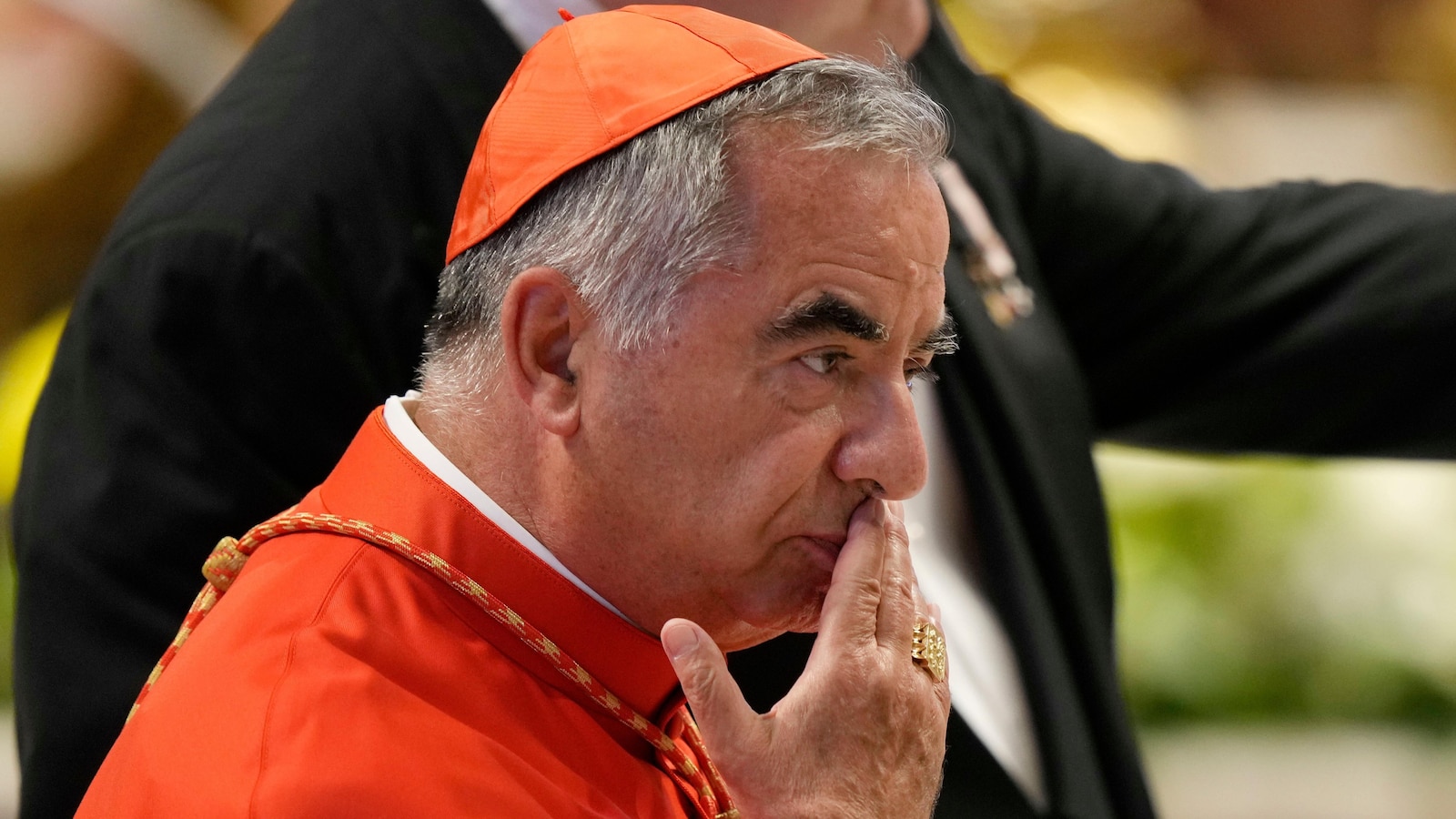
The Vatican’s most significant legal proceeding in recent history has hit some serious roadblocks that could completely change the game for everyone involved. What’s been dubbed the “trial of the century” centers on Cardinal Angelo Becciu, once one of the most influential figures in Vatican City, along with eight other defendants who were found guilty of various financial crimes back in 2023. The trial itself was a marathon affair that stretched across two years and captured international attention. Now, as the appeals process gets underway, two major developments have thrown everything into question and put prosecutors in a surprisingly weak position.
The first major blow came when the Vatican’s highest court, the Court of Cassation, made a stunning decision to completely dismiss the prosecutors’ appeal. This isn’t just a technicality—it’s a huge deal. What it means in practical terms is that the nine defendants can only see their situations improve from here. Their convictions might be reduced, their sentences lightened, or in the best-case scenario for them, their verdicts could be completely overturned. There’s no possibility of things getting worse for them, which is obviously not what prosecutors were hoping for. On the very same day this ruling came down, the Vatican’s top prosecutor, Alessandro Diddi, made the dramatic decision to step away from the case entirely. After spending months fighting against calls for his removal, he suddenly resigned rather than risk being forced out by the court. These two developments together represent a complete reversal of fortune that has left many observers wondering what will happen next in this already controversial case.
The WhatsApp Messages That Changed Everything
At the heart of the controversy surrounding prosecutor Diddi’s resignation is a collection of WhatsApp messages that have become something of a smoking gun in this case. These chat logs, which have now become infamous in Vatican legal circles, apparently document a years-long, coordinated effort happening behind closed doors to specifically target Cardinal Becciu. The content of these messages raises serious questions about the conduct of multiple parties involved in the investigation and prosecution, including Vatican police officers, Vatican prosecutors themselves, and—most explosively—even Pope Francis himself. It’s the kind of revelation that fundamentally undermines public confidence in the fairness and impartiality of legal proceedings.
Defense lawyers seized on these messages, arguing forcefully that they demonstrated Diddi couldn’t possibly be an impartial prosecutor. According to the defense teams, the chats showed that Diddi had handled both evidence and witnesses in ways that suggested he had already made up his mind about the outcome. They insisted he was fundamentally unfit to continue serving in his prosecutorial role. Diddi pushed back hard against these accusations, calling them “unfounded” and making bitter complaints to the cardinal judges on the Cassation court. Despite maintaining his innocence of any wrongdoing, he ultimately chose to remove himself from the case anyway, explaining that he wanted to prevent what he called “insinuations and falsehoods” about him from being used to damage the pursuit of truth and justice. The stakes couldn’t have been higher—if the Cassation court had actually ruled that Diddi’s role was incompatible with fair proceedings, the entire trial could have been declared a mistrial or thrown out completely as null and void. The appeals court has now ruled that the work Diddi did as prosecutor remains valid even though he’s no longer involved, but the whole episode has left a cloud hanging over the proceedings.
Following the Money: The London Property Deal at the Center of It All
So what exactly is this case actually about? When the original trial kicked off in 2021, the central focus was on a massive real estate deal involving Vatican money. The Holy See had invested a staggering 350 million euros (about $413 million in U.S. dollars) in a property located in London. According to prosecutors, this wasn’t just a bad investment—it was an elaborate scheme to defraud the Catholic Church. They alleged that various brokers and Vatican officials, including monsignors who should have been looking out for the Church’s interests, instead fleeced the Holy See out of tens of millions of euros through excessive fees and commissions paid to acquire the property. But the alleged wrongdoing didn’t stop there. Prosecutors also claimed that these same individuals then turned around and extorted an additional 15 million euros (roughly $16.5 million) from the Vatican to finally hand over control of the property that the Church had already paid for.
From this main investigation, two additional lines of inquiry emerged that particularly focused on Cardinal Becciu, who had been an extremely powerful figure in Vatican politics before his downfall. He was ultimately convicted of embezzlement and handed a sentence of five and a half years in prison—a stunning fall from grace for someone who had once wielded enormous influence. Eight other defendants were also convicted on various charges including embezzlement, abuse of office, fraud, and other financial crimes. However, the trial didn’t go entirely the prosecutors’ way. The tribunal actually acquitted all the defendants on many other counts, and importantly, rejected prosecutors’ overarching theory that there had been a grand conspiracy to defraud the Holy See. Instead, the judges convicted the defendants only on what prosecutors considered secondary charges, even though these were still serious crimes. Every single defendant has maintained their innocence throughout and filed appeals, while prosecutors also appealed because they were unhappy that their bigger conspiracy theory didn’t stick.
A Prosecutor’s Embarrassing Mistake
Prosecutor Diddi had viewed the appeals phase as a chance to essentially retry his original case and make the arguments he felt didn’t land the first time around. However, when he filed the prosecution’s appeal, he made what turned out to be a critical and frankly embarrassing error. Rather than crafting a specific appeals argument addressing the issues at hand, he simply attached his original request for convictions from the first trial. The appeals court wasn’t having it. They threw out the prosecution’s appeal on the grounds that it lacked the “specificity” required by law when filing an appeal. This wasn’t a minor technicality—it was a fundamental procedural mistake that any experienced prosecutor should have avoided.
When the case reached the Court of Cassation on January 9th, prosecutors might have hoped for some mercy or a second chance to fix their error. Instead, the high court refused to forgive this mistake and upheld the lower court’s decision to dismiss the prosecution’s appeal entirely. It was a humiliating setback that has fundamentally altered the landscape of the appeals process. Now the proceedings continue, but only on the various defense arguments, with prosecutors unable to present their case for why convictions should be strengthened or additional guilty verdicts added. The defense teams, meanwhile, are pushing forward with multiple lines of attack, including one particularly sensitive issue that goes straight to the top of the Catholic Church’s hierarchy.
The Pope’s Secret Decrees and Questions About a Fair Trial
Perhaps the most constitutionally troubling aspect of this entire case involves Pope Francis himself and his direct intervention in the investigation. Defense attorneys have argued from the beginning that their clients couldn’t possibly receive a fair trial in an absolute monarchy where one person—the pope—holds supreme power across all three branches of government: legislative, executive, and judicial. They point out that Francis actively used these extraordinary powers during the investigation in ways that directly benefited prosecutors. Specifically, between 2019 and 2020, during the early stages of the investigation, Francis signed four secret executive decrees that gave Vatican prosecutors incredibly broad powers that went far beyond what normal law would allow.
These decrees permitted the unchecked use of wiretapping without independent judicial oversight and explicitly gave prosecutors the right to deviate from existing laws—essentially making up the rules as they went along. Perhaps most troublingly, these laws were kept completely secret. They only came to light right before the trial began and were never officially published in any public way. The decrees provided no explanation for why they were necessary, no time frame for how long the surveillance could continue, and no oversight by an independent judge to prevent abuse. They were created specifically and exclusively for this particular investigation. Legal experts and scholars have pointed out that this secrecy and the ad hoc nature of these laws violated a fundamental principle of fair trials: the “equality of arms” between defense and prosecution. How can defendants mount a proper defense when they don’t even know what special powers prosecutors are using against them? Even some Vatican legal officials have privately admitted that Francis’s failure to publish these decrees was deeply problematic and potentially undermined the entire legal process.
Prosecutor Diddi defended the decrees, arguing that they actually provided unspecified “guarantees” for the suspects, though he never clearly explained what those guarantees were. The trial tribunal initially rejected defense motions arguing that the secret laws violated defendants’ fundamental rights to a fair trial. The judges issued a somewhat confusing decision, ruling that no violation of legal principles had occurred because, well, Francis had made the laws, and as pope, he has the authority to do so. This creates a strange legal paradox unique to Vatican City. Under canon law—the internal law of the Catholic Church—the pope cannot be judged by anyone except God himself. However, the pope also isn’t supposed to promulgate laws that violate divine law. This sets up a potential constitutional crisis if the appeals court ultimately finds that Francis’s decrees did violate the defendants’ fundamental rights. What happens then? Can a court rule that the pope did something wrong when canon law says the pope can’t be judged? Despite all these concerns and complications, the Vatican has consistently insisted that all defendants received a fair trial and that the proceedings have been conducted properly and justly, though many observers remain skeptical given the unusual circumstances surrounding the case.