


Hungary’s Youth Movement: A Generation Ready to Turn the Page on Orbán’s Era
Young Volunteers Challenge the Old Guard
In the quiet streets of a small Hungarian city near Lake Balaton, a group of twenty-something friends knocked on doors with a message of hope and change. These weren’t seasoned political operatives or party loyalists—they were ordinary young people who had grown up knowing only one political reality: Prime Minister Viktor Orbán’s Hungary. Now, they’re volunteering for the center-right Tisza party and its charismatic leader Péter Magyar, believing that after 16 years, it’s time for something different. Twenty-five-year-old student Florián Végh captured the sentiment perfectly when he said they’ve lived their entire lives in this system and simply want to experience what life could be like outside of it. For him and his university friends, the current system isn’t just outdated—it’s fundamentally broken. Another volunteer, 24-year-old Levente Koltai, pointed out a painful irony: Fidesz, the party that has dominated Hungarian politics for nearly two decades, originally stood for “Alliance of Young Democrats.” But according to Koltai, the party has betrayed every word in its name, transforming from young to old, from democratic to dictatorial, and from an alliance into what he describes as a circle of cronies benefiting from the status quo.
The Great Generational Divide
Hungary finds itself at a crossroads, split down generational lines in a way that could fundamentally reshape its political landscape in the upcoming April 12 elections. The numbers tell a stark story: according to a recent survey by the 21 Research Center, a staggering 65% of voters under 30 are throwing their support behind Tisza, while only 14% are sticking with Orbán. On the opposite end of the age spectrum, the picture reverses dramatically, with Fidesz commanding a 50% to 19% lead over Tisza among retirement-age Hungarians. This isn’t just a political preference—it represents a fundamental disagreement about Hungary’s direction and values. Andrea Szabó, a senior researcher at Eötvös Loránd University’s Institute for Political Science, describes what’s happening as nothing less than a changing of the guard, with “a new, active political generation beginning to unfold before our eyes.” She draws a compelling parallel: just as Orbán’s generation defined itself by fighting against Hungary’s Soviet-era socialist system in the 1980s and 1990s, today’s young people have spent a quarter-century living under what they increasingly view as another form of oppressive rule. The difference is that this time, it’s Orbán’s own regime they’re rebelling against, viewing it with the same skepticism and desire for change that Orbán himself once embodied as a young dissident.
Understanding Orbán’s Appeal to Older Voters
To understand why older Hungarians remain loyal to Orbán, you have to look at the tangible benefits his government has delivered to families and retirees. His administration has implemented policies that directly improve the lives of many older citizens and parents, including abolishing income tax for mothers with multiple children, providing state-backed loans to first-time homebuyers, and offering pension supplements to retirees. At a recent Orbán campaign rally, retiree Zsuzsanna Prépos explained her support simply: she’s “very happy” with the government’s pension policies and believes Fidesz genuinely “helps young people.” She contrasted today’s situation with her own youth, when she received no government assistance, arguing that young people today actually have access to significant support. Orbán’s government has also gained international attention for its self-described “Christian-national” and “illiberal” stance, distancing Hungary from its European Union partners while cultivating closer relationships with Russia and China. His opposition to immigration and curtailing of LGBTQ+ rights has made him an icon in the global far-right movement, attracting admirers who see him as a defender of traditional values in an increasingly progressive world. Yet despite these family-friendly policies and conservative credentials, Orbán has utterly failed to capture the hearts and minds of Hungary’s youth.
The Turning Point: Scandal and Awakening
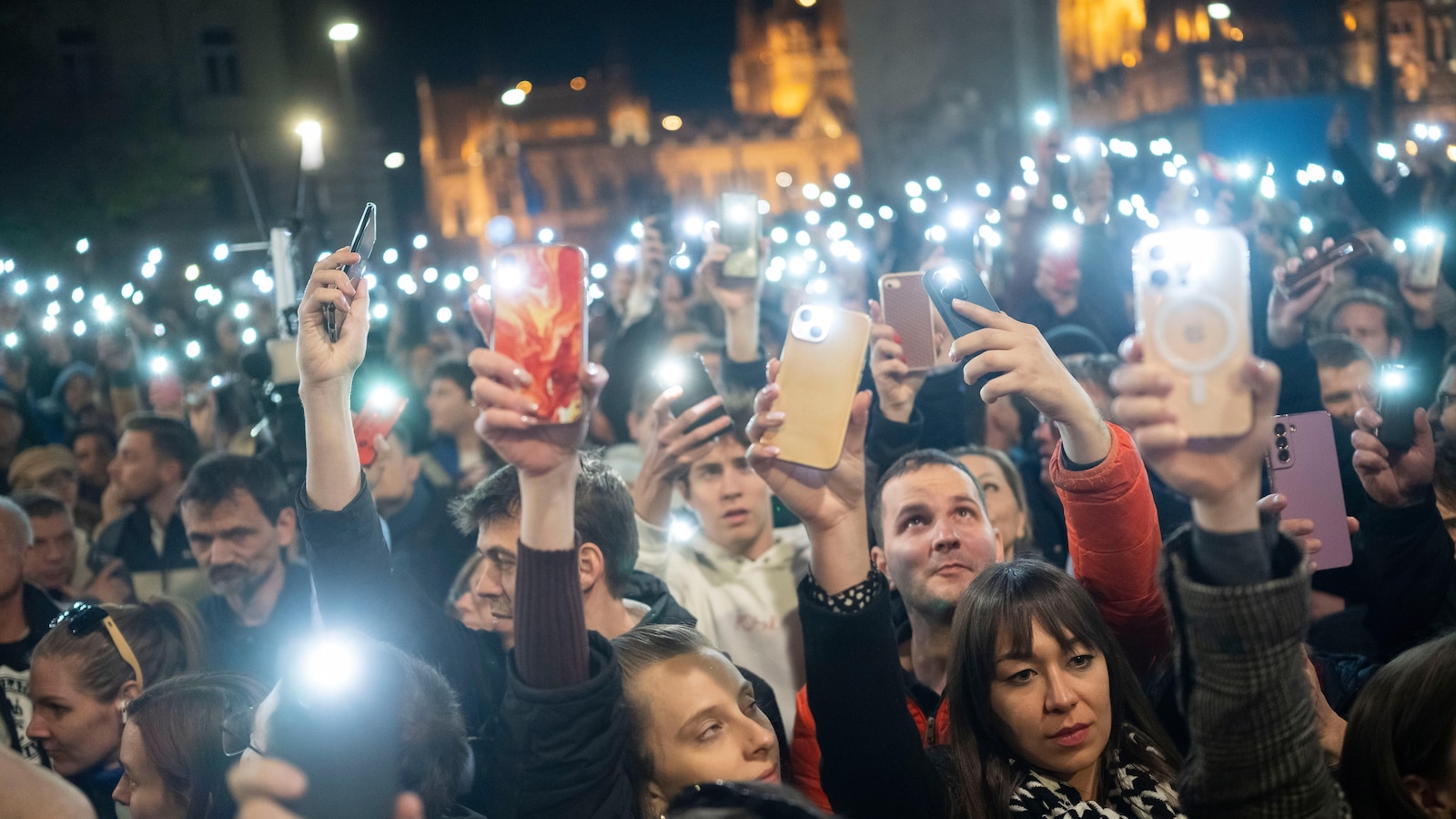
What finally broke through decades of political apathy among Hungarian youth was a scandal so shocking it couldn’t be ignored. In February 2024, it emerged that Hungary’s president—a close ally of Orbán—had granted a pardon to an accomplice in a child sexual abuse case. The revelation sent shockwaves through Hungarian society, leading to the resignation of both the president and the justice minister. But more importantly, it catalyzed something that had been building beneath the surface for years. Days after the scandal broke, some of Hungary’s most popular social media influencers organized a protest demanding political transformation. Tens of thousands of people, many of them young and politically active for the first time in their lives, flooded the streets. According to researcher Andrea Szabó, this moment “opened the door to politicization for a lot of young people” who had previously felt disconnected from the political process. It was in this climate of outrage and possibility that Péter Magyar, a 45-year-old lawyer, made his dramatic break with Fidesz and launched the Tisza party. Just three months later, Tisza captured an impressive 30% of the vote in European Parliament elections, signaling that Magyar had tapped into something real and powerful—a genuine hunger for change that had been waiting for the right moment and the right leader.
Why Young People Are Turning Away
While older Hungarians may appreciate the government’s family policies, young people see a bigger, more troubling picture. According to Szabó, young Hungarians possess what she calls a “very strong sense of justice” that clashes fundamentally with what they perceive as authoritarian power, entrenched corruption, and a general atmosphere of vulnerability and insecurity. Having spent their entire lives under Orbán’s rule—knowing no other system—they have a unique perspective on its failings. Unlike older generations who remember different governments and can make comparisons, these young people only know life under Orbán, and they’re convinced there must be something better. The internet generation has advantages their parents didn’t have. They can easily access information from multiple sources, breaking through government-controlled media narratives. More importantly, they can travel to neighboring countries and see with their own eyes what functioning democracies look like. As Florián Végh, the Tisza volunteer, put it: “In Austria, you see a much calmer, more peaceful, more educated society with better roads and better health care. You cross the border and see that you have drifted into a developed European country.” This exposure creates a painful contrast that no amount of government propaganda can erase. Magyar’s campaign has seized on these frustrations, promising to end Hungary’s drift toward Russia, restore the country’s Western orientation, and revive the stagnating economy by recovering billions in EU funds currently blocked over rule-of-law and corruption concerns. For young people who feel their country has been left behind while its neighbors prosper, this message resonates powerfully.
The Battle for Hungary’s Future
As the April 12 election approaches, Orbán has recognized the threat posed by youth opposition and has tried alternating between scolding and pleading. At a rally last week, he delivered what might be seen as a desperate appeal: “Young people, wake up! These are not times for taking risks, experimenting or trying new things. Believe me, today only Fidesz and my humble self can provide this country with security.” But his message seems to be falling on deaf ears among the very demographic he’s trying to reach. The election outcome remains uncertain despite Tisza’s lead in the polls. Orbán maintains strong support among older voters and in much of the countryside, where his message of stability and traditional values still resonates. The electoral system itself, which critics argue has been manipulated to favor Fidesz, presents another significant hurdle for any challenger. Yet something fundamental has shifted in Hungarian politics. At a recent Tisza rally in Budapest that drew upward of 100,000 people, supporter Dorina Csobán described how the election had become “pretty divisive in my family for the older people, because we younger people are saying clearly that there must be change.” This generational split within families mirrors the broader divide across Hungarian society. Whether Tisza wins or loses on April 12, the emergence of a politically engaged young generation represents a profound transformation. After two decades of dominance, Orbán faces opponents who weren’t inspired by memories of communist Hungary or dreams of Western integration—they’re simply young people who’ve grown up in his system, compared it to their neighbors’, and decided they deserve better. That might be the most powerful opposition Orbán has ever faced.