


Historic Congressional Testimony: Bill Clinton Appears Before House Committee in Epstein Investigation
A Landmark Moment in Presidential Accountability
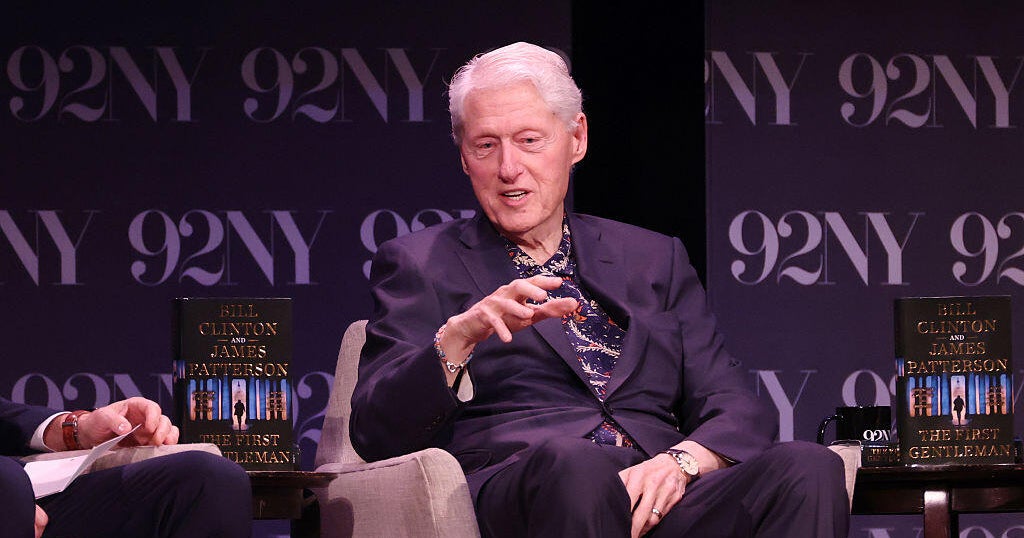
In an unprecedented turn of events that marks a significant shift in how Congress exercises its oversight powers, former President Bill Clinton became the first ex-president in American history to be compelled to testify before Congress under subpoena. The closed-door session took place in New York on Friday as part of the House Oversight Committee’s investigation into the activities of convicted sex offender Jeffrey Epstein. This historic moment represents a major victory for Representative James Comer, the Kentucky Republican who chairs the committee, following a prolonged legal and political battle with both Bill and Hillary Clinton. The couple had initially resisted the congressional demand to appear, but ultimately conceded after facing the very real prospect of being held in criminal contempt of Congress through a bipartisan committee vote. This development underscores the seriousness with which the committee approached its investigation and the lengths to which it was willing to go to secure testimony from high-profile figures connected, however tangentially, to Epstein’s criminal enterprise.
The Clintons’ Resistance and Eventual Cooperation
The path to Bill Clinton’s testimony was neither smooth nor swift. For months, both Clintons fought against the committee’s efforts to compel their testimony, utilizing every available legal avenue to resist the subpoenas. However, the turning point came when the House Oversight Committee, in a demonstration of rare bipartisan unity, voted to recommend holding the former first couple in criminal contempt of Congress for their refusal to cooperate. Facing potential legal consequences and the political fallout from such a designation, the Clintons relented. Hillary Clinton appeared before the committee first, spending hours answering questions on Thursday, one day before her husband’s scheduled appearance. According to Chairman Comer, Hillary Clinton’s testimony was notable for how frequently she deflected questions about certain matters, suggesting instead that those particular inquiries should be directed toward her husband. Comer reported that she invoked this redirection more than a dozen times during her deposition, essentially pointing investigators toward Bill Clinton for answers about the nature and extent of his relationship with Epstein. Despite this pattern of deflection on specific questions, both Republicans and Democrats on the committee confirmed that Hillary Clinton was cooperative overall, answering all questions posed to her during the lengthy session.
Clinton’s Connection to Epstein and His Defense
The relationship between Bill Clinton and Jeffrey Epstein has been a subject of public speculation and scrutiny for years, particularly as more information about Epstein’s crimes has come to light. Photographs showing the former president with the disgraced financier have surfaced in recent months, and it’s been documented that Clinton took several trips on Epstein’s private aircraft decades ago. However, it’s crucial to note that Clinton has not been accused of any criminal wrongdoing in connection with Epstein’s activities. In a sworn declaration submitted to the committee last month, Clinton provided his account of the relationship, explaining that between 2002 and 2003, Epstein made his private plane available to the former president, his staff, and his Secret Service detail to support the philanthropic work of the Clinton Foundation. Clinton firmly denied ever visiting Epstein’s private island in the U.S. Virgin Islands, the location where many of the late financier’s alleged crimes took place. Furthermore, he stated that he had not been in contact with Epstein for more than a decade before Epstein’s arrest in 2019. Regarding their initial acquaintance, Clinton suggested that Epstein may have attended any number of the hundreds of White House events and receptions held during his eight-year presidency, where tens of thousands of people were photographed with him, but he claimed not to recall any specific encounters or interactions with Epstein during his time in office.
Questions About Ghislaine Maxwell and Knowledge of Crimes
Another significant aspect of Clinton’s declaration concerned Ghislaine Maxwell, Epstein’s longtime associate who was convicted of sex trafficking and other crimes related to Epstein’s operation. Clinton stated that he could not recall when he first met Maxwell or the nature of his interactions with her, though he noted that she later became involved in a relationship with a mutual friend of his. Most importantly, Clinton emphatically denied having any knowledge of the criminal activities being perpetrated by either Epstein or Maxwell. His declaration stated clearly: “To be clear, I had no idea of Mr. Epstein’s or Ms. Maxwell’s criminal activities. And, irrespective of any intent either may have ever had, I did not take any action for the purpose of helping them to avoid any type of scrutiny.” This statement addresses not only the question of knowledge but also preemptively counters any suggestion that Clinton might have used his influence to protect Epstein or Maxwell from investigation. During her own testimony, Hillary Clinton echoed these sentiments, reiterating that she had no knowledge of the crimes committed by Epstein or Maxwell. When reporters asked her after the deposition whether she was confident that her husband similarly lacked knowledge of Epstein’s criminal enterprise, she responded with a simple but definitive “I am.” She went on to explain the timeline, noting that Bill Clinton’s connection with Epstein had ended several years before any information about Epstein’s criminal activities became public knowledge.
Calls for President Trump’s Testimony and New Precedents
The decision to compel a former president to testify has opened what some see as a Pandora’s box of congressional oversight. Representative Robert Garcia of California, the ranking Democrat on the panel, explicitly stated that the committee had “now set a new precedent about talking to presidents and former presidents.” Seizing on this new standard, Garcia immediately demanded that current President Donald Trump be asked to appear before the committee to testify about his own connections to Jeffrey Epstein. This demand is not without foundation—Trump’s name appears thousands of times in the Epstein files that were released by the Justice Department, though Trump, like Clinton, has denied any wrongdoing. However, Chairman Comer dismissed the equivalence, arguing that Trump has already been sufficiently transparent about his relationship with Epstein by answering “hundreds, if not thousands of questions” from the press on the matter and by supporting the release of documents related to the case. Democrats were quick to point out a crucial distinction: answers given to the press are not provided under oath, whereas testimony before Congress carries the weight of perjury laws. The president had initially called the effort to release the Epstein files a “hoax,” but eventually supported their public disclosure after Democrats and some Republicans forced a vote compelling the Justice Department to make them available.
Historical Context and Future Implications
While Bill Clinton’s compelled testimony represents a first in American history, it’s worth noting that former presidents have appeared before Congress in the past, though always on a voluntary basis. President Gerald Ford testified before Congress in 1983, Harry Truman did so in 1955, and William Howard Taft appeared before congressional committees approximately a dozen times. Several sitting presidents have also voluntarily answered questions from congressional committees throughout history. What makes Clinton’s appearance different and significant is the element of compulsion—he was subpoenaed and ultimately appeared under the threat of being held in contempt of Congress. This sets a new precedent that future Congresses may invoke when seeking testimony from former presidents, potentially altering the balance of power between the legislative and executive branches. The long-term implications of this precedent remain to be seen, but it undoubtedly expands Congress’s ability to conduct oversight of both current and former presidents. As the investigation into Epstein’s network of connections continues, and as more information potentially comes to light, this case may well be remembered not just for what it revealed about Epstein’s associations with powerful figures, but for how it fundamentally changed the relationship between Congress and the presidency, even after a president has left office.