



The Department of Education’s Building Shift: What It Means for Federal Workers and American Education
A Major Relocation Signals Further Downsizing
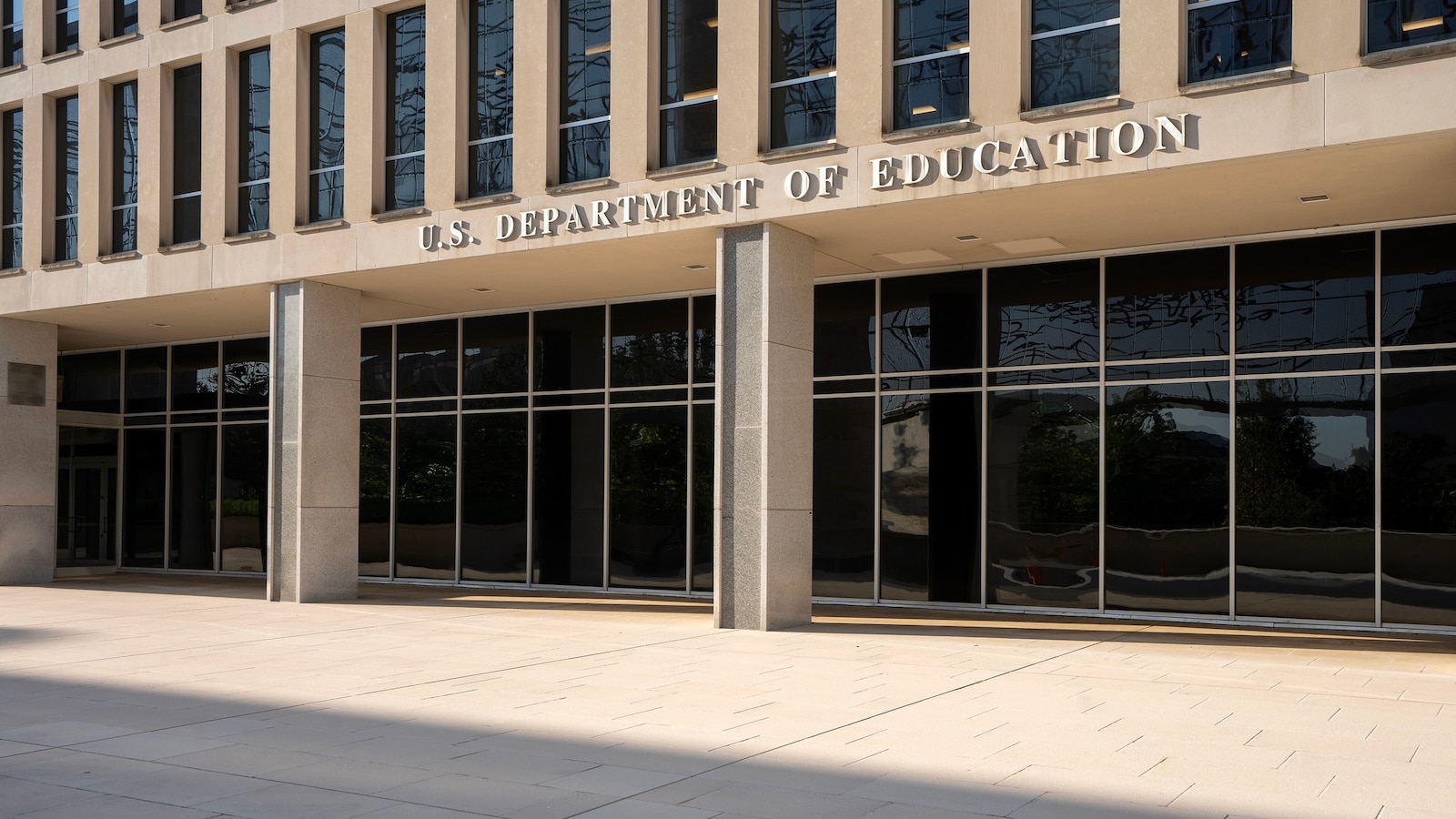
The Department of Education announced a significant reshuffling this Thursday that will see hundreds of its employees relocated from their longtime headquarters to a different federal building in Washington, D.C. This move, framed as a cost-saving measure by the administration, will free up space for Department of Energy employees to occupy the Education Department’s decades-old building. According to the Trump Administration’s fact sheet accompanying the announcement, the federal education bureaucracy has been reduced so substantially that the department no longer needs its historic headquarters. The agency emphasized that taxpayers will save nearly $5 million annually in operating costs, as the main building currently sits 70% vacant. While the Education Department officially stated there would be no immediate impact on staff, employees received notification of the relocation only moments before the news became public, leaving many feeling blindsided and uncertain about their professional futures.
Employees Express Anxiety and Uncertainty
Behind the official statements of efficiency and cost savings, current Education Department employees paint a very different picture—one of anxiety, confusion, and demoralization. Staff members who spoke with ABC News described the move as puzzling and disruptive, expressing concerns that this is yet another tactic to keep them in a constant state of uncertainty. “Employees see this as nothing more than continued efforts to keep us afraid and uncertain—always on alert, waiting for the next shoe to drop,” one Education Department employee explained. The sentiment reflects a workplace environment where fear and instability have become the norm rather than the exception. Another employee shared that they’re under considerable stress as “the administration is attempting to eliminate the department through any means possible.” These testimonies reveal a workforce struggling not just with logistical changes but with the psychological toll of working in an agency that appears to be systematically dismantled. For federal employees who dedicated their careers to public service in education, the message feels clear: their work is no longer valued, and their positions may not be secure for much longer.
The Political Battle Over Education’s Future
Education Secretary Linda McMahon framed the building swap as a beneficial arrangement for all parties involved, stating that Energy Department staffers would benefit “far more” from the space than the Department of Education currently does. In her official statement, McMahon described the move as “an important step in our efforts to forge brighter futures for our nation’s students, honor the taxpayers who invest in their promise, and support the civil servants who keep this vital work moving forward.” However, critics see this language as euphemistic cover for a more aggressive agenda. House Education and Workforce Committee Ranking Member Bobby Scott issued a sharp rebuke, calling the announcement an overt action by McMahon to dismantle her own agency. “Leaving the Lyndon B. Johnson headquarters building does not cut bureaucracy—it rearranges it,” Scott wrote in his statement. He argued that closing the Department’s physical building represents more than symbolism; it reflects a broader effort to reduce the federal government’s role in ensuring equal access to quality education for all Americans. The debate underscores fundamental disagreements about the federal government’s responsibility in education policy and whether downsizing federal involvement genuinely serves students or simply shifts burdens elsewhere.
Union Leaders Sound the Alarm
Rachel Gittleman, president of AFGE Local 252, the union representing Education Department employees, strongly condemned the decision to move hundreds of workers from what she described as a “recently renovated” headquarters building. In her statement, Gittleman drew attention to the symbolism of abandoning a building named after President Lyndon B. Johnson, who championed federal involvement in education through landmark legislation like the Elementary and Secondary Education Act. “The message the Secretary’s announcement sends to our staff and the American public is clear—education is next on the chopping block,” Gittleman warned. Her statement reflects broader concerns among labor advocates and education supporters that these incremental changes represent a coordinated strategy to gradually eliminate the Department of Education entirely. The employees will relocate in August to a building just steps away that previously housed the U.S. Agency for International Development, which itself has faced similar downsizing pressures. For union leaders and employees alike, the pattern is unmistakable: federal agencies dedicated to education and international development are being systematically reduced, and physical relocations serve as visible markers of this larger transformation.
McMahon’s Track Record of Dramatic Downsizing
President Donald Trump specifically selected Linda McMahon for the Education Secretary position with an explicit mandate: to put herself out of a job by shuttering the Department completely. In her first year leading the agency, McMahon has aggressively pursued this goal through a series of dramatic cuts and restructuring efforts. According to a Pew Research Center analysis, she reduced the department’s workforce by over 40% in 2025—from approximately 4,000 employees down to just 2,100. This makes the Education Department, along with USAID, one of the two federal agencies that received the steepest percentage of job cuts last year. Beyond personnel reductions, McMahon has systematically offloaded the department’s core responsibilities to other federal agencies through Interagency Agreements, effectively hollowing out the department’s functions even as its formal existence continues. Perhaps most significantly, in March she initiated a multi-phase process to transfer the department’s nearly $1.7 trillion student loan portfolio to the Treasury Department, stripping away one of the Education Department’s most substantial operational responsibilities. These actions represent not mere budget trimming but a fundamental reimagining of the federal government’s role in American education.
The Broader Implications for American Education
Established in 1980, the Department of Education is the smallest Cabinet-level agency, but its impact on American education policy and implementation has been substantial. Federal education programs touch millions of students through financial aid, civil rights enforcement, research funding, and support for disadvantaged populations. The current downsizing raises critical questions about what happens to these functions when the coordinating federal agency is systematically dismantled. Supporters of the changes argue that education is fundamentally a state and local responsibility, and that reducing federal bureaucracy will eliminate wasteful spending while empowering communities to make their own educational decisions. Critics counter that without federal oversight and coordination, educational inequalities will worsen, particularly for vulnerable populations who rely on federal protections and funding. The debate extends beyond administrative efficiency to fundamental questions about equality, opportunity, and the social compact. As the Education Department continues to wind down its operations, relocate its workforce, and transfer its responsibilities, Americans are witnessing a real-time experiment in whether a decentralized approach to education policy can maintain the progress achieved through federal involvement. The outcomes of this transformation will likely shape American education for generations, determining whether reduced federal presence leads to innovation and empowerment at the local level or to widening gaps in educational quality and access across different communities and demographic groups.