


Federal Government Admits Error in Justifying Immigration Court Arrests
Justice Department Acknowledges Misuse of ICE Memo
In a significant development that has raised serious questions about immigration enforcement practices, the Department of Justice has admitted to making a substantial error in how it justified arresting immigrants at immigration courts across the country. U.S. Attorney Jay Clayton for the Southern District of New York filed a court document acknowledging that federal prosecutors had been incorrectly citing an internal Immigration and Customs Enforcement memo to defend a controversial policy that has led to widespread courthouse arrests. The admission came as part of an ongoing federal lawsuit in New York, where civil rights organizations have been challenging the practice of detaining migrants immediately after their immigration court proceedings. In his filing, Clayton expressed regret for what he described as a “material mistaken statement of fact” that the government had repeatedly made to both the court and the plaintiffs challenging the policy. This revelation has cast doubt on the legal foundation that federal authorities had been using to justify their enforcement actions at immigration courts nationwide.
The Confusion Over ICE Guidance and Its Application
The heart of the government’s mistake lies in how officials interpreted and applied a document known as the “2025 ICE Guidance.” Federal prosecutors had been citing this memo as authorization for conducting civil immigration enforcement operations at immigration courts, but ICE officials recently informed the Department of Justice that this interpretation was fundamentally incorrect. According to the corrected understanding, the guidance “does not and has never applied” to civil immigration enforcement actions taking place in or near immigration courts. The memo does apply to criminal immigration enforcement actions inside courthouses, but more importantly, it was actually intended to govern civil immigration law enforcement at non-immigration courts at the federal, state, and local levels. This distinction is crucial because immigration courts operate under a different legal framework than criminal or civil courts, and the protections and procedures that apply in these specialized venues are specifically designed to ensure that migrants can fully exercise their due process rights without fear of immediate detention.
What Happens at Immigration Courts and Why These Arrests Matter
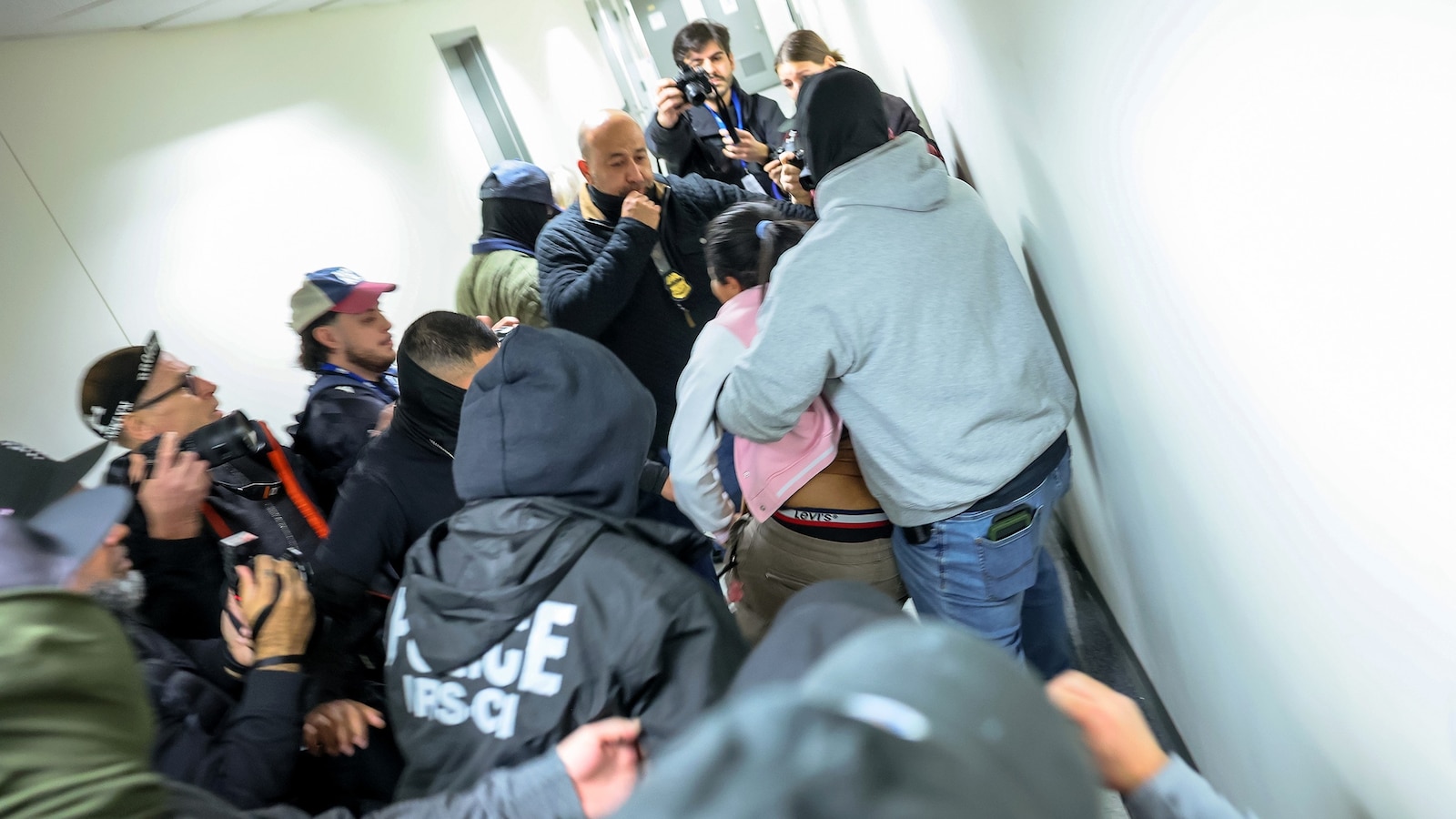
To understand why these arrests have become so controversial, it’s important to know what actually happens during immigration court proceedings. Deportation hearings in immigration court are legal proceedings initiated by the Department of Homeland Security where an immigration judge determines whether someone should be removed from the United States. These proceedings are civil in nature, not criminal, which means they operate under different rules and protections. In many cases, immigration judges will dismiss cases to allow individuals to pursue other forms of legal relief, such as seeking asylum protection or applying for other immigration benefits that might allow them to remain in the country lawfully. Immigration attorneys and advocates have reported a disturbing pattern where federal enforcement officers have been positioning themselves inside immigration court buildings, waiting for migrants to complete their hearings, and then arresting them immediately after their cases are dismissed—even when the dismissal is meant to give them an opportunity to seek protection through other legal channels. Several videos capturing these arrests have circulated widely on social media, showing the distress and confusion of migrants who believed they were attending court proceedings that would help resolve their immigration status, only to be taken into custody as they left the courtroom.
The Impact on Immigrants’ Rights and Access to Justice
The practice of arresting migrants at immigration courts has profound implications for the constitutional right to due process and the fundamental principle that everyone should have meaningful access to the courts without fear of immediate detention. Priscilla Olivarez, an attorney with the Immigrant Legal Resource Center in San Antonio, characterized the enforcement pattern as “a coordinated campaign of fear-mongering” designed to intimidate immigrant communities and undermine their ability to exercise their legal rights. The civil rights groups challenging this policy—including the New York Civil Liberties Union and the ACLU—argued in their response to the government’s filing that these arrests have effectively “deprived” immigrants of their right to seek relief from removal. They emphasized that the consequences have been “far-reaching,” noting that in the months since the court initially denied their request for preliminary relief based on the government’s now-corrected representation about the ICE guidance, federal agents have continued making arrests at immigration court hearings. Many of those detained have been transported to facilities hundreds of miles away from their communities, families, and legal representatives, making it even more difficult for them to pursue their cases and access the legal assistance they need.
Government’s Defense and Continued Enforcement Policy
Despite acknowledging the error in how they cited the ICE guidance, government officials have made it clear that they intend to continue the practice of arresting migrants at immigration courts. A Department of Homeland Security spokesperson issued a statement asserting that “there is no change in policy” and that federal authorities “will continue to arrest illegal aliens at immigration courts following their proceedings.” The spokesperson characterized the practice as simple common sense, arguing that it makes logical sense to take people into custody after their removal proceedings have been completed. The statement also emphasized that “nothing prohibits arresting a lawbreaker where you find them,” framing the issue as a straightforward matter of law enforcement rather than one involving complex questions about due process rights and access to justice. This position suggests that while the government has admitted to misrepresenting the legal basis for the arrests, it believes it has other legal authority to continue the practice and sees no problem with conducting enforcement operations in and around immigration courts, despite the chilling effect this may have on migrants’ willingness to appear for their hearings and fully participate in legal proceedings.
Broader Implications for Immigration Enforcement and the Courts
This admission by the Department of Justice raises troubling questions about government transparency, the protection of constitutional rights, and the relationship between immigration enforcement and the court system. The fact that federal prosecutors repeatedly cited guidance that didn’t actually apply to the situations they were defending suggests either a significant breakdown in communication between agencies or a problematic approach to legal arguments in cases involving immigrant rights. The ongoing legal challenge will likely force courts to grapple with fundamental questions about whether immigration courts can function properly as forums for due process when the people who appear there face immediate arrest, regardless of the outcome of their hearings. Civil rights advocates argue that this enforcement approach transforms immigration courts from venues where migrants can seek justice into traps that effectively punish people for exercising their legal right to have their cases heard. As this case continues to unfold, it will have important implications not just for the specific individuals affected by courthouse arrests, but for the broader question of how the United States balances immigration enforcement priorities with the constitutional principles of due process and equal access to justice that are supposed to apply to everyone on American soil, regardless of their immigration status.