


The Battle Over Bones: How Archaeology Became a Weapon in the Israeli-Palestinian Conflict
Ancient Paths Through Modern Battlegrounds
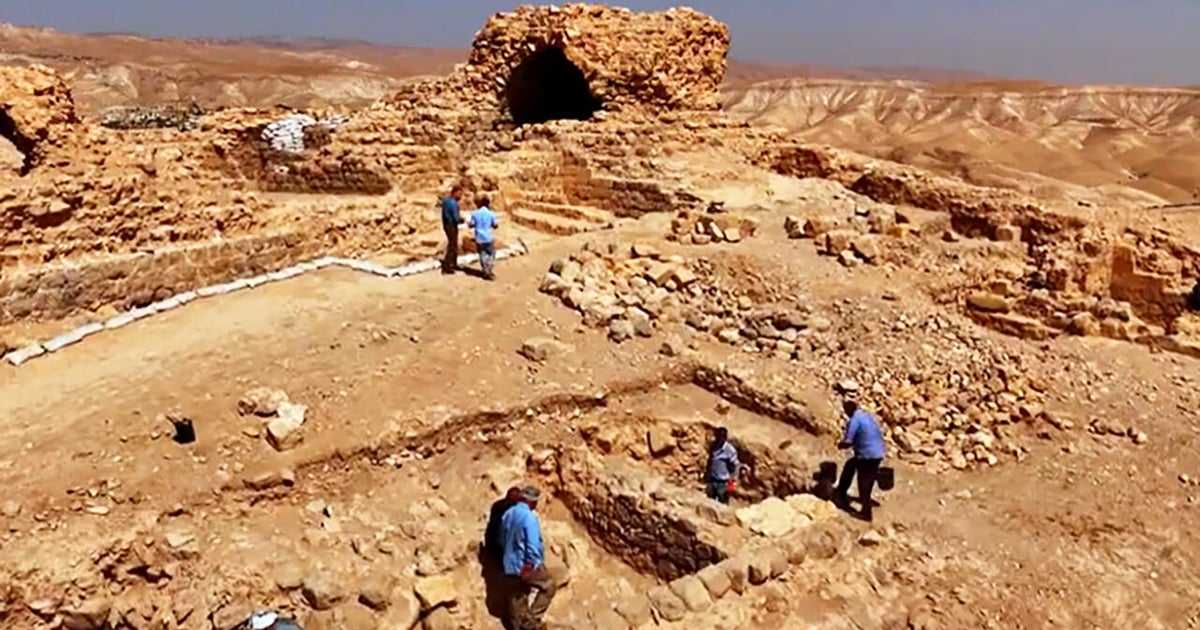
Deep in the Judean desert, archaeologists are carefully brushing away centuries of dust and sand, uncovering remnants of civilizations long gone. At a site called Tala’at Ad-Dam, they’re excavating an ancient pilgrimage route to Jerusalem—one that, according to tradition, Jesus’ parents once walked. This land, historically known as Judea after the Jewish people who inhabited it, has been conquered and reconquered by empires of different faiths over millennia. Today, it’s just one of at least 5,000 archaeological sites scattered across what most people call the West Bank, though Israelis often refer to it by its Biblical name, Judea and Samaria, while the United Nations designates it as occupied Palestinian territory. These different names for the same piece of earth hint at the deeper conflict that transforms every archaeological dig into a potential flashpoint.
Eyal Freiman, who serves as deputy staff officer for archaeology in Israel’s Civil Administration of Judea and Samaria, understands better than most how complicated his job has become. “I don’t act by political views,” he insists, standing among the ruins his team is carefully excavating. “If we weren’t excavating this site, it would probably be half-buried.” When pressed about whether his very presence—an Israeli archaeologist working on what is considered Palestinian land—is inherently political, Freiman frames his role in purely professional terms: “I’m just an employee of a civil administration. My job is to protect, preserve, and make approachable all the archaeological sites.” But his answer immediately raises another question that cuts to the heart of the conflict: approachable for whom?
When Digging Becomes a Political Statement
That question is exactly what concerns Talya Ezrahi, who works with Emek Shaveh, a left-wing Israeli archaeology group. According to Ezrahi, archaeology in this region has been transformed from a scientific pursuit into something far more troubling—a tool for territorial claims. “Archaeology has become a way of proving that we were here,” she explains. “So, whenever we look in the ground, we’re always hoping to find something that has some indication of Jewish life in the land of Israel”—essentially, she argues, to establish the claim “we were here first.” In Ezrahi’s view, archaeology has been deliberately weaponized to place certain lands off-limits to Palestinians, “in the service of enhancing and entrenching settlements and claiming more and more lands that were once Palestinian lands.”
The transformation of the site at Nebi Samuel illustrates her point powerfully. This location, where the prophet Samuel is believed to have been buried a thousand years before Christ, was once home to a Palestinian village. That village was systematically dismantled to create what has now become a tourist destination. Eid Barakat was one of those displaced when his house was demolished. Since 1971, he’s been living in temporary housing, claiming he cannot obtain the building permit necessary to build a permanent home. Meanwhile, Israel has allocated nearly $100 million partly to develop archaeological and tourism sites throughout the West Bank. When asked whether it’s positive that the land where Barakat once lived has been excavated, Ezrahi acknowledges the site’s beauty but points out what’s missing: “At the same time, there is a very important chapter of the site that is missing, and that is the story of the Palestinian village that lived here.”
The Price of Preservation
At the West Bank town of Sebastia, once the glorious capital city of the ancient Kingdom of Israel, Israeli archaeologist Adi Shragai walks among ruins that span thousands of years. “So many parts of history were completely erased just because someone decided to come and build on top of it,” she observes. Shragai works with an Israeli archaeology group called Preserving the Eternal, which operates in the West Bank with the stated mission of protecting humanity’s shared heritage. She points out that “for 100 years, there hasn’t been proper excavations in this site, [or] academic research.” Among the sites her organization has identified for preservation is an ancient theater, its stone seats weathered by more than two thousand years of wind and rain.
But the work comes with complications that are impossible to ignore. To reach the excavation site, the Israeli team had to drive off-road around the Palestinian town because tensions have reached a point where simply driving through is considered too dangerous. When confronted with the accusation that such excavations by Israelis essentially amount to a land grab on the West Bank, Shragai responds by framing her work in terms of preservation urgency: “My main mission is to have these sites safe, protected and preserved. If it were to be done by the Palestinian Authority, fine. But unfortunately, they don’t do that.”
Zaid Azhari, a Palestinian whose family has lived in Sebastia for at least twenty generations, sees things very differently. He makes his living giving tours of these very same sites, including the ancient theater. As a Palestinian, he says he’s prohibited from approaching the sites when Israeli archaeologists are working there. “The Israelis are not allowing us to work inside this site,” he explains. “If you start working here, you will see the drones above you. The soldiers will come. The settlers will come.” In November, Israel issued a land expropriation order to seize control of more than 300 acres of Sebastia. Azhari argues this move would cut the town off from their heritage, their farmland, and a major portion of their economy. “It’s just about controlling land, stealing land,” he says bluntly. When told that Israelis claim this is purely about archaeology and not politics, Azhari’s response is immediate: “This is totally political. We protect our culture and our ruins since thousands of years.”
The Story We Tell Ourselves
Rafi Greenberg, a professor of archaeology at Tel Aviv University and co-founder of Emek Shaveh, entered his field with certain idealistic assumptions. “I thought that archeology was going to be only about facts,” he recalls. But his years of experience taught him something different: “The finds themselves are not actually in the past, they’re in the present.” He remembers his early days as a student studying artifacts, suddenly realizing they were “on our table, they’re looking at us. We’re looking at them. And those pieces of evidence don’t add up to anything unless we make them add up to something.” Archaeology, Greenberg came to understand, is ultimately about storytelling—and who gets to tell that story matters enormously.
This dynamic is on full display at the City of David, where Israeli archaeologists have determined that Israel’s most powerful king built his capital a thousand years before Christ. Greenberg was excavating there when CBS correspondent Bob Simon visited in 1980, reporting that the United Nations had condemned Israeli archaeologists for digging in what the U.N. designated as Occupied Territory. Today, the City of David has been transformed into a national park complete with modern amenities, including a zip-line. “So, that became sort of a blueprint,” Greenberg observes—a blueprint which he argues functions partly as a “settler project” and provides a roadmap for how other archaeological sites might be developed. In the neighboring area of Silwan, dozens of Palestinian families have been displaced or face eviction proceedings, though Israeli authorities maintain they only demolish structures lacking proper permits and only after exhausting all legal proceedings. According to Greenberg, “They’re using the antiquities and the control of antiquities to connect different points within that part of Jerusalem, to prevent Palestinians from expanding their footprint. And their eventual aim is to drive them out.”
Official Narratives and Forgotten Voices
To understand the official Israeli government perspective, it’s instructive to listen to Israel’s Minister of Heritage, Amichai Eliyahu, who represents a far-right political faction. At the City of David, he speaks with reverence about the significance of the site: “We are essentially stepping on the story that the entire Bible is based on.” Deep in the old city aqueducts, he produces what he calls a “magical” ring from his jacket pocket—magical, he explains, “because it has been waiting in the ground for 2,000 years.” The ring was discovered on Mount Gerizim in the West Bank, engraved in Hebrew with Judaism’s holiest prayer, the shema. “If people ask, is this land ours? Here is the simplest and most moving proof,” he declares. When asked about the story of the Palestinians, including those who once lived on these very sites, the minister’s response is stark: “According to history, there was no Palestinian people. We don’t know who the Palestinian king was. It’s a people that was invented 60 years ago.”
This denial of Palestinian historical presence finds its mirror image back in Sebastia, where Zaid Azhari shows visitors a plaque that makes no mention that Sebastia once served as the capital city of the Kingdom of Israel. When confronted about what appears to be an erasure of Jewish history from the site, Azhari responds carefully, noting that the period in question mentions Herod, the Roman leader, and the Canaanites, “but there is missing the Israelites.” He argues against categorizing the city as exclusively Jewish: “To say this is a Jewish kingdom or a Jewish city, it’s not really that correct. This is my heritage. This is not the Zionist history or culture, this is mine.” That phrase—”this is mine”—echoes on both sides of the conflict, each claiming ownership of the same ancient stones. When Minister Eliyahu is told about Emek Shaveh’s contention that Israeli control of archaeological sites in the West Bank functions as a land claim, he responds with a challenge: “Does Emek Shaveh agree that these historical sites belong to the history of the Jewish people? If the answer is yes, then we must preserve these sites. And if the answer is no, then let them prove it belongs to the Palestinian people. For now, there is no proof.” To Professor Greenberg, this attitude represents “another way of weaponizing. That is, you attach more importance to certain kind of heritage, and less importance to other kinds of heritage.”
The historical roots of this archaeological nationalism run deep. When Israel was founded in 1948, first Prime Minister Ben Gurion spoke eloquently about archaeology’s importance to the newly formed state. As Greenberg explains, “Every nation needs a unifying myth, something that will bring everyone together to relate to one story that is their story.” Yet Greenberg insists that despite efforts to force archaeology into a single national narrative, the reality uncovered by careful excavation usually tells a story of shared, layered history—multiple civilizations building upon the ruins of those who came before. Back at the pilgrimage route excavation, Eyal Freiman stands among the evidence of this complexity: “We have the Jewish culture, we have the Christian culture, we have the Muslim cultures. It is all combined. Sites that started as one and ended as another. Sometimes it’s not as black-and-white as you see.” Rather, these discoveries exist in shades of dusty, sandy grey—part of a continuum that offers tantalizing glimpses of another time, inevitably viewed through the lens of today’s conflicts, hopes, and competing claims to belonging.