



The Captivating Saga of Germany’s Stranded Humpback Whale
A Nation Watches as Rescue Efforts Unfold
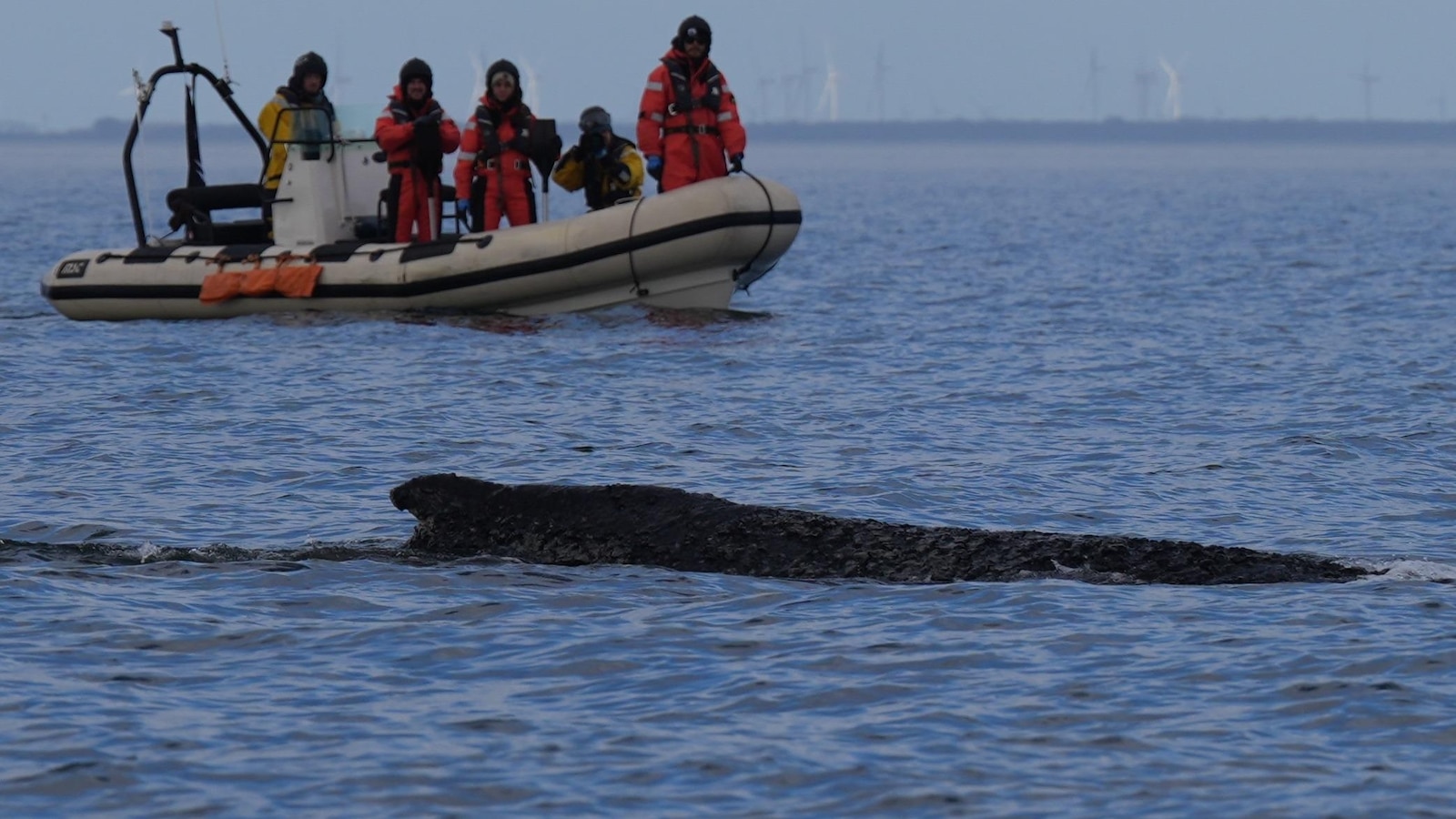
Germany found itself united in concern this week as a magnificent humpback whale became unexpectedly trapped in the shallow waters of the Baltic Sea, far from its natural Atlantic Ocean habitat. The enormous marine mammal, measuring between 12 and 15 meters (approximately 39 to 49 feet) in length, first became stranded on a sandbank near Timmendorfer Strand beach, a popular Baltic Sea resort. What followed was a remarkable display of human compassion and determination that captured the hearts of an entire nation. The rescue efforts became something of a national event, with major media outlets sending out breaking news alerts for every development and broadcasting live footage from the beach. Germans across the country found themselves checking their phones constantly for updates, exchanging text messages about the whale’s condition, and discussing rescue strategies with friends and family. The story transcended typical news coverage, becoming a shared experience that brought people together in hope and concern for this magnificent creature that had wandered so far from home.
Innovative Rescue Attempts and Initial Success
The rescue operation proved to be extraordinarily complex and required creative problem-solving from multiple agencies working together. Initial attempts to guide the distressed whale back toward deeper water involved deploying coast guard vessels and fire department boats to create large artificial waves, hoping the surging water would encourage the animal to swim in the right direction. However, these early efforts proved unsuccessful, as the confused whale seemed unable or unwilling to navigate its way out of the shallow coastal waters. Faced with this setback, rescue teams devised a more dramatic solution: they brought in an excavator to literally dig an escape channel through the sandbank where the whale had become trapped. This engineering feat represented a last-ditch effort to give the struggling mammal a clear path to freedom. On Thursday, workers carefully carved out the underwater passage, and their patience was finally rewarded early Friday morning when the exhausted whale swam through the man-made channel and disappeared into deeper waters. For a brief, hopeful moment, it seemed the rescue had been successful, and the whale was on its way back to the safety of the Atlantic Ocean.
Hope Turns to Renewed Concern
The celebration proved premature. After losing track of the whale following its escape through the emergency channel, rescue teams and marine wildlife observers anxiously scanned the waters, hoping the animal was making progress toward its distant oceanic home. Those hopes were dashed on Saturday when the whale was spotted once again, this time further east near the coastal town of Wismar in the state of Mecklenburg-Pomerania. Environmental organization Greenpeace confirmed what everyone had feared: the humpback had become stranded again. A spokesperson for Mecklenburg-Pomeronia’s environment ministry acknowledged the disappointing development, stating that despite managing to free itself from its initial predicament, the whale had been spotted around noon on Saturday in Wismar Bay. The news sent ripples of concern through the community of people who had been following the story so closely. The question now facing authorities and rescue organizations was whether to mount another rescue attempt, and if so, what methods might prove more successful in not just freeing the whale, but actually guiding it toward the route it needed to take to reach the Atlantic Ocean, hundreds of kilometers away through German and Danish waters.
The Mystery of the Whale’s Wrong Turn
As the rescue drama unfolded, marine biologists and whale experts attempted to understand what could have led this magnificent creature so far off course. Humpback whales are typically found in the Atlantic Ocean and are not natural residents of the Baltic Sea. Several theories emerged to explain this unusual situation. One possibility suggested by experts was that the whale may have been following a large shoal of herring and, in its focus on feeding, inadvertently swam too far into Baltic waters without realizing the danger. Fish migration patterns can sometimes lead marine predators into unfamiliar territory, and hunger can override navigational instincts. Another theory centered on the likelihood that the stranded whale was male. Male humpback whales are known to have different migration patterns than females, often traveling alone and covering greater distances. This solitary wandering behavior could potentially explain how an individual whale might end up so far from its normal range. Whatever the reason for its presence in the Baltic, the whale’s situation highlighted the vulnerability of even the ocean’s largest creatures when they find themselves in unfamiliar environments.
A Race Against Time and Biology
The urgency of the situation extended far beyond simply getting the whale unstuck from shallow water. Marine biologists explained that the Baltic Sea environment poses multiple serious threats to the whale’s health and survival. Perhaps most critically, the salt concentration in Baltic waters is significantly lower than in the Atlantic Ocean, creating a hostile environment for an animal adapted to true oceanic conditions. Reports indicated that the whale had already begun developing a skin disease, likely a direct result of the unsuitable water conditions. This dermatological condition would only worsen with continued exposure, potentially leading to serious infections and further complications. Additionally, the Baltic Sea lacks the specific types of nutrition that humpback whales require to survive. These massive mammals have enormous caloric needs, and without access to their usual food sources, the stranded whale faces the very real threat of starvation even if it manages to avoid other hazards. The only way for this magnificent creature to survive is to successfully navigate its way back to the Atlantic Ocean—a journey of several hundred kilometers through German and Danish coastal waters, presenting numerous navigational challenges for an animal that has already demonstrated difficulty finding its way.
A Community United in Hope and Determination
The story of Germany’s stranded humpback whale represents more than just a wildlife rescue operation—it has become a powerful reminder of humanity’s capacity for compassion and our deep connection to the natural world. The nationwide attention given to this single whale’s plight demonstrates how stories of animal welfare can transcend political, social, and regional divisions, bringing people together in common purpose. From the rescue workers who spent days coordinating complex operations to free the animal, to the millions of Germans who followed every update and shared their concerns with friends and family, this incident showcased the best of human empathy. As authorities consider their next steps and whether another rescue attempt is feasible, the eyes of Germany—and indeed the world—remain fixed on this magnificent creature and its struggle for survival. Whether through human intervention or its own navigational abilities, the hope remains that this wandering whale will somehow find its way home to the vast Atlantic, where it belongs. The outcome of this story will likely be remembered as either a triumph of conservation and human determination, or a sobering reminder of the challenges facing marine life in an increasingly complex and changing world. For now, the waiting continues, and with it, the prayers of a nation hoping for a happy ending to this remarkable maritime saga.