


Hungary’s Election Could Reshape the Future of the European Union
A Pivotal Moment for European Democracy
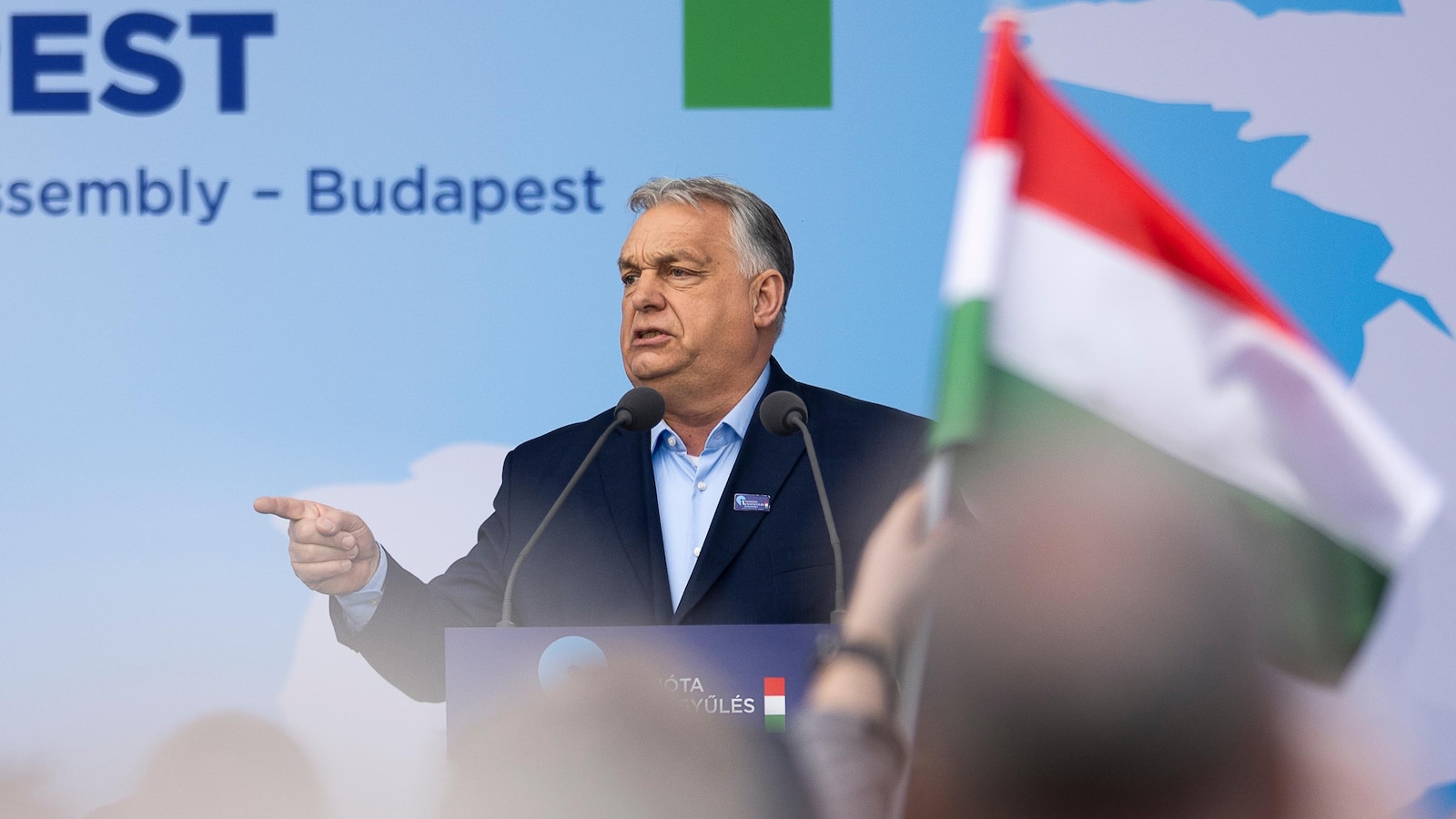
Hungary stands at a critical crossroads as it prepares for national elections on April 12, an event that has captured the attention of the entire European Union. At the heart of this political drama is Viktor Orbán, the EU’s longest-serving prime minister, whose 16-year tenure has fundamentally challenged how the European Union functions. Many across Europe are watching closely, hoping for a change in leadership that could restore harmony within the 27-nation bloc. Orbán, currently trailing in opinion polls, faces challenger Péter Magyar, who has promised to heal the fractured relationship between Hungary and Brussels if elected. This election represents more than just a domestic political contest—it’s a referendum on Hungary’s place in Europe and a test case for how the EU handles member states that challenge its core values. The outcome will reverberate far beyond Hungary’s borders, potentially reshaping the balance of power and decision-making processes that govern nearly 450 million European citizens.
The Orbán Effect: How One Leader Has Paralyzed EU Decision-Making
Viktor Orbán’s approach to EU membership has been nothing short of revolutionary, though not in ways the bloc’s founders envisioned. He has mastered the art of exploiting the EU’s rule that requires unanimous agreement among all member states for major decisions, effectively giving any single country veto power. Dániel Hegedűs, deputy director at the Berlin-based Institute for European Politics, describes Orbán’s strategy bluntly: “He entered a club, read the rules, figured out how he can rig the rules, and then started to be a free rider and blackmail all of the other club members.” This isn’t mere political rhetoric—the numbers back it up. An internal European Parliament report reveals that Orbán has vetoed more EU initiatives than any other leader in the organization’s entire history, a record that stands alone without competition. German lawmaker Daniel Freund calls this “the biggest design flaw in the EU that he has exposed.” The Hungarian prime minister has wielded his veto power strategically, blocking crucial decisions on everything from aid to Ukraine to sanctions against Russia, often extracting financial and political concessions in return. This pattern of behavior has raised fundamental questions about whether the EU’s governance structure, designed to protect smaller nations from being steamrolled by larger ones, has instead created opportunities for manipulation that threaten the bloc’s ability to respond to genuine crises.
From Hope to Frustration: Hungary’s Journey in the European Union
The relationship between Hungary and the EU didn’t begin this way. When Hungary joined the European Union in 2004 alongside nine other countries in the bloc’s largest expansion, there was genuine optimism about the future. The Cold War had ended, and the expansion represented a historic moment of reunification for a continent long divided by ideology. Jim Townsend, a fellow at the Center for a New American Security, recalls the widespread hope that surrounded Hungary’s accession. However, economic crises created fertile ground for Orbán’s populist message. Gábor Scheiring, a former Hungarian lawmaker now teaching at Georgetown University in Qatar, explains that Orbán rose to power by promising prosperity to both rich and poor citizens, while also building strategic alliances with conservative politicians across Europe. From 2014 to 2022, Hungary became one of the biggest beneficiaries of EU funding, with billions flowing into the country. Yet paradoxically, even while accepting this massive financial support, Orbán began publicly vilifying the EU, frequently comparing Brussels to the Soviet Union and positioning himself as a defender of Hungarian sovereignty against foreign interference. Scheiring notes that “Orbán could navigate the EU system really well: get all the money and get away with his political shenanigans.” This approach allowed him to consolidate power at home while maintaining enough influence in Brussels to protect his interests, creating a situation that many European leaders found increasingly intolerable but struggled to address effectively.
The Ukraine Crisis Exposes Deep Divisions
Russia’s full-scale invasion of Ukraine in February 2022 brought Orbán’s obstructionist approach into sharp relief, transforming what had been primarily an internal EU governance issue into a matter of continental security. As most EU members rallied to support Ukraine with military aid, financial assistance, and punishing sanctions against Moscow, Orbán repeatedly used his veto power to block or dilute these efforts. His well-documented closeness to Russian President Vladimir Putin raised eyebrows across Europe and prompted questions about where Hungary’s true loyalties lay. The situation reached a breaking point last month when Orbán reneged on a deal, struck just months earlier in December, to provide Ukraine with a crucial 90-billion euro ($104-billion) loan for its defense and reconstruction. The move visibly frustrated even the normally diplomatic European Council President Antonio Costa, who declared firmly: “Nobody can blackmail the European Union institutions.” Yet the reality is that Orbán has been doing exactly that—using his veto as leverage to extract concessions on unrelated matters, secure additional funding for Hungary, or simply block policies he opposes. This pattern has revealed a fundamental vulnerability in the EU’s structure: that unity, while a noble principle designed to protect smaller members, can also become a weapon when wielded cynically. Critics argue that this design flaw has prevented the bloc from taking stronger, more decisive action not only on Ukraine but also on other critical issues like the humanitarian crisis in Gaza, where differing national interests have similarly paralyzed collective response.
What Can the EU Do? Exploring Options and Limitations
Facing this unprecedented challenge, European leaders and institutions are exploring various mechanisms to limit Orbán’s ability to hold the entire bloc hostage—or to prevent future leaders from following his playbook. One approach would involve reforming the EU’s foundational treaties to reduce the number of issues requiring unanimous votes, allowing major decisions to pass with a simple majority of the 27 national leaders representing roughly two-thirds of the bloc’s population. Hegedűs suggests that the European Commission “could play even more hardball” by crafting targeted sanctions that address specific breaches of EU rules. Some politicians have proposed invoking Article 7 of the Treaty of the EU, a nuclear option that could revoke Hungary’s voting rights entirely. However, this measure would ironically require unanimous agreement from all other EU leaders, and Slovak Prime Minister Robert Fico has already indicated he would veto such action. The EU has already begun using financial pressure, freezing billions in funding to Budapest since 2022 over concerns about judicial independence, media freedom, and corruption. Most recently, the European Commission has withheld approval of Hungary’s bid to access approximately 16 billion euros ($18.4 billion) from an EU defense capabilities fund, even as 18 other countries received approval for their plans. Some analysts suggest this funding could become a bargaining chip to extract concessions, such as lifting Orbán’s veto on aid to Ukraine. Yet Hegedűs voices the frustration many feel: “What will the EU offer in two to three or four months when the next strategic decision will come and Orbán will block again?” The question underscores a fundamental dilemma—even if the EU successfully pressures Orbán on one issue, there’s no guarantee he won’t simply find another policy to veto once he gets what he wants.
Learning From Mistakes: The Future of EU Expansion
Hungary’s tumultuous membership has forced a fundamental reexamination of how the European Union accepts new members and monitors existing ones. The experience has cast a long shadow over current negotiations with aspiring members including Moldova, Montenegro, and Ukraine, all of which are navigating the complex accession process with the Hungarian example serving as both warning and lesson. In February, European Commissioner for Enlargement Marta Kos acknowledged that the 12 countries that joined between 2004 and 2007, including Hungary, “led to a new era of stability for our continent and an impressive level of economic convergence.” However, she pointedly added that lessons have been learned from that expansion era. Without naming Hungary specifically, Kos emphasized that “we need to have safeguards that ensure new members stick to the rules.” She stressed that if countries backslide on fundamental values like democracy and rule of law, “the safeguards must bite,” concluding with an unmistakable warning: “No Trojan horses.” This represents a significant shift in EU thinking—an acknowledgment that the optimism of the 2004 expansion, while justified in many ways, may have overlooked the need for stronger enforcement mechanisms. The bloc is now grappling with how to balance its founding principles of openness and inclusion with the practical reality that not all members may share or maintain commitment to democratic values over time. As Hungary heads to the polls on April 12, the entire European project watches nervously, knowing that the outcome will either validate the EU’s patient approach to managing difficult members or force even more fundamental questions about how this unique experiment in supranational governance can survive in an increasingly turbulent world.