



The Quad God’s Fall: Ilia Malinin’s Shocking Olympic Defeat
A Dream Turned Nightmare in Milan
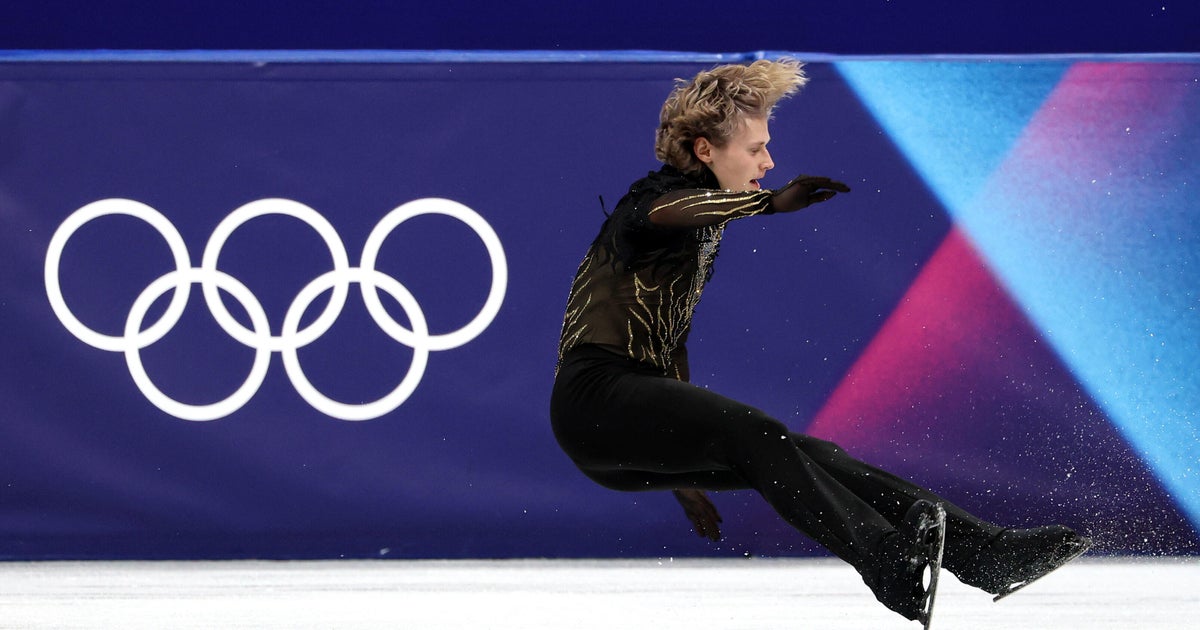
The 2026 Winter Olympics in Milan witnessed one of the most heartbreaking moments in figure skating history when American superstar Ilia Malinin, affectionately known as the “Quad God” for his extraordinary ability to execute quadruple jumps, experienced a devastating collapse during the men’s free skate competition. The 21-year-old phenom, who had entered the final with a commanding lead after a stellar short program performance, needed only an average showing to secure individual gold and add to the team gold medal he had already won. Instead, the Milano Ice Arena fell into stunned silence as Malinin tumbled twice during his routine, ultimately finishing in eighth place with 264.49 points—a finish that seemed almost impossible just hours earlier. The young skater’s visible emotion after leaving the ice painted a picture of pure devastation, as tears threatened to fall following what would become one of the darkest nights of his otherwise brilliant career.
An Unstoppable Force Meets an Unexpected End
Before Friday’s shocking turn of events, Ilia Malinin had been nothing short of invincible on the ice. His unbeaten streak had stretched across more than two years, encompassing 14 complete competitions where he had dominated the field with a combination of technical prowess and artistic expression that left judges and audiences in awe. This remarkable run included back-to-back world championship titles, which he had claimed with such ease that many considered his Olympic gold all but guaranteed. Malinin had revolutionized men’s figure skating with his unprecedented mastery of quadruple jumps—the incredibly difficult aerial maneuvers that require four complete rotations in the air before landing. His ability to execute multiple quads in a single program, and to do so with apparent effortlessness, had earned him the “Quad God” moniker and established him as the sport’s most exciting and technically advanced competitor. The comfortable margin he held after the short program seemed to confirm what everyone expected: that Malinin would cruise to victory and cement his legacy as one of the greatest figure skaters of his generation.
Kazakhstan’s Golden Moment
While Malinin’s fall from grace dominated the emotional narrative of the evening, the night belonged to Kazakhstan’s Mikhail Shaidorov, who delivered the performance of his lifetime when it mattered most. Shaidorov’s career-best score of 291.58 points not only earned him the gold medal but also gave Kazakhstan its first medal of any color at the 2026 Winter Games—a historic achievement for the Central Asian nation’s figure skating program. In a sport traditionally dominated by skaters from the United States, Russia, Japan, and a handful of European countries, Shaidorov’s victory represented a significant breakthrough and a testament to the increasingly global nature of competitive figure skating. His technically sound and artistically compelling free skate demonstrated that he belonged among the world’s elite, and his ability to maintain composure while his primary competitor faltered showed the mental fortitude required to succeed at the Olympic level. For Shaidorov, who had worked in relative obscurity compared to more heralded competitors, the gold medal validated years of dedication and positioned him as a major figure in the sport’s landscape.
Japan’s Consistent Excellence
The podium’s completion told a story of Japanese figure skating’s remarkable depth and consistency. Yuma Kagiyama, who had captured silver at the previous Winter Olympics, repeated that achievement with another second-place finish, demonstrating the kind of reliability under pressure that defines championship-caliber athletes. Kagiyama’s ability to deliver strong performances at consecutive Olympic Games, despite the intense pressure and expectations that come with being among the favorites, speaks to his exceptional mental strength and technical consistency. Joining him on the podium was his teammate Shun Sato, who claimed the bronze medal and ensured that Japan would leave Milan with two medals in men’s figure skating. This dual-medal achievement highlighted the strength of Japan’s figure skating development system, which has consistently produced world-class skaters capable of competing at the highest levels. For a nation with a deep passion for figure skating and a history of excellence in the sport, seeing two athletes on the Olympic podium represented both a source of immense pride and confirmation of the program’s continued success on the global stage.
The Anatomy of a Collapse
Understanding what happened to Ilia Malinin on that fateful Friday requires examining the immense psychological pressure that comes with being the overwhelming favorite at the Olympic Games. Unlike other competitions where athletes can recover from mistakes or have another opportunity in the same season, the Olympics represent a once-every-four-years moment where everything must come together perfectly. For Malinin, the weight of expectation—from his country, his coaches, his family, and himself—may have proven too heavy to bear. The first fall during his free skate likely triggered a cascade of doubt and tension that made the second fall almost inevitable, as the relaxed confidence that had characterized his previous performances gave way to desperation and overthinking. Figure skating, perhaps more than any other sport, requires a delicate balance between technical precision and artistic flow, and when that balance is disrupted by anxiety or loss of confidence, even the most talented athletes can find themselves unable to execute elements they’ve landed thousands of times in practice. The star-packed crowd that had gathered to witness what they expected to be a coronation instead watched a cautionary tale about the unpredictability of sports and the fragility of even the most dominant champions.
Beyond the Ice: Perspective and the Path Forward
As the shock of Malinin’s unexpected defeat begins to settle, the figure skating world will inevitably turn its attention to what comes next for the young American star. At just 21 years old, Malinin has ample time to process this disappointment, learn from it, and return stronger for future competitions. History is filled with examples of great athletes who experienced devastating setbacks only to use those moments as fuel for even greater achievements. What happened in Milan, while crushing in the moment, doesn’t erase Malinin’s revolutionary impact on the sport or his status as one of the most technically gifted skaters ever to compete. His two-year winning streak and world championship titles remain significant accomplishments, and his gold medal in the team event ensures he won’t leave these Olympics empty-handed. The real test of his character will come in how he responds to this adversity—whether he allows it to define him or uses it as motivation to come back even better prepared for the next challenge. For sports fans and aspiring athletes alike, Malinin’s experience serves as a powerful reminder that success is never guaranteed, that even the most prepared and talented competitors can have off days, and that resilience in the face of failure often matters more than avoiding failure altogether. As the skating community rallies around him during this difficult time, there’s little doubt that the “Quad God” will have opportunities to add more chapters to his story, and that this painful Olympic memory, while impossible to forget, need not be the final word on a career still in its early stages.