


Lebanon’s Unfolding Crisis: A Nation Caught Between Hezbollah and Israel
The Perfect Storm Threatening Lebanese Stability
Lebanon finds itself at the epicenter of what experts are calling one of the most challenging phases in the broader confrontation between Israel and Iran. The country’s new technocratic government, which took power in February 2025 amid hopes for positive change, now faces what analyst Emile Hokayem describes as “the worst possible combination of factors.” The escalating Israeli military operation against Hezbollah has thrust this small Mediterranean nation into a precarious position where it faces existential threats from multiple directions. While Israel demands that Lebanon’s government take stronger action against the Iranian-backed militia operating within its borders, doing so risks plunging the country back into the kind of civil chaos that devastated it during the brutal 1975-1990 civil war. Meanwhile, both Israel and Iran appear to view Lebanon as a strategic battlefield where they can advance their competing interests, with the Lebanese people caught helplessly in between.
The situation represents more than just another flare-up in the region’s long history of conflict. Experts warn that Lebanon has become what Hokayem calls “a secondary front” that is “likely to burn for longer” than other theaters of conflict because both major powers see strategic advantages in prolonging the confrontation there. For Israel, the current moment presents what they perceive as a political and military opportunity to decisively weaken Hezbollah while the militia appears vulnerable. For Iran, Lebanon offers a place where they can distract and exhaust Israeli forces, bleeding their resources and attention away from other priorities. This dynamic means that regardless of what Lebanon’s government or people want, their country has become a chess board for larger powers playing out their regional rivalry, with devastating consequences for ordinary Lebanese citizens who have already endured years of economic collapse, political dysfunction, and violent conflict.
A Nation Still Bearing the Scars of Recent Conflicts
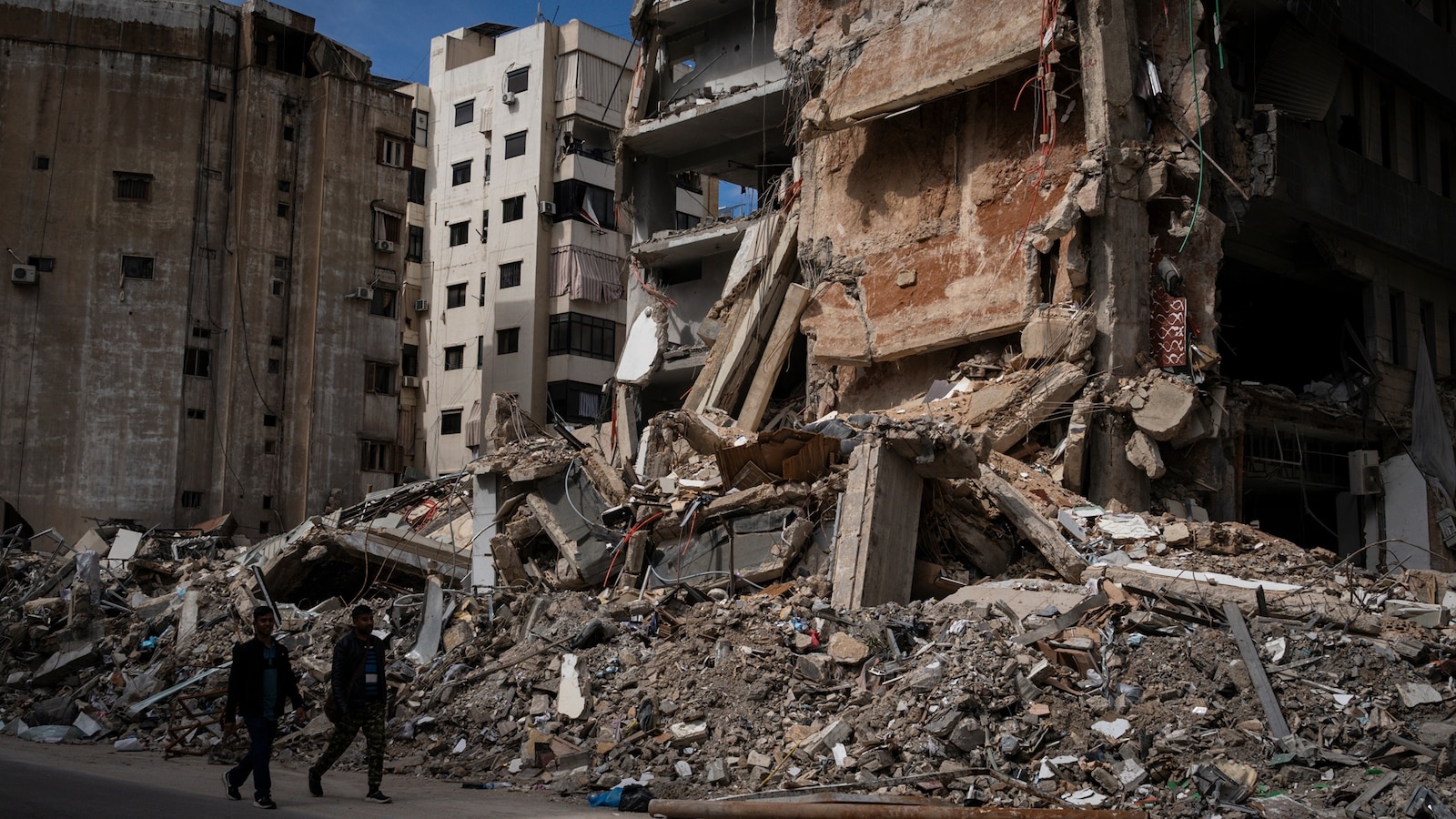
The physical landscape of Lebanon tells the story of recent violence in vivid detail. In Beirut, the devastated port area remains a haunting reminder of the massive 2020 explosion that killed over 200 people and left much of the capital damaged. Efforts to investigate and assign responsibility for that disaster have been repeatedly blocked, with many pointing fingers at Hezbollah’s interference, though others blame the entire corrupt political establishment. Throughout the southern and eastern regions of the country, where Hezbollah holds dominant influence, villages lie in ruins from Israeli missiles, bombs, and artillery fire from clashes that began when Hezbollah attacked Israel in solidarity with Hamas following the October 7, 2023, attack. Even after a U.S.-brokered ceasefire in 2024 that saw Israeli forces partially withdraw, they maintained five positions inside Lebanese territory, a continuing violation of sovereignty that the weakened Lebanese state has been powerless to challenge.
In Beirut’s southern Dahiyeh neighborhood, a longtime Hezbollah stronghold, the destruction is particularly visible. Massive craters dot the landscape, while giant posters of Hassan Nasrallah—the group’s iconic leader killed in a devastating Israeli airstrike in 2024—loom over the main road connecting the airport to the rest of the city. These images serve as both memorial and warning, reminding residents of the heavy price paid during the conflict that significantly degraded Hezbollah’s military capabilities. The cumulative effect of this destruction, combined with Lebanon’s ongoing economic crisis and political paralysis, had left the population exhausted and increasingly resentful of Hezbollah’s actions, which many blamed for bringing repeated Israeli attacks onto Lebanese soil. This growing discontent among the wider Lebanese population, including among some who had previously supported or tolerated Hezbollah, seemed to set the stage for political change, with a new government less beholden to the militia group taking power with promises to finally bring it under state control.
A Weakened Hezbollah Faces New Challenges
From late 2024 into early 2026, Hezbollah appeared to be in the weakest position it had occupied in decades. The conflict with Israel had killed not just Nasrallah but many of the group’s most experienced military commanders and strategic thinkers, leaving significant gaps in leadership and expertise. Its primary patron, Iran, was itself weakened by confrontations with Israel and later the United States, while also facing internal turmoil from repeated waves of anti-government protests where demonstrators specifically criticized Tehran’s funding of foreign proxy forces like Hezbollah. The fall of Syrian President Bashar al-Assad in December 2024 dealt another severe blow, robbing Hezbollah of strategic depth, vital weapons smuggling routes through Syrian territory, and important financial opportunities. Before its latest war with Israel began in 2023, estimates placed Hezbollah’s strength at somewhere between 30,000 to over 50,000 fighters, but those numbers were believed to have dropped significantly due to casualties and defections.
The new Lebanese government led by Prime Minister Nawaf Salam and President Joseph Aoun—neither of whom received formal endorsement from Hezbollah—seemed determined to capitalize on this moment of weakness. Both leaders publicly committed to disarming Hezbollah and appealing to foreign partners for assistance in this monumental task. The Lebanese Armed Forces claimed in January to have completed the first phase of dismantling all non-state military groups south of the Litani River, approximately 18 miles north of Israel’s border, as required by the 2024 ceasefire agreement. In March, following the outbreak of new U.S.-Israeli military operations against Iran, the Lebanese government took the unprecedented step of declaring all Hezbollah military activities illegal and establishing checkpoints to search vehicles heading south for weapons. These were bold moves that would have been unthinkable just a few years earlier, when Hezbollah’s power seemed unassailable and the group operated with virtual impunity as what analysts described as “a state within a state.”
The Risk of Civil War and State Collapse
Despite Hezbollah’s apparent weakness, the prospect of open confrontation between the Lebanese state and the Iranian-backed militia raises terrifying possibilities for those who remember the country’s devastating 1975-1990 civil war. That conflict killed over 100,000 people and left the young nation shattered, creating sectarian divisions that still shape Lebanese politics today through a complex power-sharing system designed to prevent any single religious or ethnic group from dominating. Sectarian tensions are once again rising dangerously, with Prime Minister Salam himself criticizing this system last month as “a source of harm both for the state and for the citizens.” The state’s armed forces, while generally respected and popular among the population, are widely considered too weak to confront Hezbollah militarily, whether compared to other regional national armies or even to non-state armed groups. Meanwhile, despite its recent setbacks, Hezbollah remains, as Hokayem puts it, “a very powerful coercive force domestically in Lebanon, where they can punish, intimidate and possibly assassinate their enemies.”
Hezbollah’s new leader, Naim Qassem, made the group’s position crystal clear in August when he stated that Hezbollah would never surrender its weapons to the state, warning ominously that there would be “no life in Lebanon” if anyone tried to take their arms by force. This isn’t merely rhetoric—it’s a threat that many take seriously given Hezbollah’s history of using violence to maintain its position. Experts predict that as pressure increases, Hezbollah may resort to targeted assassinations and increased intimidation of opponents within Lebanon. If the Lebanese military and security forces prove unable to prevent or contain such violence, public trust in central institutions—already at extremely low levels—could collapse entirely. Hokayem’s assessment is sobering: “Given the trajectory of events, more likely than not the state will weaken despite what some people in Washington say or would like to believe.” The nightmare scenario involves Lebanon sliding back into the kind of communal violence and political assassinations that characterized the darkest years of its civil war, only this time with a state that is even weaker and less capable of restoring order.
Israel’s Expanding Military Operation
The current Israeli military operation in Lebanon has rapidly escalated beyond anything seen since the 2024 ceasefire. Israeli forces are pushing deeper into southern Lebanese territory, with the Israel Defense Forces issuing urgent evacuation orders that now cover areas up to 36 miles north of the border—double the initial buffer zone. Human Rights Watch reports that more than one million people have been forced to flee their homes, representing nearly one-fifth of Lebanon’s entire population. The Lebanese health ministry says over 1,000 people have been killed in just the latest round of fighting, which began after Hezbollah joined Iran in responding to U.S.-Israeli attacks on Iranian targets starting February 28. Despite assessments that it had been substantially weakened, Hezbollah has defied expectations by launching daily rocket and drone attacks against northern Israel, with the IDF reporting over 2,000 projectiles fired so far, killing two civilians and two soldiers.
Israeli military leaders have made clear this operation is just beginning. IDF Lt. Gen. Eyal Zamir described it as “a prolonged operation,” while Defense Minister Israel Katz ordered acceleration of the destruction of Lebanese homes in border villages, explicitly referencing the devastating destruction Israel inflicted on Gaza towns during its war against Hamas. Katz stated Israeli forces would seize and hold territory up to the Litani River to create what he called a “defensive buffer,” though more extreme voices in the Israeli government have called for permanent occupation. Far-right Finance Minister Bezalel Smotrich declared the Litani should become “the new Israeli border,” echoing longstanding ambitions among Israeli ultranationalists. Israeli forces have already destroyed multiple bridges spanning the river, prompting Lebanon’s president to describe these actions as “a dangerous escalation and flagrant violation of Lebanon’s sovereignty” that appear to be “a prelude to a ground invasion.” With clear backing from President Trump—who said Hezbollah is “rapidly being eliminated” by Israeli action—Israeli Prime Minister Benjamin Netanyahu appears determined to pursue his vision of a “new Middle East” free of Iranian influence, regardless of the cost to Lebanese civilians.
A Bleak Future Without Clear Solutions
The international community offers little hope for Lebanon’s desperate situation. The United States and France, traditionally Lebanon’s two primary foreign partners, have largely abandoned the country to its fate. American officials have adopted what former State Department official Barbara Leaf describes as a “hectoring” approach, essentially telling the Lebanese government: “Take care of Hezbollah, and if not, the Israelis will.” This represents an impossible demand for a weak state facing a still-powerful militia with the backing of a regional power. The U.S. has urged the approximately 86,000 American citizens in Lebanon to leave immediately, a clear signal that Washington expects the situation to worsen significantly. Meanwhile, French support has been largely rhetorical, without the kind of substantive diplomatic pressure on Israel that might restrain the expanding military operation.
The grim reality is that Lebanon finds itself trapped in a situation with no good outcomes. The ongoing Israeli operation may actually undermine the very partners Israel claims to want to strengthen in Beirut. As Hokayem observes, “A Lebanon in which so much territory is occupied will struggle to enter any kind of genuine peace negotiations with Israel,” and the central authority will lack “enough strength and legitimacy” to make meaningful commitments. Political scientist Ziad Majed warns that Lebanon must prepare for worst-case scenarios involving massive destruction in the south, the Bekaa Valley, and southern Beirut, combined with military occupation preventing hundreds of thousands of displaced people from returning home. Such conditions could “lead to suffocating living crises and social and political tensions that many might exploit for political opportunism, incitement and other forms of sectarian conflict.” For ordinary Lebanese citizens who have already endured economic collapse, political dysfunction, the port explosion, and years of conflict, the future appears darker than ever, with their country serving as a battleground for regional powers that care little for the suffering they inflict on one of the Middle East’s most diverse and historically vibrant nations.