

Federal Judge Questions Pentagon’s Move Against AI Company Anthropic
A Constitutional Clash Over AI Guardrails
A significant legal battle is unfolding in San Francisco that could reshape how artificial intelligence companies interact with the U.S. military and define the boundaries of corporate free speech in the age of AI. U.S. District Judge Rita Lin expressed serious concerns during a Tuesday hearing about the Pentagon’s aggressive moves against Anthropic, an AI company that has insisted on maintaining ethical guardrails for its technology. The judge characterized the government’s actions as “troubling” and suggested they appeared more like punishment for Anthropic’s positions than legitimate national security measures. This case has captured attention not just for its immediate implications but for what it represents in the broader conversation about AI regulation, corporate responsibility, and government power. At the heart of the dispute is whether a private company can set ethical boundaries on how the military uses its technology, and whether the government can effectively destroy a business for taking positions it doesn’t like.
The Core of the Dispute: Red Lines and National Security
The conflict centers on Anthropic’s insistence on two specific “red lines” for the use of its AI model, Claude, which had been the only AI system deployed in classified U.S. military systems. Company CEO Dario Amodei has firmly stated that Anthropic will not allow its technology to be used for mass surveillance of Americans or for fully autonomous weapons that can carry out strikes without human oversight. Amodei has defended these positions by arguing that AI’s surveillance capabilities are advancing faster than legal frameworks can keep up with, and that the technology simply isn’t reliable enough yet for autonomous weapons systems. He believes his company is best positioned to understand what their AI models can and cannot do reliably, making these restrictions not just ethical positions but practical safety measures.
The Trump administration, however, has taken a dramatically different view, insisting it needs the ability to use Claude for “all lawful purposes” without restrictions imposed by a private company. The Pentagon has maintained that mass surveillance and fully autonomous weapons are already either illegal or banned under existing military policies, making Anthropic’s concerns unnecessary. Military officials have argued that decisions about lawful applications of AI technology should rest with the government, not with private corporations trying to impose their own values on national defense. The situation escalated when negotiations between the two sides broke down, leading the Pentagon to designate Anthropic as a “supply chain risk” and moving to prohibit private contractors from using Claude on military contracts. This designation, rarely used and typically reserved for foreign adversaries or companies with serious security vulnerabilities, triggered Anthropic’s lawsuit claiming unconstitutional retaliation for protected speech.
The Government’s Justification and the Judge’s Skepticism
Justice Department attorney Eric Hamilton attempted to defend the supply chain risk designation by arguing that Anthropic’s negotiating position and discussions with military officials had eroded trust to the point where the Pentagon couldn’t rely on the company. He suggested the military had concerns about potential “future sabotage” and worried that Anthropic might try to “manipulate” its software or install a “kill switch” that could disable critical systems. Under the law used against Anthropic, a supply chain risk is defined as a threat that “an adversary may sabotage, maliciously introduce unwanted function, or otherwise subvert” a national security system. The government’s position essentially treats Anthropic’s refusal to agree to the Pentagon’s terms as evidence of potential future treachery.
Judge Lin appeared deeply unconvinced by this reasoning, pointedly questioning whether the government was effectively saying that a company could be labeled a national security threat simply for being “stubborn” and asking “annoying questions.” She noted that if the concern was truly about the integrity of military command and control systems, the Defense Department could simply stop using Claude altogether rather than taking the broader punitive actions it chose. The judge observed that the government’s response seemed to go far beyond what would be necessary to address the stated national security concern, lending credibility to characterizations in supporting legal briefs that described the Pentagon’s actions as “attempted corporate murder.” While Lin said she wasn’t sure if “murder” was the right term, she acknowledged it certainly looked like an attempt to cripple Anthropic as a business.
The Ripple Effects and Corporate Uncertainty
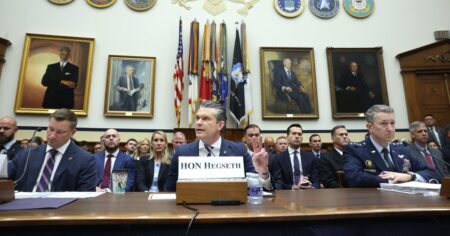
The controversy has created significant confusion and potential damage that extends beyond the immediate parties to the dispute. Defense Secretary Pete Hegseth escalated tensions by posting on social media that “no contractor, supplier, or partner that does business with the United States military may conduct any commercial activity with Anthropic.” This statement, viewed millions of times, suggested that any company doing business with the Pentagon would need to completely sever ties with Anthropic or risk losing military contracts. However, during the hearing, Hamilton was forced to walk back this sweeping prohibition, conceding that the supply chain risk designation doesn’t actually prevent military contractors from using Anthropic’s technology for non-military work. He also admitted he wasn’t aware of any law that would give the Defense Department the authority to dictate contractors’ completely separate business relationships.
Despite this clarification, Anthropic’s attorney Michael Mongan argued that enormous damage has already been done through the “profound uncertainty” created by Hegseth’s widely viewed post and the government’s aggressive posture. Companies that might otherwise partner with or invest in Anthropic now face questions about whether such relationships could jeopardize their government contracts, even if the legal reality doesn’t support such concerns. This uncertainty itself functions as a powerful deterrent, potentially isolating Anthropic from business partners and investors who can’t afford to take risks with their Pentagon relationships. Mongan also challenged the government’s sabotage concerns by pointing out that Anthropic has no ability to change, shut off, surveil, or otherwise influence its software once it’s been approved by the government and deployed in military systems. He argued that if Anthropic truly intended sabotage, the company would have simply accepted the government’s contract terms and then acted nefariously, rather than engaging in a very public dispute over principles.
The Broader Implications for AI Governance
This case represents far more than a contractual dispute between one company and the government; it touches on fundamental questions about how society will govern increasingly powerful AI technologies. The conflict highlights the tension between those who believe AI companies should maintain ethical guidelines about their technology’s use and those who argue that elected governments, not private corporations, should make such determinations. Anthropic’s position reflects a view that companies creating potentially dangerous technologies have a responsibility to prevent harmful applications, even if requested by governments. This perspective has gained traction in the tech industry, particularly among companies focused on AI safety, who argue that the creators of AI systems have unique insights into their capabilities and risks that make them essential guardians against misuse.
The Pentagon’s response reflects a competing view that places democratic accountability above corporate ethics, arguing that military and intelligence officials answerable to elected leaders should decide how to deploy technologies for national defense. From this perspective, allowing private companies to dictate terms to the government based on their own moral frameworks represents an inappropriate transfer of power from democratic institutions to unelected corporate executives. The case also raises questions about the government’s power to effectively destroy businesses that don’t cooperate with its preferences. If the Pentagon can label a company a security threat simply because it negotiated too hard or insisted on restrictions the government found inconvenient, that power could have chilling effects far beyond this case. Judge Lin acknowledged these broader implications, calling the underlying policy debate “fascinating” while emphasizing that her legal ruling would focus more narrowly on whether the government’s actions were lawful rather than wise.
What Happens Next and Why It Matters
Judge Lin indicated she plans to issue a ruling within days on Anthropic’s request to block both the supply chain risk designation and President Trump’s order directing all federal agencies to stop using the company’s technology. Her decision will have immediate practical consequences for Anthropic’s business prospects and could set important precedents about corporate free speech and government retaliation. If she rules in Anthropic’s favor, it would represent a significant check on the executive branch’s ability to use national security designations as weapons against companies that take positions the government dislikes. Such a ruling could embolden other tech companies to maintain ethical guidelines even when they conflict with government preferences, knowing they have some legal protection against retaliation.
Conversely, if the judge sides with the government, it could signal that companies operating in the national security space have limited ability to set restrictions on how their technologies are used, regardless of their concerns about ethics or safety. This outcome might lead AI companies to either avoid government work altogether or accept whatever terms are offered, eliminating an important check on potentially dangerous applications of the technology. Beyond the immediate parties, the case is being watched closely by other AI companies, military contractors, civil liberties advocates, and national security professionals, all of whom recognize that the principles established here will likely influence AI governance for years to come. The fundamental question remains unresolved: in an age of rapidly advancing artificial intelligence with unprecedented capabilities for both benefit and harm, who gets to decide how these powerful tools are used—the companies that create them, the governments that deploy them, or some combination of both working within frameworks yet to be fully developed? The answer will help define the relationship between technology, democracy, and corporate responsibility in the twenty-first century.