


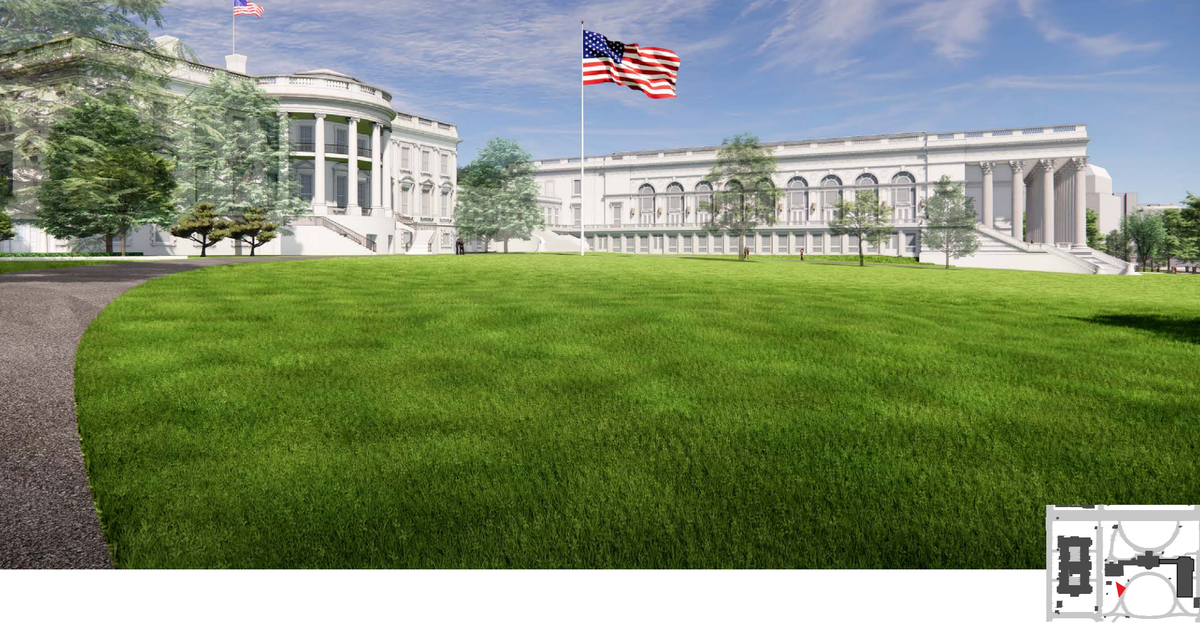

Federal Judge Halts Trump Administration’s Controversial White House Ballroom Project
A Significant Legal Setback for Presidential Construction Plans
In a major blow to the Trump administration’s ambitious plans to renovate the White House, a federal judge has issued a temporary injunction blocking the construction of a massive 90,000-square-foot ballroom that was intended to replace the historic East Wing of the presidential residence. U.S. District Judge Richard Leon delivered this ruling after carefully considering a lawsuit filed by a preservation group dedicated to protecting the architectural integrity and historical significance of America’s most iconic residence. The decision represents a significant victory for historic preservation advocates and raises important questions about the extent of presidential authority when it comes to making dramatic changes to national landmarks.
The judge’s decision wasn’t made lightly, and his reasoning cuts to the heart of constitutional questions about presidential power. Judge Leon determined that the preservation group’s legal challenge had a strong likelihood of success because, in his assessment, the Trump administration failed to demonstrate adequate legal authority for such a dramatic undertaking. In his written opinion, the judge made clear that “no statute” cited by the government “comes close to giving the President the authority he claims to have” to proceed with this construction project. This language is particularly significant because it suggests that the administration may have overstepped its bounds by attempting to make such substantial alterations to a building that holds deep historical and cultural meaning for the American people without proper legal justification or statutory backing.
Understanding the Scope and Controversy of the Proposed Ballroom
The scale of the proposed construction project is truly remarkable and helps explain why it generated such intense opposition from preservation groups and historians. At 90,000 square feet, the planned ballroom would be an enormous addition to the White House complex, dramatically altering not just the physical footprint of the building but potentially its character and historical authenticity as well. To put this in perspective, 90,000 square feet is roughly the size of two football fields or a medium-sized department store. Such a massive structure replacing the East Wing would fundamentally transform one of America’s most recognizable and historically significant buildings, which has served as the home and workplace of every U.S. president since John Adams.
The East Wing of the White House, which would be demolished to make way for this ballroom, has its own rich history and has served various important functions over the decades. It currently houses offices for the First Lady and her staff, as well as space for social events and visitor access. The wing has been part of the White House complex since the early 20th century and represents an important piece of American architectural and political history. The decision to replace it entirely with an entertainment space raised immediate concerns among historians, architects, and preservation advocates who viewed the plan as prioritizing luxury and spectacle over historical stewardship and respect for the building’s legacy as a symbol of American democracy.
The Legal Challenge and Preservation Concerns
The preservation group that brought this lawsuit represents a broader coalition of concerned citizens, historians, and architectural experts who believe that dramatic alterations to the White House should not be undertaken without proper legal authority, thorough public input, and careful consideration of the historical implications. Their legal challenge focused on the fundamental question of whether a sitting president has the unilateral authority to order such extensive construction and demolition work on a building that, while serving as the president’s residence, also belongs to the American people and represents centuries of national history. The group argued that existing statutes governing modifications to federal buildings, particularly those with historical significance, do not grant the president the sweeping powers necessary to undertake a project of this magnitude without additional oversight and approval.
Beyond the strictly legal arguments, the preservation group’s lawsuit reflected deeper concerns about what such a project would mean for the White House as a symbol of American values and history. The White House is more than just a building where the president lives and works; it’s a living museum that tells the story of American democracy, housing priceless artifacts, artwork, and furnishings that span more than two centuries. Every room, every architectural detail, and every piece of the building carries historical weight and meaning. Critics of the ballroom project worried that replacing a significant portion of this historic structure with what many perceived as an ostentatious entertainment venue would fundamentally alter the character of the White House and set a troubling precedent for future administrations to make changes based on personal preferences rather than historical preservation principles.
Implications of the Judicial Decision
Judge Leon’s ruling carries significant weight beyond this specific construction project. By finding that the administration likely exceeded its legal authority, the judge has reinforced the principle that even the president of the United States cannot unilaterally make dramatic changes to national landmarks without clear statutory authorization. This decision serves as an important check on executive power and affirms that certain actions require congressional approval or must follow established legal procedures, even when undertaken by the nation’s chief executive. The ruling protects not just the physical structure of the White House but also the democratic principle that some decisions affecting our shared national heritage require broader input and authorization than one person’s vision or desires.
The 14-day delay before the ruling takes effect is a standard legal procedure that gives the administration time to respond, potentially appeal the decision, or take other legal action. However, the judge’s clear language about the weakness of the government’s legal arguments suggests that any appeal would face an uphill battle. During this two-week window, the administration must decide whether to accept the judge’s decision, seek an emergency stay from a higher court, or pursue other legal options. The delay also gives preservation advocates time to prepare for potential next steps and ensures that no irreversible construction or demolition work can begin immediately while the legal issues remain unresolved.
Broader Context and Looking Forward
This legal battle over the White House ballroom project is developing in real-time, and as with many breaking news stories, additional details and developments are likely to emerge in the coming days and weeks. The judge’s decision may prompt congressional hearings about presidential authority over White House renovations, lead to new legislation clarifying the rules governing such projects, or inspire similar legal challenges to other controversial construction plans. It also raises questions about what happens next with the administration’s vision for hosting large-scale events at the White House and whether alternative, less invasive solutions might be explored that could accommodate the desire for expanded entertainment space without demolishing historic structures.
The case ultimately reflects an ongoing tension in American democracy between the practical needs and desires of current officeholders and the responsibility to preserve and protect our shared historical heritage for future generations. The White House must function as a working residence and office for the sitting president while simultaneously serving as a museum, a symbol of national identity, and a tangible connection to our past. Finding the right balance between these sometimes competing needs requires careful thought, proper legal procedures, and respect for both the law and the historical significance of this irreplaceable building. As this story continues to unfold, it will be closely watched by preservation advocates, legal scholars, and citizens who care deeply about maintaining the integrity of America’s most important residence while ensuring that necessary changes can be made through proper channels and with appropriate oversight. The judge’s decision represents an important moment in this ongoing conversation about how we honor our past while meeting the needs of the present.