


Justice After 35 Years: Arrest Made in Houston’s Infamous “Lovers’ Lane” Cold Case Murders
A Breakthrough in a Decades-Old Mystery
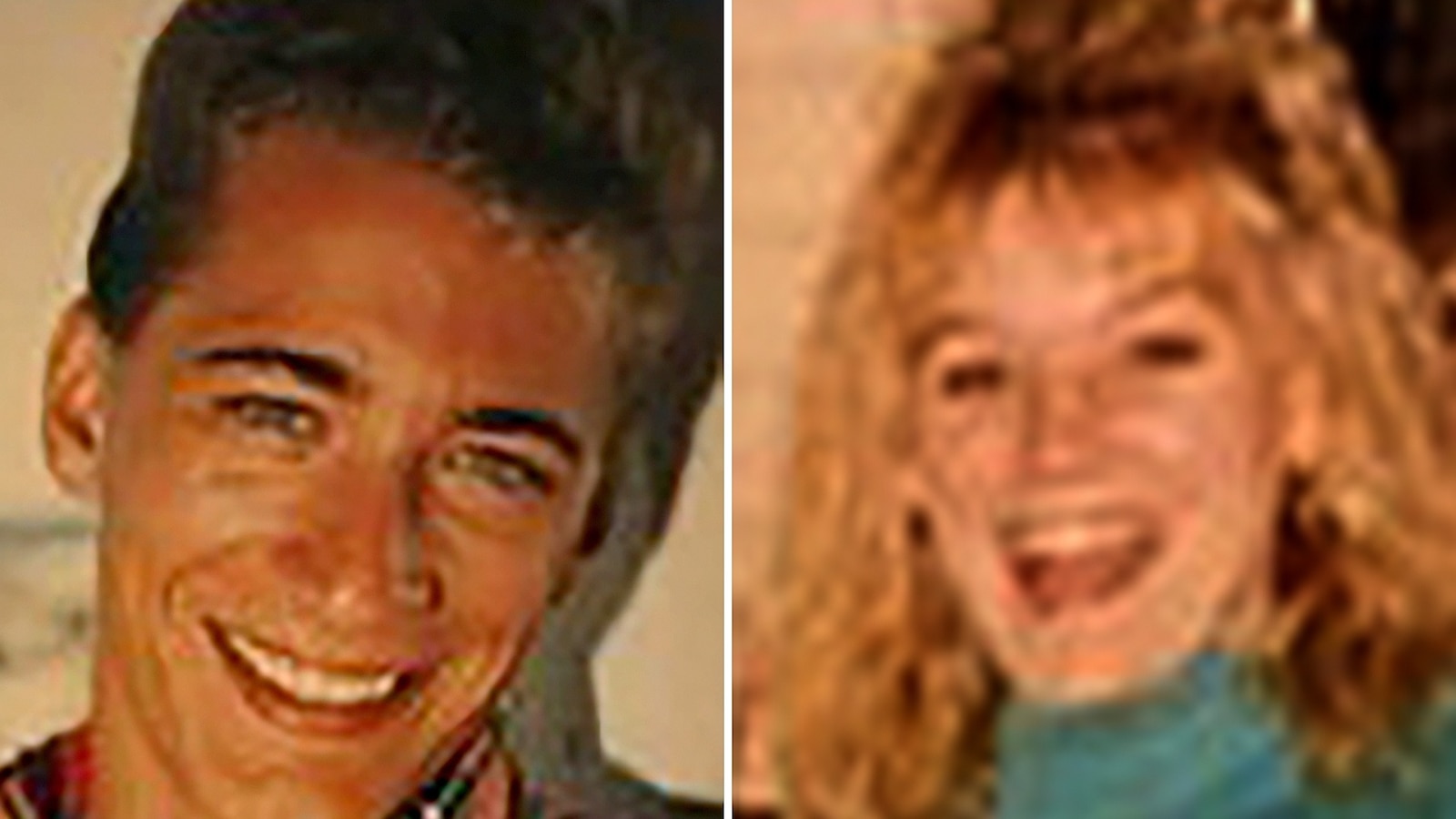
After more than three decades of waiting, grieving, and hoping for answers, the families of two young victims finally have reason to believe justice may be served. Houston police announced a major breakthrough in one of the city’s most haunting unsolved cases—the 1990 “Lovers’ Lane” murders that claimed the lives of 22-year-old Cheryl Henry and 21-year-old Andy Atkinson. Floyd William Parrott, now 64 years old, has been arrested and charged with capital murder in connection with their deaths. For 35 years, this case has remained a painful open wound for the victims’ loved ones and a frustrating mystery for investigators who never gave up hope of finding the person responsible for this brutal crime.
The arrest represents not just a legal milestone but an emotional turning point for everyone touched by this tragedy. When young people’s lives are cut short in such violent circumstances, the ripple effects extend far beyond their immediate families—friends, classmates, coworkers, and entire communities feel the loss. In this case, two vibrant young adults with their whole futures ahead of them were stolen from the world in a senseless act of violence. Their families have lived with unanswered questions, sleepless nights, and the terrible knowledge that someone responsible for their children’s deaths was walking free. Now, after what must have felt like an eternity, there is finally movement toward accountability and closure.
The Tragic Discovery That Shocked Houston
On August 23, 1990, what should have been an ordinary summer day turned into a nightmare that would haunt Houston for decades. Cheryl Henry and Andy Atkinson—whose friends knew him as “Andy”—were found dead in a parked car in a quiet cul-de-sac. The young couple had been enjoying time together when their lives were brutally ended. According to police reports, both victims suffered injuries to their necks, indicating a violent and personal attack. The location and circumstances of the crime led to it being dubbed the “Lovers’ Lane” killings, a name that would become synonymous with one of Houston’s most perplexing cold cases.
At just 22 and 21 years old respectively, Cheryl and Andy were at that hopeful stage of life where everything seems possible. They were young adults building their lives, making plans, and creating memories with the people they cared about. The brutality of their deaths and the apparent randomness of the crime sent shockwaves through the Houston community. Parents worried about their own children’s safety, and a sense of vulnerability settled over the city. Who could commit such a heinous act? What kind of person targets young people in what should have been a safe moment? These questions haunted investigators and residents alike, creating an urgency to solve the case that never truly faded, even as years turned into decades.
The Long Road of Investigation and Perseverance
Cold cases are called “cold” for a reason—trails go stale, witnesses’ memories fade, evidence becomes harder to analyze with passing time, and leads that once seemed promising turn into dead ends. But what the public often doesn’t see is the dedication of law enforcement professionals who refuse to let these cases be forgotten. In the Henry-Atkinson murders, a remarkable collaboration of agencies worked tirelessly over the years, piecing together whatever fragments of information they could find. Houston police partnered with the Harris County District Attorney’s Office, the FBI, and the Texas Attorney General’s Cold Case and Missing Persons Unit in a coordinated effort that spanned decades.
This kind of multi-agency cooperation is crucial in solving complex cold cases, as each organization brings different resources, expertise, and perspectives to the investigation. The FBI, for instance, has access to national databases and specialized forensic capabilities that local departments might not have. The Texas Attorney General’s Cold Case Unit specifically focuses on unsolved crimes, bringing fresh eyes and new techniques to old evidence. Throughout the years since 1990, investigative methods have evolved dramatically—DNA analysis has become more sophisticated, database systems have expanded, and new technologies have emerged that can extract information from evidence that might have been considered useless decades ago. Investigators likely revisited the Henry-Atkinson case multiple times over the years, applying new techniques to old evidence, always hoping for that one breakthrough that would finally identify the killer.
The Arrest and What Comes Next
Earlier this month, something finally clicked. Police identified Floyd William Parrott as the suspect in this 35-year-old double murder, though authorities have not yet publicly revealed what specific evidence or investigative technique led them to him. This discretion is typical in ongoing criminal cases—prosecutors need to protect the integrity of their evidence and legal strategy as they prepare for trial. What we do know is that Parrott, now 64, was located in Lincoln, Nebraska, where he was arrested on Wednesday. He now faces capital murder charges and awaits extradition back to Harris County, Texas, where the crimes occurred and where he will face justice.
The fact that Parrott was found in Nebraska, far from the scene of the crime in Houston, raises questions about his life over the past three and a half decades. Where has he been all these years? Has he been living under the radar, constantly looking over his shoulder, or has he been living openly, perhaps believing he had gotten away with murder? Did he have any idea that investigators were closing in, or did his arrest come as a complete shock? These are questions that will likely be explored as the case moves forward through the legal system. Capital murder is the most serious charge in Texas law, carrying the possibility of the death penalty or life imprisonment without parole. The designation of “capital murder” rather than simple murder indicates that the crime meets certain criteria under Texas law—such as multiple murders, murder during the commission of another felony, or particularly heinous circumstances—that elevate its severity.
Hope for Families and the Promise of Justice
The Harris County District Attorney’s Office released a statement calling Parrott’s arrest “a significant step in the ongoing pursuit of justice for Cheryl Henry, Andy Atkinson, and their families.” These words, while formal, carry profound emotional weight. For parents who have lived 35 years without their children, for siblings who grew up and grew old without their brother or sister, for friends who have carried the memory of their lost companions through marriages, children, careers, and life milestones—this arrest represents validation that their loved ones have not been forgotten. It says that Cheryl and Andy’s lives mattered, that their deaths demanded justice, and that the system, however slowly, has continued working on their behalf.
The path forward will not be easy for these families. They will likely have to relive traumatic memories as the case proceeds to trial. They may have to sit in a courtroom and hear difficult details about their loved ones’ final moments. They will have to look at the person accused of destroying their family’s happiness and stealing their children’s futures. Yet there is also the possibility of closure—not the kind that erases grief or brings back what was lost, but the kind that comes from knowing the truth, from seeing justice done, and from the confirmation that society takes these crimes seriously and will pursue accountability no matter how much time has passed. The DA’s office has indicated they are working to coordinate a news conference, suggesting there may be more information to come about how this breakthrough was achieved and what evidence will be presented. For now, the community and the families wait with cautious hope that this arrest will lead to a conviction and finally bring this painful chapter to a close.
The Broader Implications for Cold Case Investigations
The arrest in the Henry-Atkinson case offers hope not just to one family but to countless others still waiting for answers in unsolved cases across the country. It demonstrates that cold cases are never truly closed—they’re simply waiting for that one piece of information, that one technological advancement, or that one investigator who sees something others missed. In recent years, we’ve seen remarkable success in solving decades-old crimes through advances in DNA technology, genetic genealogy, and improvements in forensic science. Cases that seemed impossible to solve in the 1990s are now being cracked open with techniques that didn’t even exist when the crimes occurred.
This case also highlights the importance of preserving evidence and maintaining detailed case files, even when investigations seem to have hit insurmountable walls. Somewhere in the accumulated documentation of this case was information that, when viewed through the lens of 2025 technology or investigative techniques, pointed to Floyd William Parrott. It’s a reminder that justice delayed is not always justice denied—sometimes it’s simply justice waiting for the right moment, the right tool, or the right insight. For investigators working on other cold cases, the resolution of the Lovers’ Lane murders provides both inspiration and validation of their continued efforts. And for families still waiting for answers about their own lost loved ones, it offers the most precious commodity of all: hope that their day of answers may still come.