
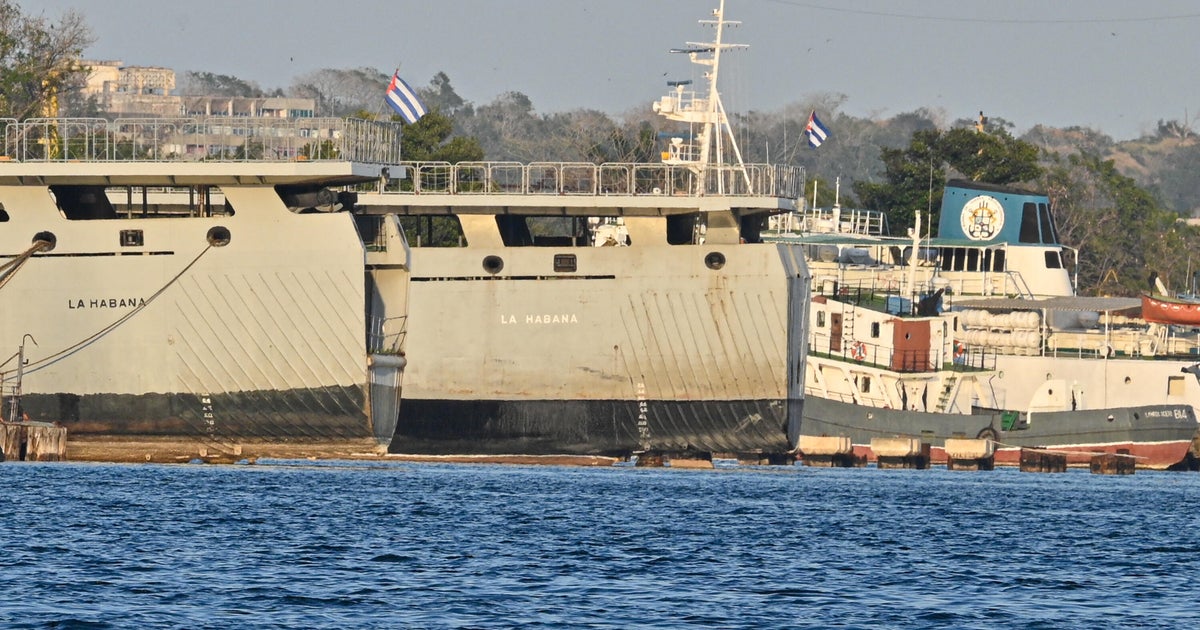

A Tragic Mission: The Fatal Speedboat Incident in Cuban Waters
A Brother’s Obsessive Quest for Freedom
In a devastating turn of events that has sent shockwaves through Cuban-American communities, a group of ten Cuban nationals living in the United States attempted what Cuban authorities are calling a terrorist incursion into the island nation. Among those killed was Michael Ortega Casanova, whose brother, Misael Ortega Casanova, has now spoken out about the tragic incident. In heart-wrenching interviews with the Associated Press, Misael described how his brother had become consumed by what he called an “obsessive and diabolical” mission to overthrow Cuba’s communist government. This wasn’t just a casual political interest or peaceful protest—Michael had become so fixated on freeing Cuba that he apparently lost sight of everything else, including the value of his own life and the devastating impact his death would have on his family.
Michael was an American citizen who had built a life in the United States over more than two decades. He worked as a truck driver, was married, and was about to become a grandfather—his daughter was pregnant at the time of his death. Yet despite these deep roots and personal connections in America, the pull toward liberating his homeland proved stronger than the ties that bound him to his family. Misael told reporters that Michael never shared his plans with anyone, keeping his intentions secret even from those closest to him. This secrecy speaks to the dangerous isolation that can come with extremism, even when motivated by deeply held political beliefs. The incident highlights a painful reality within the Cuban-American community: while many peacefully advocate for change in Cuba and criticize the island’s leadership for human rights violations, some individuals become radicalized to the point of taking violent action, with tragic consequences for everyone involved.
The Deadly Confrontation at Sea
According to the Cuban government’s account of the incident, which was released on Wednesday afternoon, a speedboat registered in Florida entered Cuban territorial waters carrying the ten Cuban nationals who were living in the United States. The vessel was reportedly loaded with weapons and tactical equipment that painted a picture of a group prepared for armed conflict. Cuban authorities said they found assault rifles, handguns, Molotov cocktails, bulletproof vests, telescopic sights, and camouflage uniforms aboard the boat. The Cuban government characterized all ten passengers as having “a known history of criminal and violent activity,” though these claims have not been independently verified by U.S. authorities. The group allegedly planned to carry out what Cuba’s government termed a terrorist attack on the island.
When Cuban border patrol boats approached the speedboat, the situation quickly escalated into violence. According to Cuban officials, those aboard the speedboat opened fire on the border patrol vessel first, prompting return fire from the Cuban authorities. In the ensuing gun battle, four of the ten men were killed, including Michael Ortega Casanova. The six surviving passengers were wounded in the confrontation and subsequently arrested by Cuban authorities. The Cuban government has stated that the wounded men received medical assistance following their capture. Additionally, a seventh individual, identified as Duniel Hernández Santos, was arrested on Cuban soil. According to Cuba’s Interior Ministry, Hernández Santos allegedly confessed that he had been sent from the United States specifically “to guarantee the reception of the armed infiltration,” suggesting a coordinated operation with support already positioned on the island.
International Response and Diplomatic Tensions
The incident has created a complex diplomatic situation at a time when relations between the United States and Cuba are already strained. Cuban President Miguel Díaz-Canel responded firmly on social media platform X (formerly Twitter) on Thursday, declaring that “Cuba will defend itself with determination and firmness against any terrorist and mercenary aggression against its sovereignty and national stability.” This strong statement reflects the Cuban government’s position that they were defending their territory against an armed incursion, rather than simply policing their borders.
On the American side, Secretary of State Marco Rubio acknowledged on Wednesday that the U.S. government currently has no information about the incident beyond what Cuban authorities have provided. Rubio stated that multiple agencies, including the Department of Homeland Security and the Coast Guard, are investigating what happened. “We’re gonna find out exactly what happened here and we’ll respond accordingly,” Rubio said, suggesting that the U.S. government is taking the incident seriously but withholding judgment until American investigators can gather independent information. Vice President JD Vance also addressed the situation, confirming that the White House is monitoring developments closely. This incident comes at a particularly delicate moment in U.S.-Cuba relations, as President Trump has recently imposed new sanctions and tariffs on the Caribbean nation following operations related to former Venezuelan President Nicolás Maduro. The timing raises questions about whether deteriorating diplomatic relations may have emboldened individuals like Michael Ortega Casanova to take matters into their own hands.
The Human Cost Behind Political Extremism
Beyond the geopolitical implications, this tragedy represents a profound human loss for families on both sides of the Florida Straits. Michael Ortega Casanova left behind a wife and an expectant daughter who will never meet her grandfather. His mother, according to his brother Misael, “is devastated” by the loss. The injured survivors, identified as Amijail Sánchez González, Leordan Enrique Cruz Gómez, Conrado Galindo Sariol, José Manuel Rodríguez Castelló, Cristian Ernesto Acosta Guevara, and Roberto Azcorra Consuegra, now face uncertain futures. They are being held in Cuba, likely facing serious criminal charges, and it remains unclear when or if they will return to the United States. Their identities have not yet been officially confirmed by U.S. authorities, adding to the anxiety their families must be experiencing.
The story illustrates how political ideologies, when taken to extremes, can destroy lives and families. Michael had lived in the United States for over twenty years—long enough to build a career, raise a family, and establish himself as an American citizen. Yet something about the situation in Cuba gnawed at him so deeply that he was willing to risk everything, including the wellbeing of his own family, in an attempt to change it. His brother’s characterization of the quest as “obsessive and diabolical” suggests that Michael’s fixation had become unhealthy, consuming his judgment and sense of perspective. “They became so obsessed that they didn’t think about the consequences nor their own lives,” Misael said, speaking of his brother and the other men on the boat. This observation raises important questions about radicalization, even when the underlying cause—freedom from authoritarianism—might be seen by many as noble.
A Community Divided Between Hope and Grief
The Cuban-American community has long been characterized by passionate opposition to Cuba’s communist government, with many families having fled the island seeking freedom and opportunity. This community has consistently protested against what they view as human rights violations by Cuba’s leadership and have advocated for political change on the island. However, there is a world of difference between peaceful protest and advocacy on one hand, and armed incursion on the other. This incident has likely reopened painful divisions within the community about the most appropriate and effective ways to support change in Cuba.
Some may view the men on the speedboat as martyrs or freedom fighters who were willing to sacrifice everything for a cause they believed in. Others will see them as reckless extremists whose actions not only cost lives but may actually harm the cause of Cuban freedom by providing the Cuban government with propaganda material and justification for crackdowns. Misael Ortega Casanova himself seems caught between grief and a desperate hope that his brother’s death might not be entirely in vain. “Maybe it will justify that some day Cuba will be free,” he told the Associated Press, trying to find some meaning in a senseless loss. This heartbreaking statement reveals the complex emotions involved—pride in his brother’s commitment to freedom, devastating grief over his death, and perhaps guilt or confusion about not having known about the plan in time to potentially intervene.
Looking Forward: Lessons and Implications
As investigations continue on both sides of the Florida Straits, this incident serves as a sobering reminder of the human cost of political extremism and the dangers of taking matters into one’s own hands. While the desire for freedom and justice is understandable and even admirable, violence begets violence, and armed incursions are unlikely to achieve the democratic change that many Cuban-Americans hope to see. The four men who died in Cuban waters—including Michael Ortega Casanova—will never see their families again, and the six wounded men now face imprisonment in the very country they hoped to liberate.
For policymakers, the incident underscores the need for clear communication about legal and illegal methods of opposing foreign governments. For families, it’s a reminder to stay connected with loved ones and to recognize warning signs of radicalization before it’s too late. For the Cuban-American community, it’s an opportunity to reaffirm commitment to peaceful means of advocacy and change. And for all of us, it’s a tragic illustration of how deeply held beliefs, when pursued without regard for consequences, can lead good people to make catastrophic decisions that destroy lives and break hearts. As the mother of Michael Ortega Casanova mourns her son, and as his daughter prepares to raise a child who will never know their grandfather, we are reminded that behind every headline about international incidents are real people—with families, dreams, and stories—whose lives are forever changed by a single, fatal decision.