



The Dawn of Robot Educators: Melania Trump’s Vision for AI in American Homes
A Historic Moment at the White House
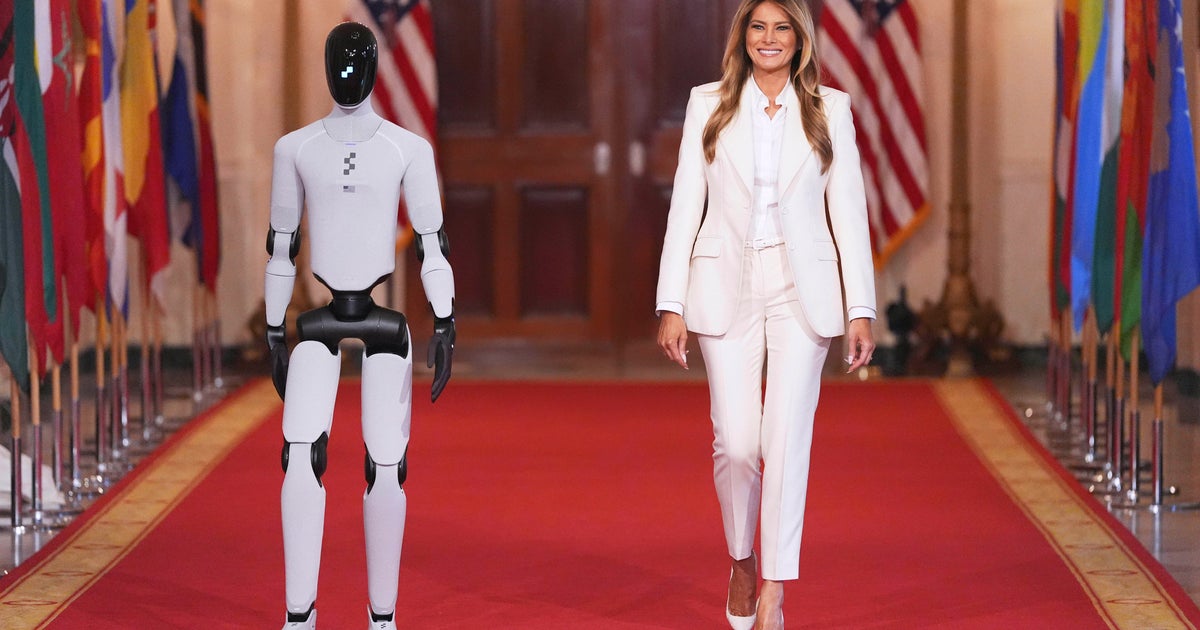
In an unprecedented scene that seemed pulled straight from a science fiction novel, the White House witnessed a historic first on Wednesday when First Lady Melania Trump was escorted not by a Secret Service agent or dignitary, but by a walking, talking humanoid robot. This remarkable moment set the stage for the Fostering the Future Together Global Coalition Summit, where Mrs. Trump, seated alongside French First Lady Brigitte Macron and spouses of other world leaders, unveiled an ambitious and controversial vision for the future of American education. The summit marked a significant moment in the Trump administration’s ongoing embrace of artificial intelligence technology, signaling a bold new direction for how the nation might educate its children in the coming years.
The Vision of “Plato”: Your Child’s New AI Teacher
At the heart of Mrs. Trump’s presentation was the concept of “Plato,” a personalized humanoid educator that would bring the entirety of human knowledge directly into American homes. The First Lady painted an enticing picture of this AI companion, describing how it would provide instantaneous access to classical studies encompassing literature, science, art, philosophy, mathematics, and history—essentially placing humanity’s complete repository of information at children’s fingertips without them ever leaving their living rooms. According to Mrs. Trump, Plato would offer far more than just information delivery; it would provide a truly personalized educational experience tailored to each individual student’s unique needs, learning pace, and even emotional state. She emphasized that unlike human teachers who must divide attention among dozens of students and who inevitably have limits to their patience and availability, this AI educator would be infinitely patient, constantly available, and capable of adapting in real-time to how a child is feeling and learning at any given moment.
The First Lady’s vision extended beyond mere knowledge transfer to the development of higher-order thinking skills. She predicted that children learning with AI companions like Plato would naturally develop “deep critical thinking and independent reasoning abilities” as the technology boosts their analytical skills and problem-solving capabilities. Perhaps most appealingly to overscheduled modern families, Mrs. Trump suggested that this efficient, personalized approach to education would create a healthier, “more well-rounded lifestyle” for children by freeing up precious time previously spent on traditional homework and study. This liberated time, she argued, could be redirected toward activities that contribute to raising “a more complete person”—spending time with friends, playing sports, and exploring personal interests beyond the academic curriculum. It’s a seductive vision that addresses many pain points of contemporary American family life, where children often struggle under the weight of academic pressure while missing out on the unstructured play and social interaction that previous generations enjoyed.
Why Humanoid Form Matters
Mrs. Trump made a specific point about why these AI educators should take humanoid form rather than remaining as disembodied voices or screen-based interfaces. “The future of AI is personified,” she declared, explaining that artificial intelligence would soon migrate from our mobile phones to physical humanoid systems that can move through and interact with the world around us. Her reasoning was practical and compelling: since our entire environment—our homes, schools, streets, and public spaces—has been designed to accommodate human bodies and human movement patterns, humanoid robots are uniquely positioned to navigate and operate within our world seamlessly. They would be able to open doors, climb stairs, sit at tables, and move through spaces in ways that would feel natural and integrated rather than requiring us to redesign our entire infrastructure around technology. This human-shaped AI wouldn’t be confined to a desk or corner; it could follow a child from room to room, accompany them outdoors, and physically interact with learning materials in ways that might make the educational experience feel more natural and engaging.
The First Lady positioned major technology companies—Meta, Microsoft, OpenAI, Google, Zoom, and Adobe—as the pioneering “catalysts for discovery” that would make this vision possible. These tech giants, already deeply embedded in American life through social media, search engines, video conferencing, and productivity tools, would apparently lead the charge in developing and deploying these educational humanoids. It’s worth noting the irony and timing of this endorsement, given that just hours after Mrs. Trump’s speech, a Los Angeles jury delivered a landmark verdict finding Meta and YouTube liable for creating products that cause harmful and addictive behavior in young users—a decision that could establish legal precedent for numerous similar cases pending against social media companies across the country.
The National Security and Economic Argument
Moving beyond the individual benefits to children and families, Mrs. Trump framed the adoption of AI education in terms of national security and economic competitiveness. In language that echoed Cold War-era concerns about falling behind rival nations, she declared it America’s “obligation to ensure that our children become the most technologically fluent and highly educated generation in the world.” This wasn’t presented as merely a nice goal or educational ideal, but as an existential imperative for maintaining American dominance on the global stage. By creating a generation of children raised alongside and educated by artificial intelligence, Mrs. Trump argued, the United States would “secure long-term economic superiority” over competing nations. The economic benefits she outlined were substantial: driving GDP expansion, attracting global investment, and positioning the nation to control what she called “arguably the most important asset of the future”—intellectual property. In this framing, the question isn’t whether American families should welcome AI into their homes and their children’s lives, but rather how quickly they can do so before other nations gain a competitive advantage. She called on the nation to inspire children to “build new platforms, create new industries and optimize production across all sectors,” essentially positioning today’s elementary school students as tomorrow’s AI developers and tech entrepreneurs who will maintain American technological hegemony.
Caution Amid the Optimism
Despite her enthusiastic endorsement of AI education, the First Lady acknowledged that the integration of robots into children’s lives couldn’t proceed with blind optimism. She stated clearly that “the safety of the next generation is always paramount” and that enthusiasm for technological advancement must be “weighed with caution.” However, her remarks provided little detail about what specific safeguards, regulations, or ethical guidelines might govern how these AI educators would interact with children, what data they would collect, how that information would be protected, or who would have access to the intimate details of a child’s learning patterns, emotional states, and home life that such a system would inevitably gather. The acknowledgment of risk felt somewhat perfunctory given the sweeping nature of the vision being proposed and the lack of concrete protections being outlined. This brief nod to caution becomes even more concerning when considered alongside the jury verdict against Meta and YouTube that came just hours later—a powerful reminder that even well-established tech companies with vast resources have created products that harm children, whether intentionally or through negligence. If companies with years of experience and regulatory oversight have failed to protect young users on platforms that are relatively well-understood, what safeguards could possibly be adequate for AI systems that would have unprecedented access to children in their homes, adapting to their emotional states and shaping their developing minds during their most formative years?
The Broader Context and Unanswered Questions
This summit and Mrs. Trump’s remarks represent just one event in a broader White House initiative to position the Trump administration at the forefront of AI policy and adoption. By hosting multiple events focused on artificial intelligence, the administration is clearly signaling its intent to embrace rather than restrict this technology, betting that American leadership in AI will translate to continued economic and geopolitical dominance. Yet this rush to adopt raises numerous questions that remain unanswered. How would families without the resources to purchase expensive humanoid robots ensure their children aren’t left behind in this new educational paradigm? Would this technology deepen existing educational inequalities, or would government programs provide universal access? What happens to human teachers in this vision—are they supplemented, replaced, or relegated to monitoring AI-delivered education? How would children develop crucial social skills if significant portions of their learning and interaction time are spent with patient, always-available robots rather than imperfect, sometimes frustrating humans? What are the long-term psychological effects of forming attachment relationships with AI systems during childhood? And perhaps most pressingly, who controls the curriculum, values, and information that these AI educators would deliver—the parents, the government, the tech companies that build them, or some combination thereof?
The image of a humanoid robot escorting the First Lady of the United States is undoubtedly striking and historic, a visual representation of how rapidly AI is moving from science fiction to everyday reality. Whether Mrs. Trump’s vision of “Plato” teaching America’s children represents an educational revolution that will liberate young minds and secure national prosperity, or a concerning abdication of human connection and oversight during the most critical developmental years, remains to be seen. What is certain is that the decisions made today about how to integrate AI into children’s lives will shape not just their individual futures, but the future of society itself. As we stand at this crossroads, we would do well to proceed with both the optimism and caution the First Lady mentioned—though perhaps with the emphasis reversed, ensuring that our eagerness to embrace the future doesn’t cause us to sacrifice the irreplaceable human elements that have always been at the heart of education.