

Michael Jordan’s Victory Off the Track: How His NASCAR Lawsuit Changed the Sport Forever
A Champion’s New Battle
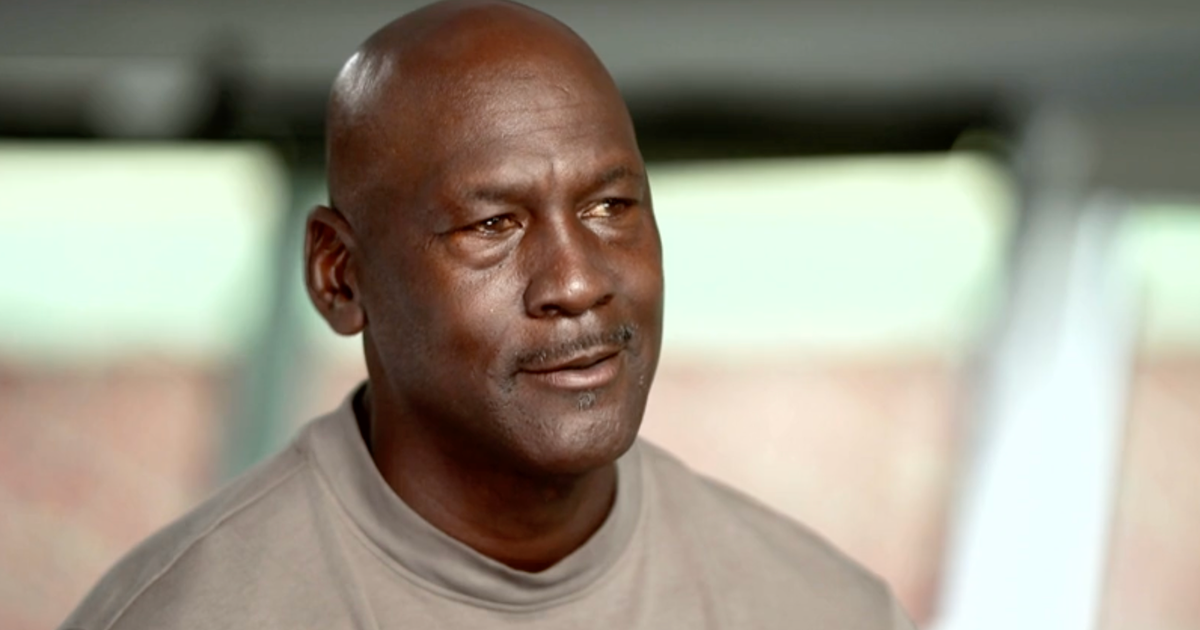
Michael Jordan has spent decades proving he’s one of the greatest competitors the world has ever seen, but his latest victory didn’t come on a basketball court—it came in a courtroom fighting for the future of NASCAR. The six-time NBA champion, who co-owns 23XI Racing with driver Denny Hamlin, recently helped secure a landmark legal settlement that could fundamentally reshape how America’s premier stock car racing series operates. While his team has been tearing up the track this season with an impressive four wins in just six races, including the crown jewel Daytona 500, Jordan’s most significant contribution to motorsports may be what he accomplished behind the scenes. In a rare and candid interview with CBS Mornings co-anchor Gayle King—one that took ten years to arrange—Jordan opened up about why he was willing to risk everything, including being kicked out of NASCAR entirely, to fight what he saw as a fundamentally unfair system that enriched executives while shortchanging the teams and drivers who actually put on the show that fans pay to see.
Recognizing a Broken System
When Michael Jordan first entered NASCAR ownership, he did so as a lifelong fan of the sport with genuine enthusiasm and respect for its history and traditions. However, as he became more deeply involved in the business side of team ownership, Jordan quickly realized that something was seriously wrong with how the sport operated. The NASCAR model, controlled privately by the France family since the sport’s founding in 1948, had created a structure that Jordan believed was fundamentally unsustainable for team owners and participants. “When I got into the sport obviously a lot—as I learned, there was a lot of things that I wasn’t really happy about. This sport was not set up for success long term for the individuals that’s involved in the sport,” Jordan explained to King. His concern wasn’t just about his own bottom line; it was about the long-term viability of NASCAR and whether the people actually competing—the drivers, crews, and team owners—were getting their fair share of the revenue they helped generate. Jordan observed that NASCAR executives at the top were “making a good living” while “the people that were putting on the show was not getting the type of recognition” they deserved, a disparity that struck him as both unfair and ultimately unsustainable for the sport’s future.
The Charter System Controversy
To understand Jordan’s fight, it’s important to understand what he was fighting against. In 2016, NASCAR introduced what it called a “charter system,” a franchise-like model that was supposed to bring more stability and prosperity to team ownership. The system guaranteed 36 teams entry into each Cup Series race and promised them “new revenue opportunities,” which on the surface seemed like a positive development for team owners who had previously faced more uncertainty about their ability to compete. However, according to the antitrust lawsuit filed in October 2024 by both 23XI Racing and Front Row Motorsports, the reality was far different from the promise. The lawsuit argued that the charter system was actually monopolistic in nature, giving NASCAR and the France family excessive control over teams while limiting their ability to operate independently or negotiate for better terms. The legal action claimed that teams were essentially forced to accept whatever terms NASCAR offered because there was no viable alternative—NASCAR’s control of the premier level of stock car racing in America meant teams had nowhere else to go if they wanted to compete at the highest level. This “take it or leave it” approach, the lawsuit contended, violated antitrust laws designed to prevent exactly this kind of monopolistic behavior in American business.
Going All In
For someone as competitive as Michael Jordan, deciding to file a lawsuit against the entire governing body of a sport he loves couldn’t have been an easy decision, but once he made it, there was no turning back. Jordan admitted to Gayle King that when it came time to potentially testify in court, he felt nervous—a rare admission from someone known for performing at his best under the most intense pressure imaginable. But despite those nerves, Jordan was crystal clear about his commitment to the fight. “The moment I decided to file the lawsuit I was ‘all in,'” he said, adding that “I was aggressively going to win. You know … I became a competitor all over again.” This wasn’t some half-hearted legal maneuver or negotiating tactic; Jordan approached the lawsuit with the same intensity and determination that made him a six-time NBA champion. He made it clear that he wouldn’t have filed the suit if he didn’t believe he had a strong case, and more remarkably, he was prepared to accept the most extreme possible consequence of his actions. Jordan stated plainly that he was willing to lose the lawsuit and even get kicked out of NASCAR entirely if that’s what it took to “wake up some people” about what he saw as fundamental flaws in NASCAR’s business model. This willingness to sacrifice his own involvement in the sport demonstrated that his motivations went beyond personal profit—he genuinely believed the system needed to change for NASCAR to thrive in the long term.
A Landmark Settlement
In December 2025, Jordan’s gamble paid off in spectacular fashion when NASCAR reached a landmark settlement in the antitrust case that could reshape the sport for generations to come. The settlement gave all teams “evergreen charters” with improved terms—a major structural shift that addressed many of the concerns Jordan and other team owners had raised about the previous system. While the full financial terms of the settlement were not publicly disclosed, the agreement represented a significant victory for team owners who had been pushing for more equitable treatment and a larger share of the revenue pie. NASCAR chairman and CEO Jim France put the best possible face on the settlement, framing it as a collaborative effort that would benefit everyone involved in the sport. “This outcome gives all parties the flexibility and confidence to continue delivering unforgettable racing moments for our fans, which has always been our highest priority since the sport was founded in 1948,” France said in a statement. He emphasized that NASCAR had “worked closely with race teams and tracks to create the NASCAR charter system in 2016” and that the system “has proven invaluable to their operations and to the quality of racing across the Cup Series.” The settlement, according to France, “reaffirms our commitment to preserving and enhancing that value, ensuring our fans continue to enjoy the very best of stock car racing for generations to come.” While France’s statement emphasized continuity and cooperation, there’s no question that the settlement represented a significant power shift within NASCAR, giving teams more security and presumably a better financial arrangement than they had before.
A Legacy Beyond Basketball
Michael Jordan’s impact on NASCAR may ultimately prove to be as significant as his impact on basketball, though in a very different way. On the court, Jordan changed the game through his individual brilliance, competitive fire, and ability to perform in clutch moments. In NASCAR, he’s changing the game by using his platform, resources, and credibility to fight for systemic changes that will benefit not just his own team but all the participants who make stock car racing possible. Jordan was careful to emphasize that his lawsuit wasn’t some impulsive attack on a sport he’d just discovered. “I’ve been a fan. It’s not like I just woke up and said, ‘You know what? I’m going to go and I’m going to attack NASCAR.’ No, I’ve been involved in NASCAR. I’ve been a supporter for NASCAR for a long period of time,” he explained. His decision to take legal action came from a place of love for the sport and concern for its future, not from any desire to tear it down or profit at others’ expense. Now, with both the legal victory secured and his 23XI Racing team dominating on the track—including victories at NASCAR’s most prestigious events—Jordan has proven once again that he knows how to win, whether the competition happens on a court, on a track, or in a courtroom. As his team continues to compete this season, and as the new charter agreement begins to reshape the business of NASCAR, Michael Jordan’s legacy in motorsports is already secure: he’ll be remembered as the owner who wasn’t afraid to stand up and fight for what he believed was right, even when it meant risking everything he’d built in the sport.