

Escalating Border Conflict: Pakistan and Afghanistan on the Brink of War
A Dangerous Turn in Regional Relations
The fragile relationship between Pakistan and Afghanistan has deteriorated into what officials are calling an “open war,” marking one of the most dangerous escalations between the two neighbors in recent history. On Friday, Pakistan launched extensive air strikes targeting major Afghan cities, including the capital Kabul and the southern stronghold of Kandahar. The attacks represent a significant escalation in months of mounting tensions and violent clashes along their shared border. Journalists on the ground in both Kabul and Kandahar reported hearing the roar of military jets overhead followed by multiple explosions echoing through the cities. This aggressive military action came in direct response to Afghan forces attacking Pakistani border troops the previous night, itself a retaliation for earlier Pakistani air strikes. The situation has spiraled rapidly, with both nations exchanging fire and accusations while diplomatic efforts struggle to gain traction.
The intensity of Pakistan’s response was unmistakable in the words of its political leaders. Information Minister Attaullah Tarar publicly announced on social media that Afghan Taliban defense targets had been struck in Kabul, Paktia province, and Kandahar, signaling the breadth of the operation. Defense Minister Khawaja Asif’s declaration was even more pointed, describing the situation as an “all-out confrontation” and stating bluntly, “Our patience has reached its limit. Now it is open war between us and you.” These weren’t the carefully measured words of diplomatic caution but rather the language of open conflict. Prime Minister Shehbaz Sharif added to the tough rhetoric by asserting that Pakistan’s armed forces possess “the full capability to crush any aggressive ambitions,” leaving little doubt about his government’s willingness to use military force to address what it views as threats emanating from Afghan territory.
The Human Cost and Ground Reality
The violence hasn’t been limited to military targets, with civilians increasingly caught in the crossfire of this escalating conflict. In Kabul, residents experienced a terrifying several hours as jets screamed overhead and multiple loud explosions rocked the city, followed by periods of sustained gunfire. The sounds of war had come to the Afghan capital in a way not seen since the Taliban’s return to power. In Kandahar, home to Taliban supreme leader Hibatullah Akhundzada, similar scenes unfolded as aircraft circled above the city. While Taliban government spokesman Zabihullah Mujahid claimed there were no casualties from the Pakistani air strikes, the broader picture tells a more tragic story. Near the Torkham border crossing, a mortar shell struck a camp housing people returning from Pakistan, wounding seven refugees, with one woman suffering serious injuries. According to Qureshi Badlun, the information chief in Nangarhar province, these vulnerable people were simply trying to return home when they were caught in the violence.
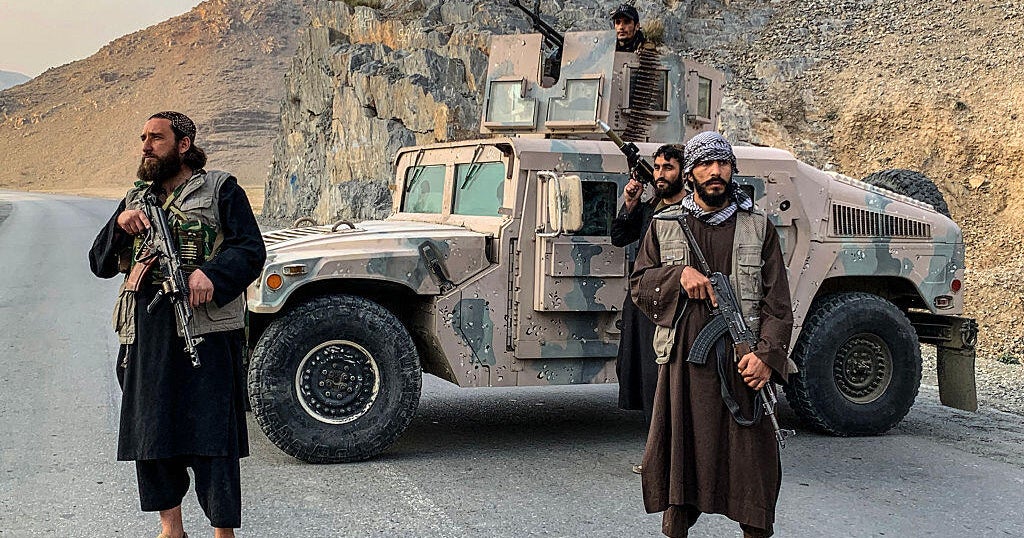
The Afghan defense ministry reported that eight of its soldiers were killed in land operations at the border, where Taliban forces had launched what Mujahid described as “large-scale offensive operations” in response to what Afghanistan views as repeated violations by the Pakistani military. The Taliban spokesman also made the provocative claim that several Pakistani soldiers had been “caught alive,” though this was quickly denied by officials in Islamabad. These competing narratives highlight how difficult it is to verify claims and counterclaims in this rapidly evolving situation. Earlier Pakistani strikes on Nangarhar and Paktika provinces overnight into Sunday had already killed at least 13 civilians, according to the United Nations mission in Afghanistan, demonstrating that non-combatants are paying a heavy price for this military escalation. The border crossings between the two countries have been largely shut since deadly fighting in October that claimed more than 70 lives on both sides, cutting off vital trade routes and separating families.
The Root Causes of Conflict
At the heart of this escalating crisis lies a fundamental disagreement about cross-border militant activity and who bears responsibility for controlling it. Pakistan has consistently accused the Taliban government in Afghanistan of failing to take action against militant groups that use Afghan territory as a base to launch attacks inside Pakistan. From Islamabad’s perspective, Afghanistan isn’t doing enough to police its own territory and prevent it from becoming a safe haven for terrorists who target Pakistani citizens and security forces. The Taliban government vehemently denies these accusations, insisting that it doesn’t harbor militants who attack Pakistan and suggesting that Pakistan’s security problems are internal rather than imported from Afghanistan. This mutual distrust has poisoned the relationship between the neighbors and made diplomatic solutions increasingly difficult to achieve.
The situation is complicated by the presence of multiple militant groups operating in the border region, including the Islamic State-Khorasan chapter, which has claimed responsibility for devastating attacks in both countries. In Pakistan, a suicide attack on a Shiite mosque in Islamabad killed at least 40 people, while in Afghanistan, a suicide bombing at a Kabul restaurant last month also resulted in numerous deaths—both claimed by Islamic State. These attacks demonstrate that while Pakistan and Afghanistan point fingers at each other, both nations face genuine security threats from extremist groups. The porous border between the countries, running through difficult mountainous terrain, makes it challenging for either government to exercise complete control over militant movements. This geographic reality, combined with historical grievances, ethnic connections that cross the border, and the legacy of decades of conflict in the region, creates an environment where tensions can quickly escalate into violence.
Failed Diplomacy and International Mediation
The international community has made multiple attempts to broker peace between the two nations, but these efforts have consistently fallen short of producing lasting results. Qatar and Turkey initially managed to negotiate a ceasefire following the deadly October clashes, offering hope that dialogue might prevail over military action. Several rounds of negotiations followed, bringing together representatives from both sides to discuss their grievances and search for common ground. However, these diplomatic initiatives failed to produce a durable agreement that could address the underlying issues fueling the conflict. The ceasefire was repeatedly violated, with both sides accusing the other of bad faith and continued aggression. As trust eroded, so did the prospects for a peaceful resolution.
Recognizing the deteriorating situation, Saudi Arabia intervened this month with its own mediation efforts, successfully negotiating the release of three Pakistani soldiers who had been captured by Afghan forces in October. This achievement demonstrated that diplomatic channels remained open and that both sides were willing to engage on specific issues. However, the release of prisoners proved insufficient to address the broader conflict, and violence continued to escalate. The failure of these diplomatic initiatives highlights the depth of mistrust between Islamabad and the Taliban government, as well as the domestic political pressures both sides face. For Pakistan’s government, appearing weak in the face of militant attacks is politically untenable, while the Taliban authorities cannot be seen as capitulating to Pakistani demands without undermining their own legitimacy and authority.
Regional Implications and the Path Forward
The escalation between Pakistan and Afghanistan carries serious implications far beyond their shared border, threatening regional stability and potentially drawing in other nations with interests in the area. A full-scale war between the two countries would create humanitarian catastrophe, with millions of civilians at risk and the potential for massive refugee flows into neighboring countries. The economic consequences would be severe, disrupting trade routes and further isolating Afghanistan’s already struggling economy while imposing costs on Pakistan that it can ill afford. The conflict also risks creating opportunities for militant groups to expand their operations amid the chaos, potentially strengthening organizations like Islamic State-Khorasan that threaten both countries and the wider region.
The path forward from this crisis requires urgent international engagement and a willingness from both Pakistan and the Taliban government to step back from the brink. De-escalation must be the immediate priority, with both sides agreeing to halt military operations and return to negotiations in good faith. Any sustainable solution will need to address Pakistan’s legitimate security concerns about cross-border militant activity while respecting Afghanistan’s sovereignty and territorial integrity. This might involve international monitoring mechanisms, intelligence sharing agreements, and coordinated operations against groups that threaten both nations. The alternative—continued escalation and open warfare—would be catastrophic for millions of ordinary people in both countries who simply want to live in peace and security. The international community, regional powers, and both governments bear a responsibility to prevent this border dispute from spiraling into a wider conflict that would destabilize an already fragile region and create suffering on an enormous scale.