


Pope Leo XIV’s Easter Message: A Powerful Call for Hope Amid Global Turmoil
A Historic First Easter Addresses a World at War
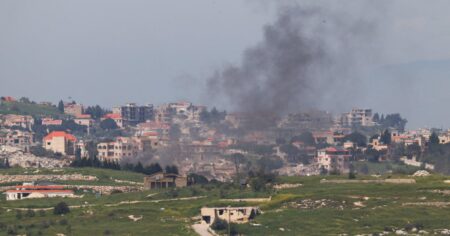
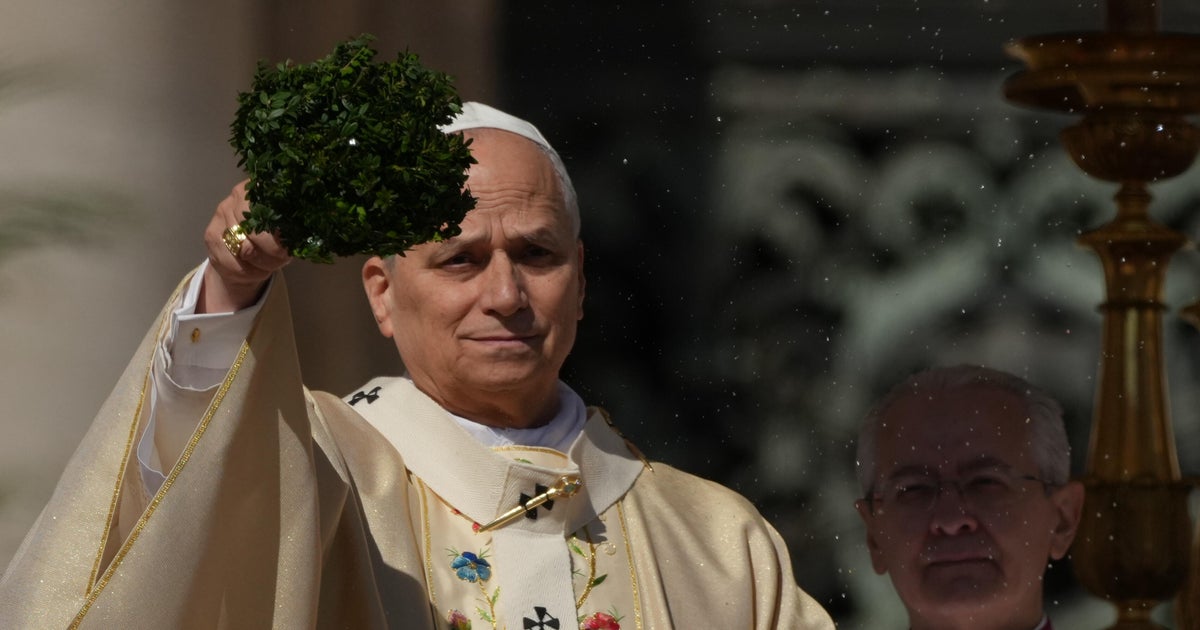
Pope Leo XIV marked a significant milestone in his papacy this Easter Sunday, delivering his first Easter Mass as the leader of the Catholic Church with an urgent and heartfelt message for a world torn apart by conflict and violence. Standing before thousands of faithful gathered in St. Peter’s Square, the pontiff—who made history as the first American-born pope—used this most sacred of Christian holidays to address the mounting crises facing humanity. With the backdrop of an elaborate altar flanked by pristine white roses and spring perennials adorning the steps leading down to the piazza, the visual symbolism of renewal and rebirth perfectly complemented his message of hope. Yet beneath this beautiful setting lay the gravity of his words, as he confronted the harsh realities of our time: the U.S.-Israeli war on Iran now entering its second month, Russia’s relentless campaign in Ukraine, and countless other conflicts spreading across the globe like a contagion of human suffering.
The timing of Leo’s message could not have been more critical. As Easter celebrates the resurrection of Jesus Christ—Christianity’s ultimate story of hope triumphing over death—the new pope seized this moment to remind the world that the power of Christ’s resurrection is fundamentally nonviolent. This wasn’t just theological rhetoric; it was a direct challenge to those wielding power in today’s world. Leo specifically called out those who wage war, those who abuse the vulnerable, and those who place profits above people. His message was clear: true strength doesn’t come from military might or economic dominance, but from fostering respectful relationships at every level of society—from individuals and families to social groups and entire nations. This vision of power stands in stark contrast to the zero-sum thinking that often drives international relations, where one nation’s gain must come at another’s expense.
The True Meaning of Power and Peace
In what may become a defining theme of his papacy, Pope Leo XIV articulated a revolutionary understanding of power that challenges conventional thinking. “The power with which Christ rose is entirely nonviolent,” he proclaimed, offering a counternarrative to the military and economic forces that dominate global affairs. This wasn’t merely a passive call for peace; it was an active reimagining of what strength means. According to Leo, genuine power doesn’t seek private interests but pursues the common good. It doesn’t impose a singular vision but works collaboratively to design and implement plans together with others. This philosophy represents a fundamental rejection of authoritarian approaches to leadership, whether in politics, business, or international relations.
The pope’s words resonated with particular poignancy given the current state of world affairs. As conflicts rage and humanitarian crises multiply, his message offered an alternative path forward—one based on cooperation rather than domination, on dialogue rather than dictates, on shared prosperity rather than winner-take-all competition. For the faithful gathered in St. Peter’s Square and the millions watching around the world, this wasn’t just spiritual guidance; it was practical wisdom for navigating an increasingly fractured world. Leo’s vision challenges us to reconsider our assumptions about security, success, and survival, suggesting that our greatest strength lies not in our ability to defeat others but in our capacity to work together toward common goals.
Confronting Death in All Its Forms
Pope Leo XIV didn’t shy away from naming the many faces of death that haunt our world today. In a particularly powerful section of his Easter homily, he expanded the concept of death beyond its physical meaning to encompass all the forces that diminish human dignity and potential. He implored the faithful to maintain hope even as death “lurks in injustices, in partisan selfishness, in the oppression of the poor, in the lack of attention given to the most vulnerable.” This broader definition of death acknowledges that people can be killed in many ways beyond physical violence—through systemic injustice, through willful neglect, through the crushing weight of poverty and marginalization.
The pope’s litany of sorrows painted a comprehensive picture of human suffering in our time. “We see it in violence, in the wounds of the world, in the cry of pain that rises from every corner because of the abuses that crush the weakest among us,” he said, before adding three specific modern scourges: “the idolatry of profit that plunders the earth’s resources,” “the violence of war that kills and destroys,” and the systematic abuse of the weakest members of society. By linking economic exploitation, military aggression, and social injustice, Leo demonstrated an integrated understanding of how these forces work together to create cycles of suffering. The phrase “idolatry of profit” is particularly striking, framing the pursuit of financial gain above all else as a false religion that demands human sacrifice. This critique speaks directly to corporate practices that prioritize shareholder returns over worker welfare, environmental destruction in the name of economic growth, and the widening gap between rich and poor that characterizes our era.
A Legacy of Hope from Pope Francis
In a touching tribute that highlighted the continuity of papal teaching, Leo XIV quoted his predecessor Pope Francis, warning against the dangerous seduction of indifference in the face of “persistent injustice, evil, indifference and cruelty.” This reference served multiple purposes: it honored Francis’s legacy, it demonstrated humility by acknowledging that wisdom doesn’t begin and end with any single leader, and it reinforced a message that transcends individual papacies. The quote also contained an essential element of hope that formed the core of Leo’s Easter message: “it is also true that in the midst of darkness, something new always springs to life and sooner or later produces fruit.”
This agricultural metaphor, so appropriate for a spring celebration of renewal, offers profound comfort and challenge simultaneously. It acknowledges that change doesn’t happen instantly—seeds must be planted, tended, and given time to grow. Yet it also promises that darkness is never the final word, that life persistently breaks through even the hardest ground, that hope is not naive optimism but a recognition of life’s fundamental resilience. For people living through what can feel like an endless barrage of bad news, this message provides both patience and persistence: patience to understand that transformation takes time, and persistence to keep planting seeds of justice and peace even when the harvest seems impossibly distant.
Restrictions and Tensions in the Holy Land
The Easter celebrations this year took place under unusually difficult circumstances, particularly in Jerusalem, where traditional ceremonies at the Church of the Holy Sepulchre—revered by Christians as the site of Jesus’ crucifixion and resurrection—were dramatically scaled back. Israeli police imposed strict limits on the sizes of public gatherings due to ongoing missile attacks, a security measure that has affected not only Christian observances but also recent Muslim celebrations of Ramadan and Eid al-Fitr, as well as the current Jewish festival of Passover. The restrictions reached a symbolic low point on Sunday when the Jewish priestly blessing at the Western Wall, typically attended by tens of thousands of worshippers, was limited to just fifty people.
These limitations have done more than simply inconvenience religious observances; they have strained relations between Israeli authorities and Christian leaders, creating diplomatic and spiritual tensions in a region already fraught with conflict. The situation reached a particularly contentious point last week when police prevented two of the church’s most senior religious leaders, including Latin Patriarch Pierbattista Pizzaballa, from celebrating Palm Sunday at the Church of the Holy Sepulchre. For many observers, this incident symbolized how security concerns, however legitimate, can collide with religious freedom and cultural traditions. Pope Leo XIV had expressed hope earlier in the week that the war could be concluded before Easter, a wish that went unfulfilled. The reality of scaled-back ceremonies served as a sobering reminder of how military conflicts don’t just claim lives on battlefields—they also disrupt the rhythms of religious life, community gathering, and the practice of faith that sustains millions through difficult times.
The Song of Hope the World Needs Today
As Pope Leo XIV prepared to deliver his traditional “Urbi et Orbi” message—Latin for “to the city and the world”—his Easter Mass had already established the central theme of his emerging papacy: hope as an active force for change. His declaration that “we need this song of hope today” wasn’t a call to ignore reality or engage in wishful thinking. Rather, it was an invitation to participate in a different kind of power, one that transforms from within rather than imposing from without. In a world where violence seems to beget more violence, where conflicts spread like wildfire, and where the vulnerable bear the greatest burdens, the pope’s message offers an alternative vision.
This “song of hope” acknowledges suffering without being consumed by it, confronts injustice without surrendering to despair, and imagines a better future without ignoring present challenges. It’s a hope grounded in the Easter story itself—the Christian belief that death does not have the final word, that resurrection follows crucifixion, that new life emerges from apparent endings. For Leo XIV, this isn’t just ancient theology but urgent contemporary relevance. As he assumes leadership of the Catholic Church at this critical moment in history, his Easter message has set a clear direction: toward nonviolent power, collaborative problem-solving, protection of the vulnerable, and persistent hope even in the darkest times. Whether the world is ready to hear and heed this song of hope remains to be seen, but the first American pope has made clear that he intends to keep singing it.