


A Community United in Grief: Canada Mourns Victims of Tumbler Ridge School Shooting
Leaders Stand Together in Unprecedented Show of Unity
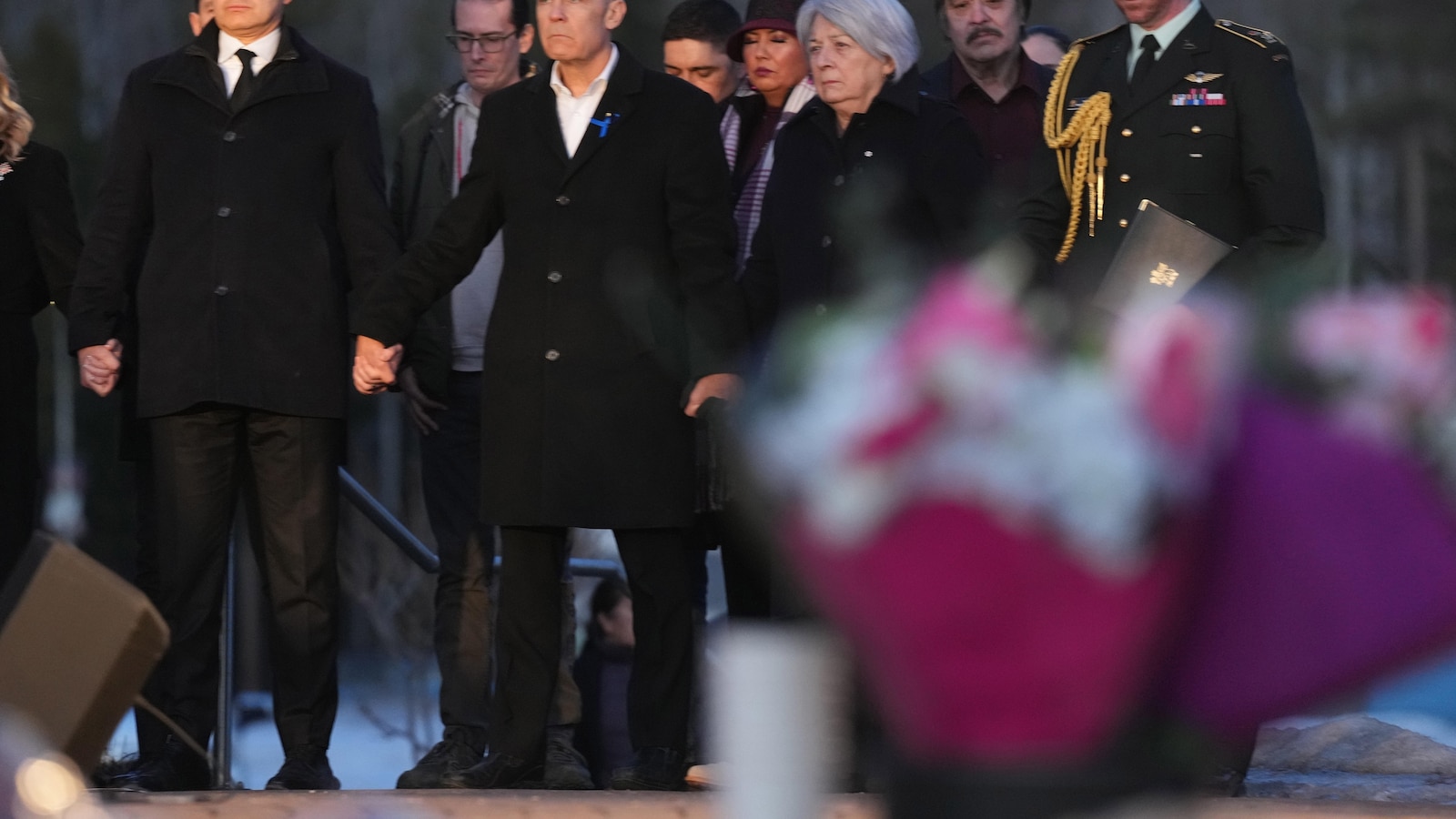
In a powerful and emotional display of national solidarity, Canadian Prime Minister Mark Carney and Conservative Opposition leader Pierre Poilievre set aside political differences to stand hand-in-hand at a vigil in Tumbler Ridge, British Columbia, honoring the victims of one of Canada’s most devastating mass shootings. The scene outside the town hall was one of raw emotion and collective grief as an Indigenous leader’s prayer song filled the air, while hundreds of community members gathered, many clutching photographs of the loved ones they had lost. The image of the nation’s top political leaders traveling together from Ottawa and joining hands in mourning sent a clear message: in the face of unimaginable tragedy, Canada stands united. This wasn’t just a photo opportunity or political theater—it was a genuine moment of shared humanity as the country grappled with a loss that has shaken it to its core. Carney took time during his address to name each of the six victims who died at Tumbler Ridge Secondary School, but he also made a point that surprised some observers: he said that Jennifer Jacobs and her son Emmett, the mother and stepbrother of the shooter who were also killed, “deserve to be mourned” as well, recognizing that they too were victims of this incomprehensible violence.
The Timeline of Terror and Heartbreak
The tragedy unfolded on Tuesday in a sequence of events that would forever change the small British Columbia town of Tumbler Ridge. According to authorities, 18-year-old Jesse Van Rootselaar allegedly began her rampage at home, where she killed her 39-year-old mother, Jennifer Jacobs, and her 11-year-old stepbrother, Emmett Jacobs. After these initial killings, Van Rootselaar made her way to nearby Tumbler Ridge Secondary School, where she opened fire on students and staff. By the time the violence ended with her own death, five children and one educator had been killed, and two others were seriously wounded. The victims identified by authorities include four 12-year-olds—Kylie Smith, Abel Mwansa, Zoey Benoit, and Ticaria Lampert—along with 13-year-old Ezekiel Schofield and 39-year-old assistant teacher Shannda Aviugana-Durand, who undoubtedly tried to protect her students in those terrifying final moments. Two survivors, 12-year-old Maya Gebala, who suffered wounds to her head and neck, and 19-year-old Paige Hoekstra, who also sustained bullet wounds, remained hospitalized in Vancouver as the community gathered to mourn.
A Methodical Attack Met With Heroic Response
Deputy Commissioner Dwayne McDonald of the Royal Canadian Mounted Police in British Columbia provided chilling details about the nature of the attack during a Friday briefing. He explained that the shooter did not appear to be targeting specific individuals but was instead “hunting” through the school, prepared to engage “anybody and everybody” she encountered. When officers arrived at the scene, they found absolute chaos—fire alarms were blaring, and someone was shouting from a window that the suspect was upstairs. The responding officers didn’t hesitate; they immediately entered the building and headed up the stairwell, where they were met with gunfire. Within seconds of that encounter, more shots rang out, though investigators later determined through video review that these weren’t directed at any specific person—the shooter had taken her own life. McDonald emphasized that from the moment police confronted the suspect, no further injuries occurred to students at the school. In total, four firearms were recovered from the scene—two from the family home and two from the school itself. What made the community’s response even more remarkable was the speed and courage displayed by first responders and school staff. As Prime Minister Carney noted, first responders arrived at the school within two minutes, and teachers instinctively shielded their students with their own bodies, acts of heroism that undoubtedly saved lives.
Words of Comfort and Promises for the Future
Prime Minister Carney’s words at the vigil were carefully chosen to acknowledge both the present pain and the long road ahead for this traumatized community. He spoke of sitting with people who are “living through something no one should ever have to endure” and offered reassurance that when the grief feels overwhelming and “the world feels impossible,” millions of Canadians stand with them. Perhaps more importantly, he acknowledged what many trauma survivors know all too well—that the hardest times often come after the media attention fades. “When the cameras leave and the quiet sets in—know that we will still be here,” Carney promised, committing the federal government to long-term support for Tumbler Ridge. Opposition leader Poilievre, in turn, praised Carney for his “tremendous grace” in handling the crisis, further cementing the non-partisan nature of the response. British Columbia Premier David Eby also made a significant promise to the traumatized students: they would never be forced to return to that school building if they didn’t want to. “I will promise that not one of you will ever be forced to go back to that school. We will provide a safe place for you to go back to school,” Eby declared, recognizing that for many of these young people, the physical space where such horror occurred could never feel safe again, no matter how much time passes.
A Rare But Devastating Reality in Canada
This attack represents Canada’s deadliest mass shooting since 2020, when a gunman in Nova Scotia killed 13 people and set fires that resulted in nine additional deaths. School shootings, while tragically common in the United States, remain relatively rare in Canada, a fact often attributed to the country’s strict gun-control laws. The Canadian government has historically responded to mass shootings with additional gun-control measures, including a recently expanded ban on all weapons classified as assault weapons. However, this tragedy has reignited conversations about what more can be done to prevent such attacks, especially when they occur in small, close-knit communities like Tumbler Ridge, where residents thought they were insulated from such violence. The fact that an 18-year-old had access to four firearms raises questions about gun storage laws, mental health interventions, and how warning signs might be identified and addressed before tragedy strikes. Yet these policy discussions, while necessary, feel almost secondary in the immediate aftermath as a community tries to comprehend how one of their own could commit such an act of violence against her own family and neighbors.
A Community Defined by Care Faces Its Darkest Hour
In his remarks, Prime Minister Carney spoke to something fundamental about Tumbler Ridge—that this community has always been defined by people caring for each other. That character showed through even in the darkest moments of Tuesday’s attack, when teachers used their bodies as shields, when first responders raced toward danger, and when neighbors immediately began supporting one another in the aftermath. The vigil itself, attended by hundreds, was a testament to this spirit of community. As people held photos of the loved ones they’d lost and supported one another through tears and prayers, they demonstrated that the bonds holding Tumbler Ridge together are stronger than the forces that tried to tear it apart. Moving forward won’t be easy for this town. The trauma of what happened will ripple through this community for years, affecting not just those who were in the school that day but entire families, friend groups, and the broader social fabric of the town. Children will struggle with nightmares and anxiety; parents will grapple with how to help their kids feel safe again; and the entire community will have to find a way to honor the memory of those lost while somehow moving forward. But if the vigil showed anything, it’s that Tumbler Ridge won’t face this journey alone—the entire nation is walking alongside them, committed to ensuring that when the immediate crisis passes and the cameras do leave, the support and care will remain.