


The Quiet Resistance: Iran’s College Students Continue to Challenge the Islamic Republic
Campus Protests Persist Despite Government Crackdown
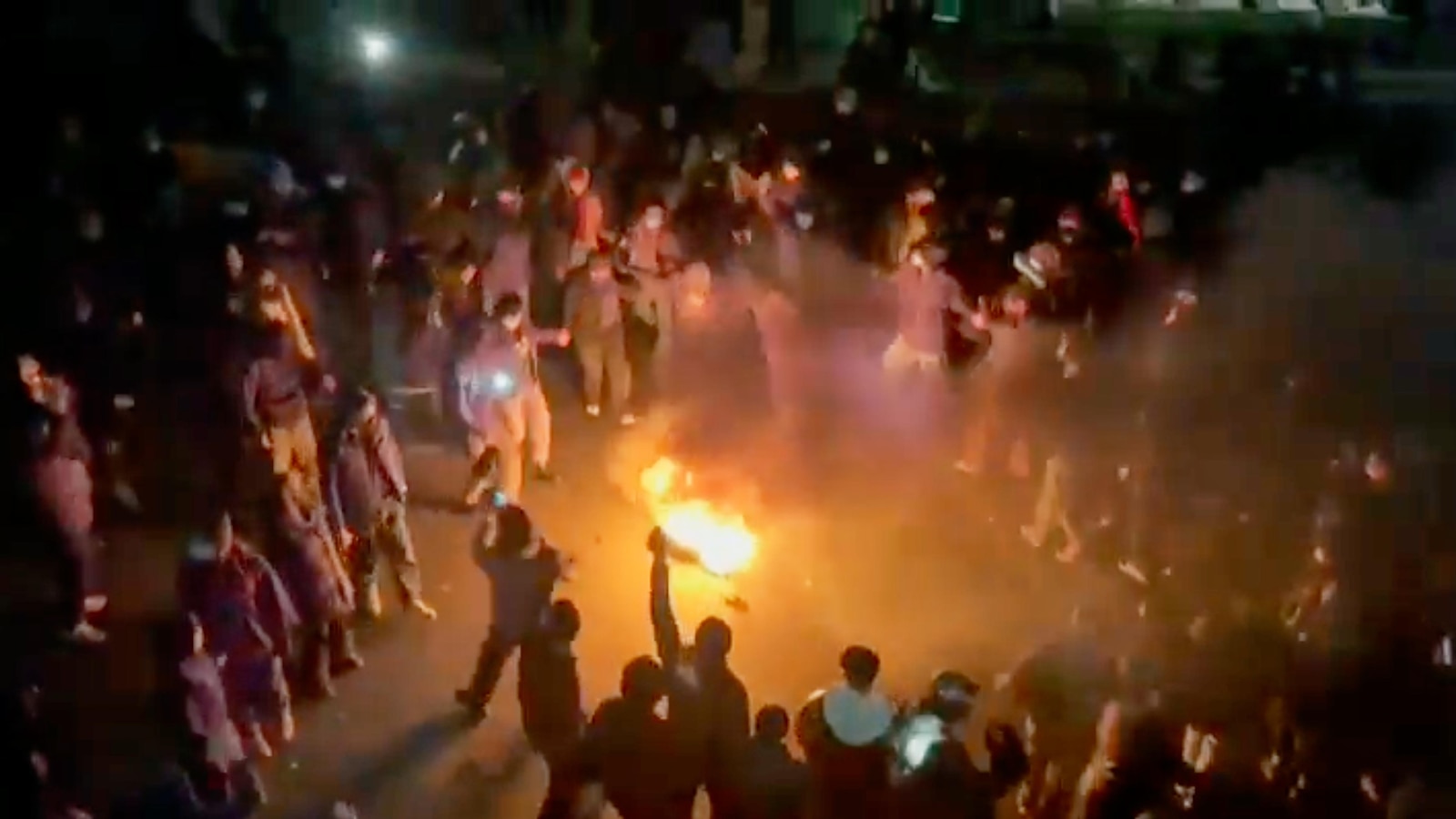
Seven weeks after Iranian authorities violently suppressed massive nationwide demonstrations, the spirit of resistance refuses to die on university campuses across the country. Despite the government’s brutal response that left thousands dead, students continue to organize protests and express their dissatisfaction with the Islamic Republic’s leadership. According to reports from exiled activists tracking student movements, verified social media footage, and firsthand accounts from students on the ground, anti-government demonstrations occurred on at least ten campuses in recent weeks. Students who witnessed these protests, speaking anonymously out of fear for their safety, describe a palpable sense of anger spreading across Iranian universities. They talk about feeling disoriented and uncertain about their nation’s future, caught between an increasingly authoritarian government and the threat of foreign military intervention. The demonstrations represent more than just political protest—they embody the deep frustration of a generation that sees its future slipping away under the weight of economic mismanagement, international sanctions, and political repression.
The Deadly January Crackdown and Its Aftermath
The current wave of campus unrest follows one of the deadliest government crackdowns in the Islamic Republic’s history. What began as protests in Tehran’s grand bazaar over deteriorating economic conditions in December quickly spread to cities and towns nationwide. In early January, authorities responded by ordering universities to switch to remote learning, shutting down internet access, and launching a violent suppression campaign. The full extent of the casualties has been difficult to confirm due to government-imposed internet restrictions and official censorship. The Human Rights Activists News Agency has confirmed more than 7,000 deaths and continues investigating thousands more cases. While the Iranian government acknowledges over 3,000 killed, observers note that authorities have historically undercounted fatalities from civil unrest. Ali Taghipour, an exiled activist monitoring the student movement, reports that at least 128 university students died during the nationwide protests, calling it “the biggest massacre of university students” since the Islamic Republic’s founding. When universities reopened for in-person learning, it coincided with traditional 40-day memorial observances for those killed in January. These memorial gatherings on campuses became flashpoints for renewed protests, as students honored their fallen peers while continuing to voice opposition to the government that killed them.
Recent Demonstrations and Government Warnings
The return to campus life has brought fresh waves of protest activity. Last Saturday, both Sharif University of Technology and Amir Kabir University witnessed demonstrations where scuffles broke out between protesters and apparent pro-government supporters, including members of the Basij—the volunteer paramilitary force that maintains a presence on university campuses through student groups. Videos verified by the Associated Press captured protesters chanting “Shameless! Shameless!”—a taunt commonly directed at security forces and plainclothes government agents. The all-female Al Zahra University in northern Tehran saw students chanting anti-government slogans on Monday, while students at the University of Tehran’s College of Foreign Languages held a spirited demonstration that same day. What began as a memorial for a student killed in the January protests evolved into a defiant gathering where participants stamped their feet and chanted, “For each person killed, a thousand stand behind them!” This sentiment captures the determination many students feel—that government violence, rather than intimidating them into silence, has strengthened their resolve and increased their numbers.
The government has responded to these campus protests with threats and intimidation. On Tuesday, government spokeswoman Fatemeh Mohajerani warned students not to cross a “red line,” language that carries ominous implications given the recent deadly crackdown. An Iranian state television anchorwoman read a statement attributed to Sharif University’s president apologizing for “inappropriate” events on campus—likely a forced statement meant to signal administrative compliance with government pressure. The following day, Gholamhossein Mohseni Ejehi, the hard-line cleric who heads Iran’s judiciary, escalated the threats further. He announced that judicial authorities would prosecute “crimes” on campuses if educational administrators couldn’t control student protests. Ejehi has become synonymous with Iran’s recent repression, publicly calling for expedited punishments for protesters. Universities across Iran have already begun barring some students from campus and conducting disciplinary hearings that can result in expulsion or even permanent bans from pursuing higher education anywhere in the country.
The Historical Role of Students in Iranian Resistance
Iranian university students have a long and proud history of challenging government authority and demanding political change. In 1999, students in Tehran sparked some of the first major demonstrations against the Islamic Republic, establishing a pattern that would repeat in subsequent decades. Campus activism played a crucial role in the 2008-2009 protests supporting Iran’s reformist political leaders, as students organized and sustained momentum for the movement. More recently, in 2022, student-led demonstrations evolved from supporting specific reforms to openly calling for the overthrow of Iran’s theocratic system of government. This radicalization of student politics reflects a generational shift in how young Iranians view their government. A doctoral student at the University of Tehran explained that the hard-line government’s refusal to implement any meaningful policy changes, combined with the devastation of Iran’s middle class under decades of Western sanctions and economic mismanagement, has led many college-age Iranians to conclude that the Islamic Republic simply cannot be reformed. This represents a fundamental loss of faith in the system itself, not just disagreement with specific policies or leaders.
This political vacuum has created space for alternative visions of Iran’s future to gain traction. Surprisingly, Reza Pahlavi—the son of the shah who was overthrown in the 1979 revolution—has become “a serious political cause for some people in Iran,” according to the doctoral student. While memories of the shah’s autocratic rule remain mixed among Iranians, nostalgia for that era’s relative economic prosperity has grown as current economic conditions have worsened. However, years of systematic repression have prevented any organized opposition from developing within Iran. A social sciences student at Tehran University noted that government crackdowns have also eliminated spaces on campuses where political debate and organizing could occur. “After 2022, around 70% of student associations were closed,” he said, including a progressive student association he had led. This deliberate dismantling of student organizations represents the government’s strategy of preventing any institutional framework that could sustain organized resistance.
Students Caught Between Violence and War
Iranian students today find themselves trapped between their government’s willingness to use deadly force against dissent and the growing threat of foreign military intervention. Supreme Leader Ayatollah Ali Khamenei’s government faces increasing threats of military action from the United States over Iran’s nuclear program, creating a complex and dangerous situation for those seeking political change. The social sciences student from Tehran University captured this impossible dilemma: “On the one hand, we are facing a government that isn’t afraid of killing anyone, and on the other hand, we are facing outside powers that support people being killed.” A student from a university in the northern city of Babol reported that fear about what a potential war could mean for Iran is rising across campus. While his personal hope is for a “democratic secular republic” in Iran, he worries that armed conflict could lead to tremendous suffering and “increase the risks of the country’s disintegration.” This concern is not abstract—Iran already struggles to maintain basic services like electricity and water in some regions, and war could devastate what remains of the country’s infrastructure.
The university in Babol has kept courses online since early January, preventing students from gathering on campus—a strategy clearly designed to limit opportunities for organizing and protest. The student there reported that many of his peers have stopped attending remote courses as a form of passive resistance. Meanwhile, political divisions exist even among opposition-minded students. The social sciences student from the University of Tehran said he disagrees with students who support Reza Pahlavi, partly because the exiled opposition figure has called for U.S. strikes on Iran. “I’ll never understand a person who sits in London yelling for America to bomb Iran,” he said. “How will they accept responsibility for what happens tomorrow?” This statement reveals the profound moral complexity facing Iranian students who oppose their government but refuse to support foreign intervention that could kill their fellow citizens. They seek freedom and democracy but reject solutions that would come at the cost of potentially thousands of Iranian lives and further destruction of their country. These young people represent Iran’s future, yet they find themselves with few good options—facing a brutal government at home and the prospect of devastating foreign military action, all while trying to continue their education and imagine a better future for their nation.