



Roman Lead Ingots Unearthed in Wales: A Remarkable Window into Ancient History
A Fortunate Discovery in the Welsh Countryside
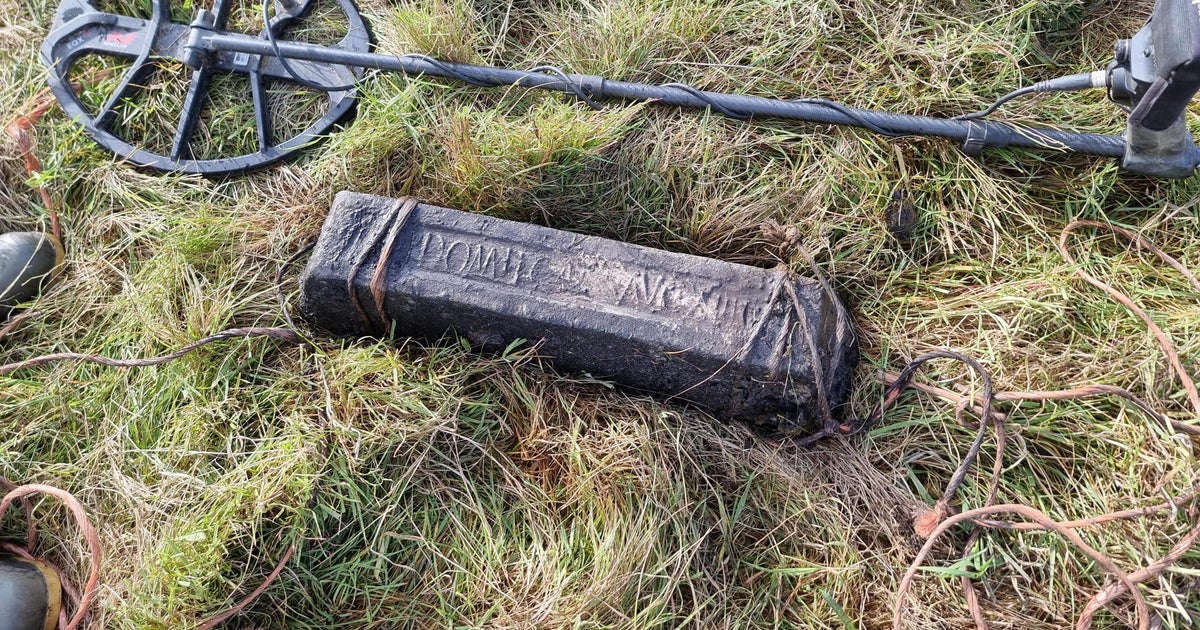
In what can only be described as a metal detectorist’s dream come true, two hobbyists exploring the rolling farmland of western Wales have uncovered a pair of Roman-era lead ingots that are rewriting our understanding of the region’s ancient past. Nick Yallope and Peter Nicolas made this extraordinary discovery while methodically searching grazing land in Ceredigion with the landowner’s permission, finding the artifacts buried just eighteen inches beneath the surface and less than six feet apart from each other. The significance of their find cannot be overstated—these are the first artifacts of this particular type ever discovered in this part of Wales. Amgueddfa Cymru, the Welsh national museum, announced the discovery on Tuesday, sparking excitement among historians and archaeologists who have long suspected that this coastal region played a more important role in the Roman Empire than previously documented. For Yallope and Nicolas, what began as a regular day of metal detecting transformed into a moment that connected them directly with history spanning nearly two millennia. The thrill of unearthing something so ancient and historically significant is a feeling that every amateur archaeologist dreams about, and for these two detectorists, that dream became reality on an ordinary Welsh farm.
Understanding the Historical Significance of Roman Lead “Pigs”
These lead ingots, colloquially known as “pigs” due to their shape resembling a mother pig with piglets lined up to nurse, date back to AD 87 according to inscriptions found on their surfaces. This dating places them firmly within the reign of Emperor Domitian, a Roman ruler known particularly for his ambitious expansion of the empire and his extensive building programs throughout Roman territories. During this period, Rome was at the height of its power, controlling vast territories across Europe, North Africa, and the Middle East. Lead was an incredibly valuable commodity in the Roman world, serving purposes far beyond what we might imagine today. These ingots were primarily used to produce essential tools and weapons that equipped Roman legions, but lead also played crucial roles in Roman daily life—from water pipes and roofing materials to weights and even cosmetics. According to museum curator Carrie Canham, the discovery sheds light on why Romans were so determined to conquer this particular region of Wales. Ceredigion’s landscape is blessed with rich mineral and ore deposits that the Romans recognized as extremely valuable resources worth the effort of military conquest and occupation. The lead mined from this area during Roman times didn’t just stay local—it spread throughout the vast Roman Empire, traveling along ancient trade routes to destinations as far-flung as Rome itself, North Africa, and the eastern provinces.
Ceredigion’s Role in the Roman Industrial Network
The discovery of these ingots confirms what archaeologists have long suspected about Ceredigion’s importance in the Roman economic system. This wasn’t just a remote outpost on the edge of the empire; it was an active industrial center contributing valuable resources to Roman civilization. The region’s Celtic heritage predates the Roman arrival, and the conquest of this mineral-rich territory represented a significant strategic and economic victory for Rome. Previous archaeological work has already hinted at the scale of Roman operations in the area. In 2005, researchers discovered the remains of a Roman lead smelting site preserved in a peat bog in Ceredigion, providing physical evidence of the industrial processes that transformed raw ore into transportable ingots like the ones recently discovered. The BBC reported at the time that nearby mines likely supplied the raw material for this smelting operation, creating a complete industrial chain from extraction to processing to transportation. The proximity of the recently discovered ingots to known Roman industrial sites suggests they may have been part of a shipment being prepared for transport when they were lost or deliberately buried nearly two thousand years ago. The fact that they remained undiscovered until now, buried on what is currently organic grazing land, speaks to how dramatically the landscape and its uses have changed over the centuries.
The Personal Impact on Those Who Made the Discovery
For the individuals directly involved in this discovery, the experience has been profoundly meaningful on both personal and community levels. Nick Yallope expressed his feelings in the museum’s news release, saying, “I feel incredibly proud to have uncovered something so rare and important to our local heritage. Unlocking a new chapter of our area’s past is incredibly exciting.” These words capture the unique thrill that comes from literally holding history in your hands—knowing that you are the first person to touch an object in nearly two millennia, and that your discovery will contribute to human knowledge and understanding. For landowner Geraint Jenkins, whose family currently farms the land organically, the discovery has provided a fascinating new perspective on the property he tends daily. “It’s remarkable to think that land we now farm organically once played a role in a much wider Roman landscape,” Jenkins reflected. This observation beautifully illustrates how layers of history exist beneath our feet, how the same piece of earth can serve vastly different purposes across the centuries—from Roman industrial site to medieval farmland to modern organic agriculture. The cooperation between metal detectorists and landowner also demonstrates the importance of proper permissions and relationships in archaeological discovery, as Yallope and Nicolas had secured Jenkins’ permission before beginning their search, following proper protocols that protect both historical artifacts and property rights.
Legal Framework and Future Display Plans
The discovery and handling of these ingots followed Wales’s established legal framework for archaeological finds, which balances the excitement of discovery with the need for proper preservation and study. Metal detectorists in Wales are required to obtain permission before exploring private land, ensuring that property rights are respected while allowing for the possibility of important historical discoveries. When items believed to be treasure are found, they must be reported to the country’s Portable Antiquities Scheme, an organization that examines discoveries to determine their historical value and legal status. This system has proven remarkably effective at bringing significant artifacts to light while protecting the interests of both finders and the public. The examination process helps determine whether items qualify as treasure under Welsh law, which affects how they are preserved and where they ultimately end up. In this case, the historical significance of the ingots was immediately apparent, and plans are already underway for their public display. Museum curator Carrie Canham announced that the pieces will be featured in a new archaeology gallery opening at the Amgueddfa Ceredigion museum in spring 2027, giving the public an opportunity to see these remarkable artifacts up close and learn about their context within Roman Britain and the wider empire.
A Pattern of Important Welsh Discoveries
This discovery is part of a broader pattern of significant archaeological finds being made by metal detectorists in Wales in recent years, suggesting that the country’s soil still holds many secrets waiting to be revealed. Between 2020 and 2022, another group of metal detectorists in Wales discovered a spectacular hoard of Bronze Age artifacts that included axes, spearheads, rings, and even a sword scabbard—items dating back even further than the Roman ingots. The Welsh government declared those artifacts treasure in 2023, ensuring their preservation and study. These repeated discoveries highlight several important points: first, that amateur archaeologists with metal detectors are making genuine contributions to our understanding of history; second, that Wales has been an important center of human activity for thousands of years; and third, that despite centuries of farming, building, and development, significant artifacts remain undiscovered beneath the surface. The combination of hobbyist enthusiasm, proper legal frameworks, and professional archaeological expertise creates an environment where important historical discoveries can be made, properly documented, and preserved for future generations. As these Roman lead ingots prepare for their public debut in 2027, they serve as a reminder that history isn’t just something we read about in books—it’s literally beneath our feet, waiting for patient searchers with the right tools, permissions, and dedication to bring it back to light. The story of these ingots connects us across nearly two millennia to the Roman workers who cast them, the miners who extracted the ore, and the vast imperial system that valued Welsh lead highly enough to establish industrial operations in this remote but resource-rich corner of the empire.