


NATO’s Warning: Russia Could Rebuild Military Within Five Years After Ukraine Peace Deal
A Resilient Force Emerges From the Ashes of War
The head of NATO’s Military Committee has issued a sobering assessment that should give pause to anyone hoping for lasting peace in Europe. Admiral Giuseppe Cavo Dragone, who serves as the principal military adviser to NATO Secretary General Mark Rutte, estimates that Russian forces could fully recover their pre-war military capabilities within just three to five years following any potential peace agreement in Ukraine. Speaking candidly during an interview at a London security conference, Dragone painted a picture of a Russian military that, despite suffering enormous losses, has demonstrated a troubling resilience and capacity for regeneration that Western planners cannot afford to ignore.
This week marked four years since Russia launched its full-scale invasion of Ukraine—a conflict the Kremlin euphemistically labeled a “special military operation” and confidently expected to conclude within days. Instead, the war has ground on relentlessly, exposing both Russian weaknesses and, paradoxically, revealing Moscow’s ability to adapt, absorb punishment, and continue fighting. Dragone’s assessment reflects a hard-earned respect for an adversary that has confounded expectations repeatedly. “We are expecting a strong, resilient—because they demonstrate that now they are resilient—conventional force,” he told ABC News, making clear that NATO is preparing for a formidable Russian military presence along the alliance’s eastern flank for years and potentially decades to come.
From Humiliation to Adaptation: Russia’s Military Evolution
The opening chapters of Russia’s invasion read like a military disaster manual. Russian forces, expected by many to steamroll through Ukraine, instead found themselves bogged down, outmaneuvered, and forced to retreat from swaths of territory they had initially captured in the north, northeast, and south of the country. The tactical and strategic failures were so pronounced that they prompted widespread reassessment of Russian military capabilities. “Their capabilities were way below what we expected at the very beginning,” Dragone acknowledged, referring to those early chaotic months when poorly coordinated Russian columns became sitting ducks for determined Ukrainian defenders.
But dismissing Russia based on those early failures would be a dangerous mistake, according to the NATO commander. Over the past four years, Moscow has demonstrated a grim capacity for reconstitution that Western observers must take seriously. Despite losing staggering numbers of soldiers—Dragone cited figures of 35,000 casualties in just November and December alone, with thousands killed or wounded for every kilometer of ground gained—Russia continues to recruit, rebuild, and field experienced forces. “They are a force which is experienced and trying to modernize as much as they can,” Dragone noted, highlighting that battlefield experience, even purchased at tremendous cost, creates a veteran military that knows how to fight and survive in modern combat conditions.
The scale of Russia’s commitment becomes clearer when examining its economic transformation. Moscow has reorganized its entire economy onto a war footing, with more than 40 percent of the national budget now dedicated to military spending. This isn’t just about sustaining current operations, Dragone suggests, but about positioning Russia to rapidly rebuild and potentially expand its military forces once active hostilities cease. The admiral estimates that Moscow may aim to generate military capabilities reaching 150 percent of what they possessed when the invasion began—a reflection of their perception that they must counter NATO’s collective strength along their western borders.
The Grinding Reality of an Attrition War
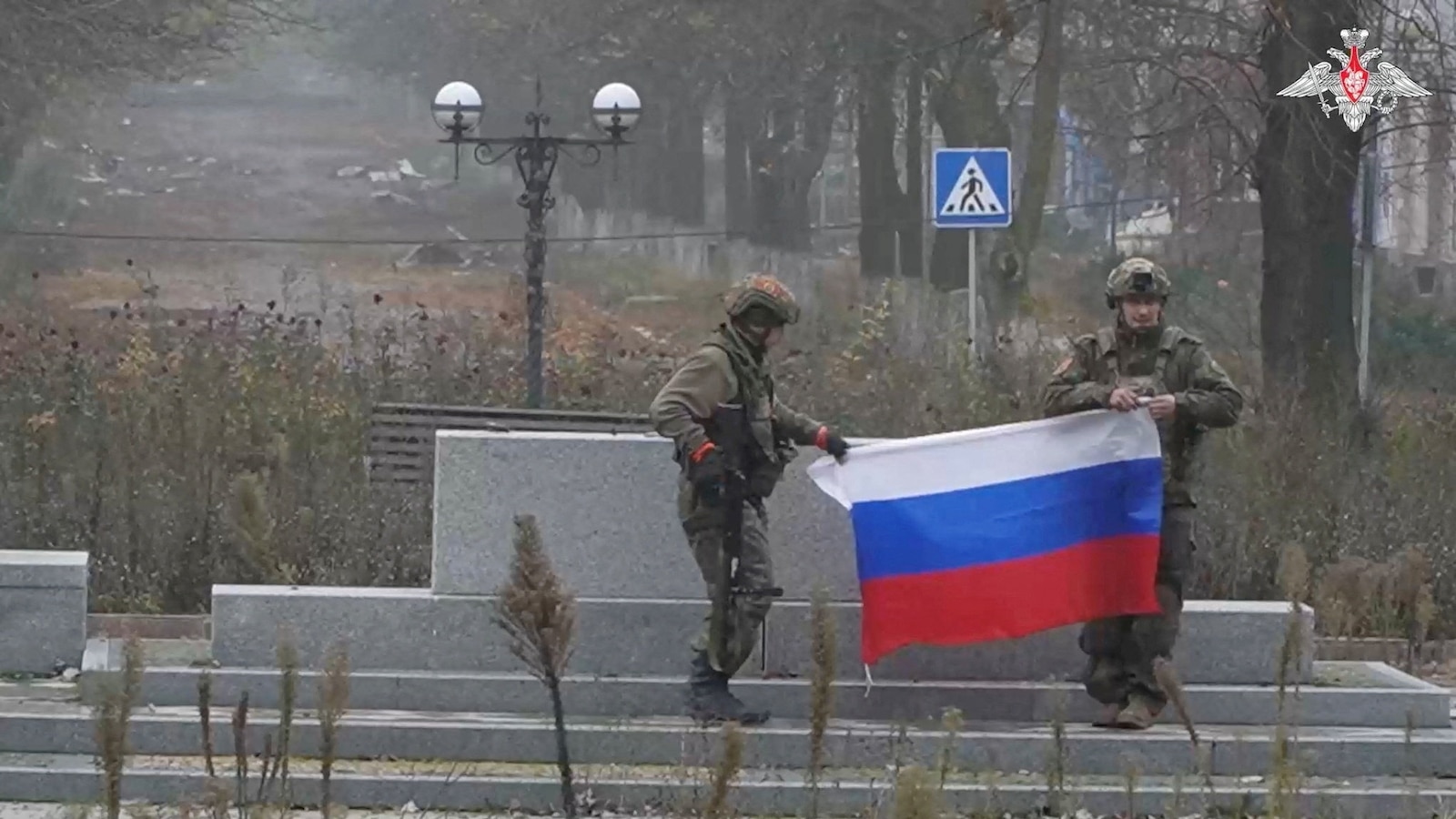
President Vladimir Putin has attempted to portray Russia’s slow advance as inevitable progress, demanding that Ukraine cede the entire Donbas region—comprising Luhansk and Donetsk—as part of any future peace settlement. Yet the reality on the ground tells a more complex story. While Russian forces do make advances, they come at horrific cost and glacial pace. Daily, Moscow’s Defense Ministry announces the capture of villages, settlements, and towns along the 750-mile front line, and Putin himself has claimed that Russian troops are “advancing on all fronts.” But these announcements, when examined closely, reveal gains measured in meters and small villages rather than strategic breakthroughs.
Ukrainian President Volodymyr Zelenskyy and his Western supporters have challenged Putin’s triumphalist narrative, pointing to the painfully slow Russian progress, mounting casualties that some estimates place in the hundreds of thousands, and signs of economic strain despite Moscow’s best efforts to maintain wartime production. Dragone’s assessment splits the difference: Russia is advancing, but at a pace that makes ultimate victory unclear and perhaps unattainable. “They will not be able, at this pace, to conquer the whole of Donbas, for example, by the end of this year,” he stated flatly.
The NATO commander described the current situation as “an attrition war that is not leading anybody anywhere,” suggesting that the tremendous expenditure of lives and resources on both sides has failed to produce decisive results for either party. Dragone called the situation an “oxymoron”—describing something as a “special military operation” that has lasted five years makes no sense. This grinding stalemate, in his view, creates the conditions where negotiation becomes not just desirable but necessary. “This is why it should be time that they sit and they start to find a negotiated solution,” he argued, though he acknowledged that such decisions ultimately rest with political leaders, not military commanders.
The Hybrid War Already Underway
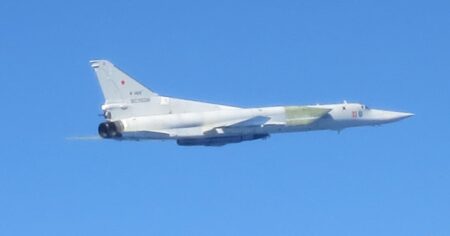
While the shooting war rages in Ukraine, Dragone made clear that Russia is already engaged in a different kind of conflict against NATO itself—what security experts call hybrid warfare. Allied leaders have documented and accused Moscow of conducting a wide range of operations within NATO borders, including surveillance activities, sabotage operations, assassination attempts, and various forms of interference and intimidation. Russian drones and missiles targeting Ukrainian infrastructure have repeatedly violated NATO airspace, creating dangerous incidents that could potentially escalate.
“They are testing us, of course,” Dragone said matter-of-factly. “In these four years, they have been testing us on our reaction times, how we are able to respond.” This ongoing probing represents a fundamental asymmetry in the confrontation between Russia and the Western alliance. NATO nations operate under moral, ethical, and legal constraints that simply don’t bind Moscow in the same way. “This is an unfair confrontation that we need to be ready to face,” Dragone acknowledged, calling it a “handicap situation” but one that NATO must accept rather than abandon its principles.
The admiral characterized Russia as “more aggressive” while NATO remains fundamentally reactive—a reflection of the alliance’s defensive nature and democratic character. “We are reacting. Our reactions are appropriate. The issue is that we are a defensive alliance, so that’s our mindset,” he explained. When asked whether NATO has been too hesitant in its responses, Dragone deferred to political leadership, noting that strategic decisions about what effects the alliance seeks to achieve properly belong to elected officials, while military commanders execute those decisions. This careful delineation reflects NATO’s fundamental character as a political alliance with military means, not a military organization that sets its own political objectives.
Nuclear Shadow Over the Conflict
The growing tensions between NATO and Russia have periodically been punctuated by nuclear threats from Moscow—reminders that this conflict takes place under the shadow of weapons that could end civilization. This week provided yet another example when Russia’s Foreign Intelligence Service made unsubstantiated allegations that Ukraine was attempting to obtain nuclear weapons with assistance from the United Kingdom and France. Ukraine quickly and emphatically denied the claim, which appeared designed more for propaganda purposes than as a credible intelligence assessment.
The accusation was followed by a threat from Dmitry Medvedev, a former Russian president and prime minister now serving on the country’s Security Council, who warned of a “symmetrical response” from Russia using “any type of weapon, including non-strategic nuclear weapons.” Such rhetoric has become disturbingly routine throughout the conflict, with various Russian officials periodically raising the specter of nuclear escalation whenever they wish to intimidate the West or signal displeasure with some development.
Dragone’s response to these threats was measured and professional: NATO remains “concerned” about Russia’s nuclear capabilities, but fundamentally “nothing has changed.” This assessment reflects the alliance’s understanding that while nuclear threats must be taken seriously, they haven’t altered the fundamental strategic calculus. Russia’s nuclear arsenal has always existed, and NATO’s planning has always accounted for it. The threats, however disturbing, don’t represent a new capability or necessarily signal increased likelihood of use—they’re primarily tools of psychological warfare designed to create hesitation and division within the alliance.
Preparing for the Long Haul
Dragone’s overall assessment paints a picture of a long-term strategic challenge that will extend well beyond whenever the current active fighting in Ukraine eventually ends. His timeline of three to five years for Russian military reconstitution means that even if peace were achieved tomorrow, NATO would face a rebuilding Russian military by the end of this decade—a military that would be experienced, modernized to the extent Russian resources and technology allow, and potentially larger than the force that invaded Ukraine in early 2022.
This projection carries profound implications for European security, NATO defense planning, and Western defense budgets. It suggests that the current moment of heightened defense spending and military readiness cannot be a temporary spike but must become the new normal. It means that countries along NATO’s eastern flank—Poland, the Baltic states, Romania—will continue to face a significant military threat regardless of how the Ukraine conflict concludes. And it underscores that any peace agreement must be accompanied by credible security guarantees and deterrence measures, because a pause in fighting is not the same as a lasting peace.
The admiral’s frank assessment serves as a valuable corrective to both excessive pessimism and unwarranted optimism. Russia has proven neither the unstoppable juggernaut some feared nor the paper tiger that early failures suggested. Instead, it has revealed itself as a resilient, if brutal, power willing to absorb enormous costs in pursuit of its objectives and capable of learning, adapting, and regenerating its military strength. For NATO and its members, this means the challenge of deterring Russian aggression will remain a central strategic concern not just for the duration of the current conflict, but for years and likely decades to come. The alliance that emerges from this crisis must be prepared not for a brief emergency, but for sustained commitment to collective defense in an era when the assumption of permanent European peace has been shattered.