

Senator Rand Paul Stands Alone: A Republican Voice of Dissent on Iran Strikes
Breaking Ranks on Military Action
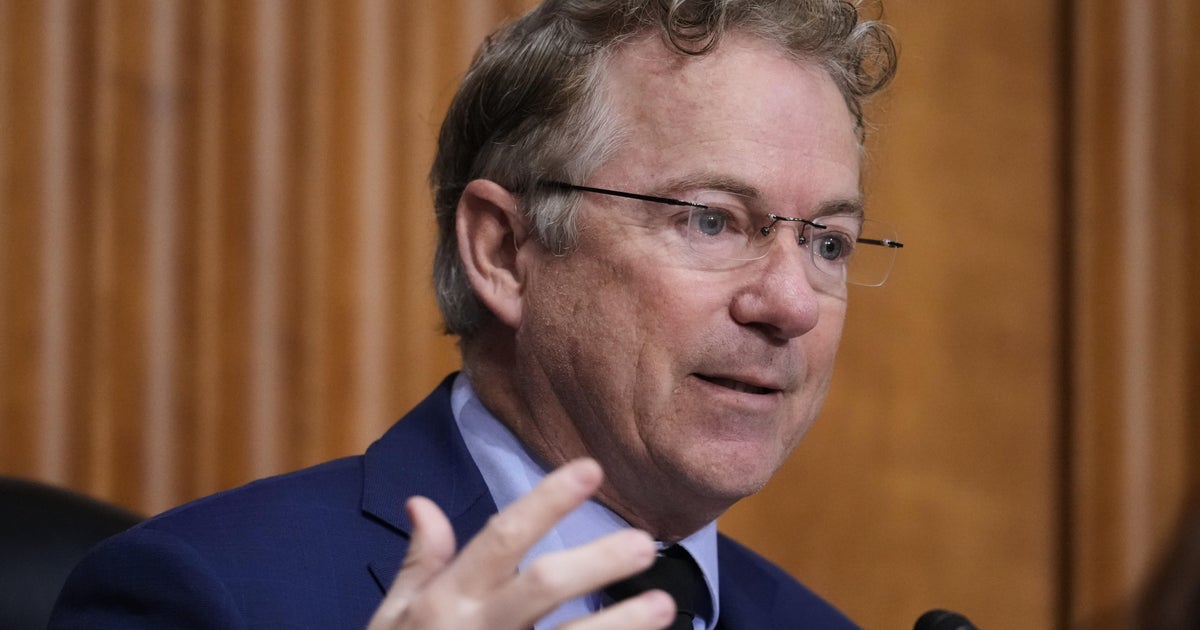
In a bold display of political independence, Kentucky Senator Rand Paul has emerged as the singular Republican voice in the Senate opposing President Trump’s recent military strikes against Iran. While the overwhelming majority of his Senate Republican colleagues have rallied behind the president’s decision, Paul has taken a principled stand rooted in constitutional concerns. The senator, who chairs the Homeland Security Committee, argues that President Trump overstepped his executive authority by launching military action without first securing congressional approval. For Paul, this isn’t simply a matter of political disagreement—it’s a fundamental question about the balance of powers that America’s founding fathers carefully designed into the Constitution. He believes that military engagement should only occur with congressional authorization or in response to an imminent threat to the nation, neither of which he believes applied in this situation. This stance puts him at odds not just with the president, but with nearly his entire party, demonstrating the kind of maverick independence that has become his political trademark.
The Founders’ Vision and Congressional Weakness
Senator Paul’s opposition to the Iran strikes stems from a deep concern about what he sees as Congress’s abdication of its constitutional responsibilities. Drawing on the wisdom of James Madison and the other founding fathers, Paul emphasizes that America’s system of government was intentionally designed with checks and balances, where the legislative and executive branches would each zealously guard their respective powers and hold each other accountable. Madison and his contemporaries envisioned a dynamic tension between these branches, where ambition would counteract ambition, preventing any single branch from accumulating too much authority. However, Paul believes the current Congress has abandoned this vision entirely, lacking the institutional ambition to challenge presidential overreach. “I don’t think our founders ever imagined our current Congress that is completely lacking in ambition,” Paul lamented, noting that today’s legislators seem unwilling to check the president’s power on matters of war and peace. This represents a fundamental breakdown in the constitutional order, where Congress has essentially surrendered one of its most important powers—the power to declare war—to the executive branch. For Paul, this moment serves as a critical test of whether the Republican-controlled Congress will reclaim its constitutional authority or continue to rubber-stamp presidential decisions on military matters.
A Complicated Relationship with Trump
Senator Paul’s willingness to challenge President Trump on Iran policy is particularly notable given their complex political history. The two men were rivals during the 2016 presidential primary season, competing for the Republican nomination with very different visions for America’s role in the world. Since Trump’s victory, however, the two have largely reconciled their differences, and Paul has been a reliable ally on many issues. Yet the senator has never hesitated to break with the president when he believes Trump is being led astray, particularly by more hawkish advisers within the administration. “I think he was misled by some of the more aggressive people,” Paul said, suggesting that the president’s natural instincts lean toward restraint rather than military intervention. Paul genuinely believes that Trump’s “basic instincts have been for less war,” and that the strikes against Iran represent a departure from those instincts, likely influenced by foreign policy hawks whispering in the president’s ear. This perspective allows Paul to criticize the president’s actions while maintaining that Trump’s core philosophy aligns more closely with his own non-interventionist views. It’s a delicate balancing act—opposing a specific policy decision while expressing faith in the president’s underlying judgment and intentions.
Warning of Political and Economic Consequences
Beyond the constitutional and foreign policy concerns, Senator Paul is sounding the alarm about the practical consequences of an escalating conflict with Iran. He believes that a prolonged war could exact a devastating political toll on the Republican Party, potentially costing them control of both the House and Senate in upcoming elections. American voters, weary from decades of Middle Eastern conflicts, may punish Republicans at the ballot box if they’re seen as leading the country into another protracted military engagement. The economic costs could be equally significant, particularly as the Trump administration reportedly prepares to request an additional $200 billion in funding for the war effort. Paul has already declared his intention to vote against this supplemental funding request, arguing that cutting off financial support is the most effective way to end the conflict. “Most people will accept the argument and say, ‘Oh, you can’t quit funding ’em. They’re over there,'” Paul acknowledged, referring to the common argument that denying funds would abandon troops already deployed. However, he counters that “if they weren’t funded, they’d be brought home,” presenting defunding as a path to bringing soldiers home rather than leaving them stranded. The Pentagon has remained silent on Paul’s announced opposition, but his vote represents a significant challenge to the administration’s war plans.
Domestic Challenges and Government Dysfunction
While foreign policy concerns dominate headlines, Senator Paul is also grappling with significant domestic issues, particularly the ongoing partial government shutdown affecting the Department of Homeland Security. The standoff has created chaos in the nation’s air travel system, with Transportation Security Administration workers going more than a month without paychecks—a situation that affects both security and the workers’ livelihoods. President Trump recently signed an executive order to pay these workers using funds from legislation passed late last year, dubbed the “One Big Beautiful Bill,” providing temporary relief. However, Paul warns that this represents only a short-term solution to a recurring problem. “We’re going to have another one of these in six months,” he predicted, noting that the current funding expires at the end of September. Rather than opposing budget battles altogether, Paul wants to redirect these confrontations toward more productive ends: “I’m not against the fight. In fact, I want to make the fight such that we’re fighting over the increases and not the salaries,” he explained, suggesting that fiscal debates should focus on overall spending levels rather than holding workers’ paychecks hostage. Adding another layer of complexity to Paul’s oversight role is his contentious relationship with the new Homeland Security Secretary, Markwayne Mullin, whom Paul opposed during the confirmation process over character concerns and Mullin’s response to a 2017 incident where Paul was physically assaulted. Though Mullin addressed their conflict in his swearing-in statement, Paul admits they haven’t spoken since, though he expects they’ll “operate in a professional manner as time goes on.”
Looking Toward the Future
Senator Paul’s independent streak—inherited from his father, former Texas Congressman Ron Paul, a libertarian icon and three-time presidential candidate—continues to shape his political trajectory. This independence has led him to support Kentucky Representative Tom Massie, another libertarian-leaning Republican who has criticized the Trump administration’s handling of the Jeffrey Epstein files. President Trump has responded by endorsing Massie’s relatively unknown primary opponent, Ed Gallrein, creating another flashpoint between Paul and the president. Yet Paul defends Massie vigorously: “You can like Donald Trump and Thomas Massie, because they represent a lot of the same things,” he argued, emphasizing that “Massie represents an independence of spirit that I think you want in your legislator. If you want a rubber stamp, we could just have AI.” This comment captures Paul’s broader philosophy—that legislators should think independently rather than simply echoing whatever position the party or president takes. Looking ahead to 2028, Paul is keeping his presidential options open, rating the chances of another run at “50/50” and planning to make a final decision after the midterm elections. If he does run, it won’t be merely for personal ambition but to ensure that certain ideas remain represented within the Republican Party: “We need to have a free market wing. We need to have a free trade wing in the party. And we need to have a wing of the party who’s not eager for war and tries to at least explore diplomacy as an option to war,” he explained. Whether or not he ultimately pursues the presidency, Rand Paul’s lonely stand against his party on Iran demonstrates that principled opposition still exists in American politics, even when it means standing virtually alone.