


Britain’s Green Party Victory Signals Political Earthquake for Labour
A Stunning Defeat in Labour’s Traditional Heartland
Britain’s political landscape has been shaken to its core following a remarkable election result in Greater Manchester that has sent shockwaves through the governing Labour Party. In what should have been a safe seat in the Gorton and Denton constituency, Prime Minister Keir Starmer’s party suffered a humiliating defeat, finishing in third place behind both the environmentalist Green Party and the right-wing Reform UK. The Green Party’s emphatic victory represents more than just a single lost seat in the 650-member House of Commons—it’s a stark warning sign about the fragility of Starmer’s leadership and the dramatic reshaping of British politics. Less than two years after Labour swept to power in what seemed like a commanding landslide victory in July 2024, the party now finds itself hemorrhaging support on multiple fronts, caught in a political crossfire between surging parties on both the left and right of the spectrum.
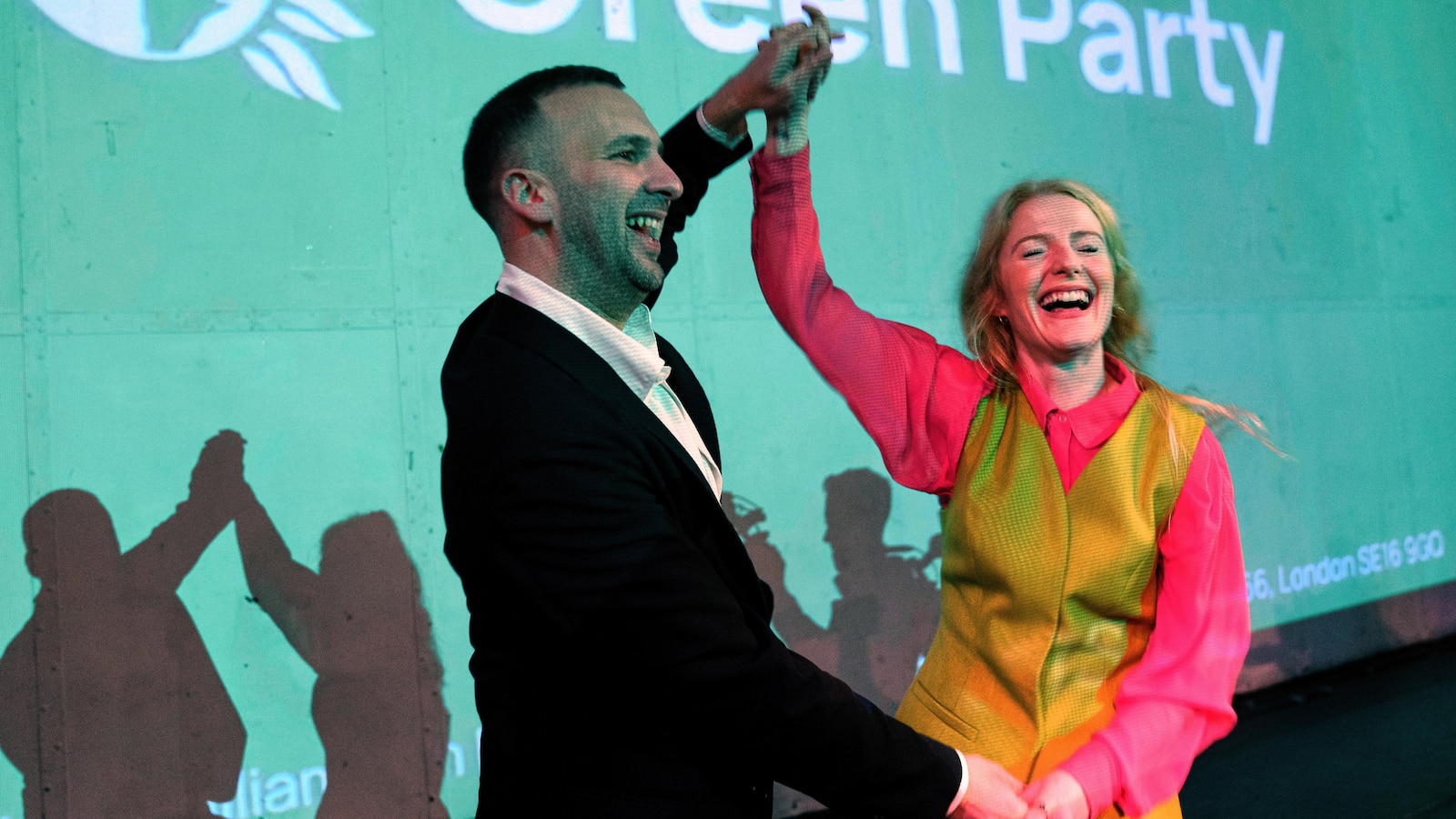
The result is particularly devastating because Gorton and Denton represents exactly the kind of territory where Labour should be strongest—a diverse area in northern England’s industrial heartlands that has historically been a Labour stronghold. The victory by 34-year-old plumber Hannah Spencer, the newly elected Green Party representative, demonstrates a fundamental shift in voter sentiment that threatens to unravel Labour’s traditional coalition. In her victory speech, Spencer struck themes that should naturally belong to Labour, speaking about the cost of living crisis, deteriorating public services, and the sense of abandonment felt by communities in former industrial regions. Her message resonated powerfully with voters who once reliably supported Labour but now feel the party has lost touch with their concerns and values.
Starmer’s Leadership Crisis Deepens
For Prime Minister Keir Starmer, this electoral defeat compounds what has already been an extraordinarily difficult period in office marked by policy missteps, broken promises, and internal party turmoil. Since taking office, Starmer has struggled to deliver on his central campaign promise of economic growth, while public services continue to deteriorate and many Britons face an ongoing cost of living squeeze. His government has been repeatedly knocked off course by policy U-turns, particularly around controversial welfare cuts that alienated core supporters, and has failed to establish a clear sense of direction or purpose. The situation became critical just three weeks before the Gorton and Denton election when Starmer’s premiership teetered on the brink of collapse amid a leadership crisis triggered by scandals involving his appointees.
The crisis stemmed from revelations about Peter Mandelson, the veteran Labour politician whom Starmer appointed as Britain’s ambassador to Washington. When documents released in the United States exposed Mandelson’s past relationship with convicted sex offender Jeffrey Epstein, it unleashed a torrent of criticism about Starmer’s judgment. Although Starmer himself has no connection to Epstein and bears no implication in any wrongdoing, the controversy surrounding his decision to appoint Mandelson despite the ambassador’s known association with Epstein after the financier’s 2008 conviction proved devastating. Several Labour lawmakers and the party’s Scottish leader publicly called for Starmer’s resignation, while his chief of staff and communications director both quit. The Prime Minister managed to survive by securing public backing from potential leadership rivals, but his authority was severely damaged.
Now, with the Gorton and Denton defeat fresh in everyone’s minds, the knives are out again within the Labour Party. Under British parliamentary rules, the governing party can replace its leader—and therefore the Prime Minister—without calling a general election, meaning Starmer’s main threat comes from within his own ranks rather than from opposition parties. Labour lawmaker Jon Trickett bluntly suggested that Starmer should “look in the mirror and make a decision about his own personal future.” With local and regional elections scheduled for May 7, where Labour is expected to perform poorly, the pressure on Starmer will only intensify. The next general election doesn’t have to be held until 2029, but whether Starmer will still be in charge by then is increasingly uncertain.
The Fragmentation of British Politics
The Gorton and Denton result illustrates a broader transformation of Britain’s political system that threatens the traditional two-party dominance that has characterized Westminster politics for over a century. For generations, British national politics was essentially a contest between the Conservative Party on the right and the Labour Party on the left, with smaller parties struggling to gain traction due to the first-past-the-post electoral system that favors larger parties. Unlike many European countries with proportional representation systems that allow multiple parties to share power, Britain’s winner-takes-all approach in each constituency historically squeezed out third parties. However, this comfortable duopoly is rapidly breaking down as voters increasingly turn to alternatives on both ends of the political spectrum.
The rise of Reform UK under the leadership of Nigel Farage, the veteran anti-immigration campaigner, represents a significant challenge from the right. Despite holding only eight seats in the House of Commons, Reform has been topping opinion polls for months, outperforming both Labour and the Conservatives in measures of voter intention. The party has capitalized on concerns about immigration, national sovereignty, and cultural change, attracting both traditional Conservative voters and working-class voters in areas that once reliably supported Labour. Meanwhile, the Green Party under its new leader Zack Polanski has positioned itself as a broad left-wing alternative rather than a single-issue environmental party. Polanski has embraced what he calls “eco-populism,” expanding the party’s platform beyond climate concerns to encompass issues like the cost of living crisis, drug legalization, and strong support for Palestinian rights—positions designed to appeal to left-liberal voters disillusioned with Labour’s centrist turn.
This fragmentation is further complicated by the distinct political landscapes in Scotland, Wales, and Northern Ireland, each of which has developed its own regional parties that compete effectively against the traditional British parties. The result is a messy, multi-polar political environment where traditional party loyalties have weakened dramatically and voters are willing to switch allegiances based on specific issues and local circumstances. Green Party leader Polanski declared that the result shows “Labour’s electoral stranglehold is over,” and the evidence increasingly supports this assessment. Political scientist Rob Ford of the University of Manchester described Labour’s predicament as “the nightmare scenario for the incumbent government,” noting that the party has fallen into an “electoral Valley of Death”—simultaneously rejected by voters in the center, on the right, and now on the left as well.
Labour’s Impossible Balancing Act
The Gorton and Denton constituency perfectly illustrates the impossible balancing act facing Labour as it tries to hold together a coalition of voters with increasingly divergent interests and values. The area includes traditional working-class neighborhoods where concerns about immigration and economic decline have made Reform UK’s message attractive to voters who once formed Labour’s core support base. At the same time, the constituency has large numbers of university students and Muslim residents, many of whom have become deeply disillusioned with Labour under Starmer’s leadership. These progressive voters feel that Labour has abandoned left-wing principles in a misguided attempt to appeal to more conservative voters, and they’ve been particularly critical of the government’s approach to the Israeli-Palestinian conflict, viewing Starmer as too slow to criticize Israel’s military operations in Gaza following the Hamas attacks.
In attempting to navigate between these competing constituencies, Labour appears to have satisfied neither. The party’s efforts to adopt tougher stances on immigration in an attempt to win over “Reform-curious” voters have alienated liberal supporters without actually stemming the flow of working-class voters toward Farage’s party. Labour lawmaker Jon Trickett argued that the party made a fundamental strategic error in assuming “that the progressive voters had nowhere else to go.” The Green Party’s victory proves that assumption catastrophically wrong—progressive voters do have somewhere to go, and they’re going there in significant numbers. Meanwhile, Labour’s centrist positioning has failed to prevent the hemorrhaging of support to Reform in working-class communities that feel left behind by economic change and cultural shifts.
This political squeeze from multiple directions leaves Labour without a clear path forward. Moving further right to compete with Reform risks losing even more support to the Greens and other left-wing alternatives. Shifting back to the left might shore up support among progressive voters but could accelerate losses in working-class communities where cultural conservatism runs strong. The party’s struggles reflect a broader challenge facing center-left parties across Western democracies as traditional class-based political alignments give way to new divisions based on education, values, and cultural attitudes. For Starmer personally, the situation is particularly acute because he has staked his leadership on a strategy of moving Labour toward the center ground, abandoning the left-wing approach of his predecessor Jeremy Corbyn. With that strategy now in tatters, calls for a fundamental change of direction are growing louder.
What Happens Next
Prime Minister Starmer has acknowledged the disappointment of the result but insists he will “keep on fighting,” noting that incumbent governments “quite often get results like that mid-term” while expressing understanding that voters are “frustrated” and “impatient for change.” However, this attempt to downplay the significance of the defeat as a routine mid-term protest vote doesn’t address the fundamental problems his government faces. With approval ratings in freefall, growing rebellion within his own party, and critical local elections looming in early May, Starmer’s position looks increasingly precarious. The upcoming local and regional elections on May 7 are expected to deliver another round of poor results for Labour, which will likely intensify pressure from within the party for either a dramatic change of direction or a change of leadership.
The broader implications of the Gorton and Denton result extend beyond Starmer’s personal political survival to questions about the future shape of British politics itself. The fragmentation of the vote between multiple parties, the weakening of traditional party loyalties, and the emergence of new political dividing lines based on values and culture rather than economic class all suggest that British politics is entering a period of sustained volatility and unpredictability. Whether this eventually leads to electoral reform that would introduce some form of proportional representation—giving smaller parties fairer representation and potentially leading to coalition governments becoming the norm—remains to be seen. For now, what’s clear is that the old certainties of British politics have broken down, leaving all the traditional parties scrambling to adapt to a new reality they don’t fully understand and can’t easily control.