
Tiger Woods Faces DUI Charges Following High-Speed Crash in Florida
The Incident Unfolds on a Quiet Florida Afternoon
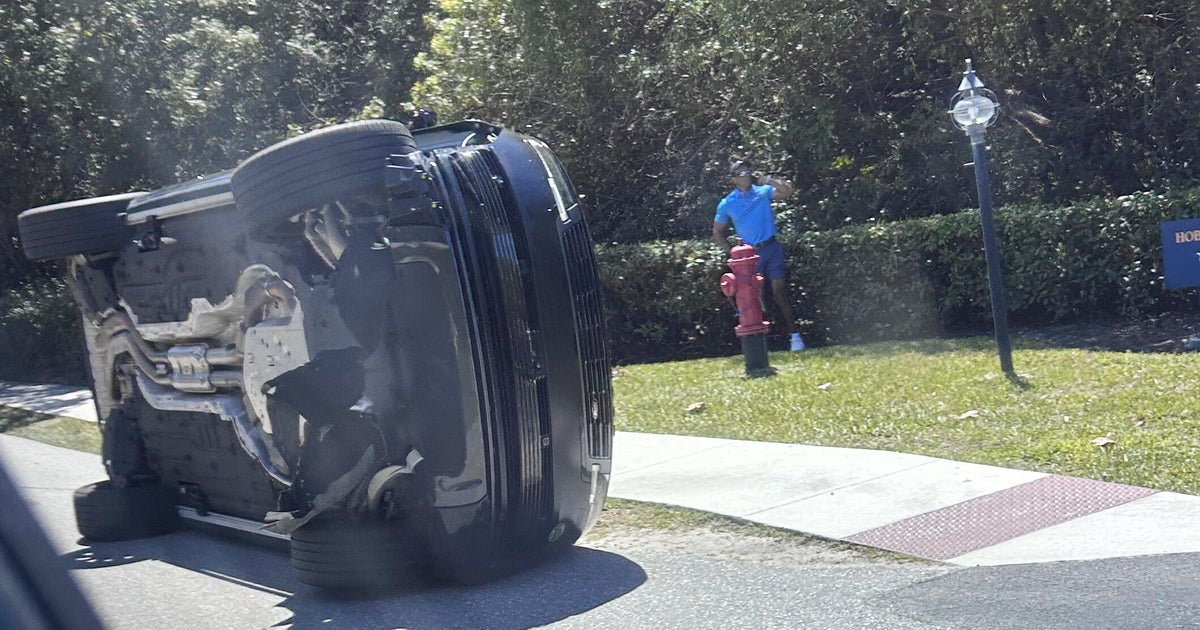
On what seemed like an ordinary Friday afternoon in Jupiter, Florida, golf icon Tiger Woods found himself at the center of a serious traffic incident that has once again thrust his personal struggles into the public spotlight. The 50-year-old athlete was charged with driving under the influence after his Land Rover crashed while traveling at what witnesses described as excessive speeds through a residential area with a posted limit of just 30 miles per hour. According to Martin County Sheriff John Budensiek, who briefed reporters at a news conference following the accident, the sequence of events began when a pickup truck towing a small trailer attempted to pull into a driveway. The driver of that truck witnessed Woods’ Land Rover approaching rapidly from behind, prompting a last-second swerve to avoid what could have been a devastating head-on collision. Despite Woods’ apparent attempt to dodge the slower-moving vehicle, his SUV clipped the trailer’s rear end, causing the Land Rover to flip onto its driver’s side and slide a considerable distance along the roadway before finally coming to rest. Remarkably, Woods managed to crawl out through the passenger side of his overturned vehicle, and neither he nor the other driver involved sustained any physical injuries from the crash.
Signs of Impairment Lead to Arrest
What followed the crash raised serious concerns for law enforcement officials on the scene. Sheriff Budensiek reported that Woods displayed clear signs of impairment when officers arrived to assess the situation and speak with him about what had transpired. The golf legend was asked to perform several standard roadside sobriety tests, the kind that police officers routinely administer when they suspect a driver may be under the influence of alcohol or drugs. Interestingly, when Woods submitted to a Breathalyzer test—a device that measures blood alcohol content—he registered what officers described as “triple zeroes,” meaning there was no detectable alcohol in his system at the time of the crash. This result effectively ruled out alcohol as the cause of his impairment, but it didn’t end the investigation. Woods was then asked to provide a urine sample, which would help authorities determine whether other substances might be affecting his ability to operate a vehicle safely. However, the famous golfer refused this request, a decision that would later result in an additional charge. According to Sheriff Budensiek, the experts who evaluated Woods at the scene came to a professional conclusion: while he wasn’t impaired by alcohol, they believed he was under the influence of some type of medication or drug. Despite this assessment, no drugs or medication were actually found inside Woods’ vehicle during the search that followed.
The Legal Consequences and Booking Process
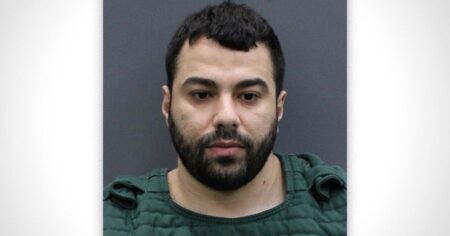
Based on the evidence gathered at the scene and Woods’ behavior during the investigation, law enforcement officials made the decision to arrest the golf legend. He was formally charged with three separate offenses: driving under the influence, property damage, and refusal to submit to a lawful test—the latter charge stemming from his decision not to provide a urine sample when requested. Following his arrest, Woods was transported to the Martin County Jail, where he was held separately from the general inmate population, likely due to his celebrity status and the potential complications that could arise from housing such a high-profile individual among other detainees. According to Sheriff Budensiek, Florida law includes a specific statute that requires anyone arrested on DUI charges to be held in custody for a minimum of eight hours before they can be released on bond. In Woods’ case, this mandatory holding period began at 3 p.m. on the day of his arrest, meaning he would need to remain in jail until at least 11 p.m. that evening before he could post bail and return home. The sheriff also provided some additional context about how the investigation unfolded, noting that while Jupiter Island police had initially responded to the accident scene, they subsequently called the Martin County Sheriff’s Office for assistance with the investigation. Sheriff Budensiek was careful to emphasize that the local police department was “fully capable” of handling the matter but that his office simply had “more repetitions”—meaning more frequent experience—with this type of investigation.
Woods’ Recent Activities and Health Struggles
The timing of this incident is particularly noteworthy given Woods’ recent activities and ongoing health challenges. Just three days before the crash, on Tuesday, Woods had participated in a golf match at the SoFi Center in Palm Beach Gardens, Florida, demonstrating that he was still actively engaged with the sport that made him a household name. However, those who follow Woods’ career closely know that he has been battling significant physical issues in recent years. In September 2025, the golf champion underwent his seventh back surgery—a staggering number that speaks to the toll his professional career and various accidents have taken on his body. Adding to his medical challenges, Woods ruptured his Achilles tendon in March 2025, another serious injury that has further complicated his ability to compete at the elite level that defined his legendary career. According to The Associated Press, Woods had been carefully weighing whether his physical condition would allow him to participate in the Masters tournament scheduled for April, one of golf’s most prestigious events. With 15 major championship victories to his name over the course of his illustrious career, Woods remains one of the sport’s most decorated athletes, but these mounting health issues have forced him to be increasingly selective about when and where he competes.
A Troubling Pattern of Similar Incidents
For those who have followed Tiger Woods’ career beyond the golf course, this latest arrest carries an unsettling sense of déjà vu. This isn’t the first time the athlete has found himself in legal trouble related to vehicle operation and possible impairment. Most notably, in 2021, Woods was involved in a severe rollover crash in Los Angeles that left him with serious injuries requiring extensive medical treatment. According to authorities who investigated that incident, Woods’ SUV had careened downhill out of control, traveling several hundred feet while flipping multiple times before finally coming to rest on a hillside in Rolling Hills Estates, a suburban area of Los Angeles. The violence of that crash was so severe that Woods became trapped inside his mangled vehicle, forcing first responders to use specialized extrication tools to pry open the windshield so they could pull him to safety. The investigation into that 2021 crash revealed that Woods had been driving at speeds between 84 and 87 miles per hour in an area where the posted speed limit was just 45 mph. Los Angeles County Sheriff Alex Villanueva stated that the primary cause of the accident was “driving at a speed unsafe for the road conditions and the inability to negotiate the curve of the roadway.” Even before that frightening incident, Woods had encountered legal problems related to impaired driving. In 2017, Florida police found the golf star asleep behind the wheel of his car and subsequently arrested him on DUI charges. Following that arrest, Woods publicly acknowledged that he had taken what he described as a “bad mix of painkillers,” suggesting that his impairment was the result of prescription medication rather than illegal drugs or alcohol.
The Broader Context of Celebrity, Health, and Accountability
Tiger Woods’ latest brush with the law raises important questions about the challenges faced by athletes dealing with chronic pain, the responsibilities that come with celebrity status, and the broader issue of impaired driving in American society. Woods has been remarkably transparent over the years about his struggles with pain management, undergoing numerous surgeries in attempts to extend his competitive career and maintain some quality of life after decades of putting extraordinary physical stress on his body. The relationship between chronic pain, prescription medication, and impaired driving is a complex one that affects thousands of Americans, not just famous athletes. However, Woods’ celebrity status means his actions carry additional weight and scrutiny, making him a highly visible example of what can happen when pain management intersects with personal responsibility for public safety. The fact that Woods refused the urine test suggests possible awareness that such a test might reveal substances in his system, though it’s also possible he simply chose to exercise his legal right to refuse, despite the additional charge this decision would incur. What remains clear is that this incident, combined with Woods’ previous crashes and his 2017 DUI arrest, paints a picture of someone who has struggled repeatedly with the intersection of medication, impairment, and vehicle operation. As Woods faces these new charges and likely legal proceedings in the months ahead, the golf world and his millions of fans worldwide will be watching to see how this latest chapter in his complicated life story unfolds, and whether it might finally serve as a definitive wake-up call for the legendary athlete.