

Government Shutdown Standoff: Democrats Push Back Against ICE Tactics as Political Battle Intensifies
The Core Dispute Over Immigration Enforcement
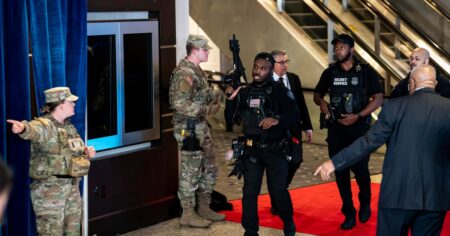
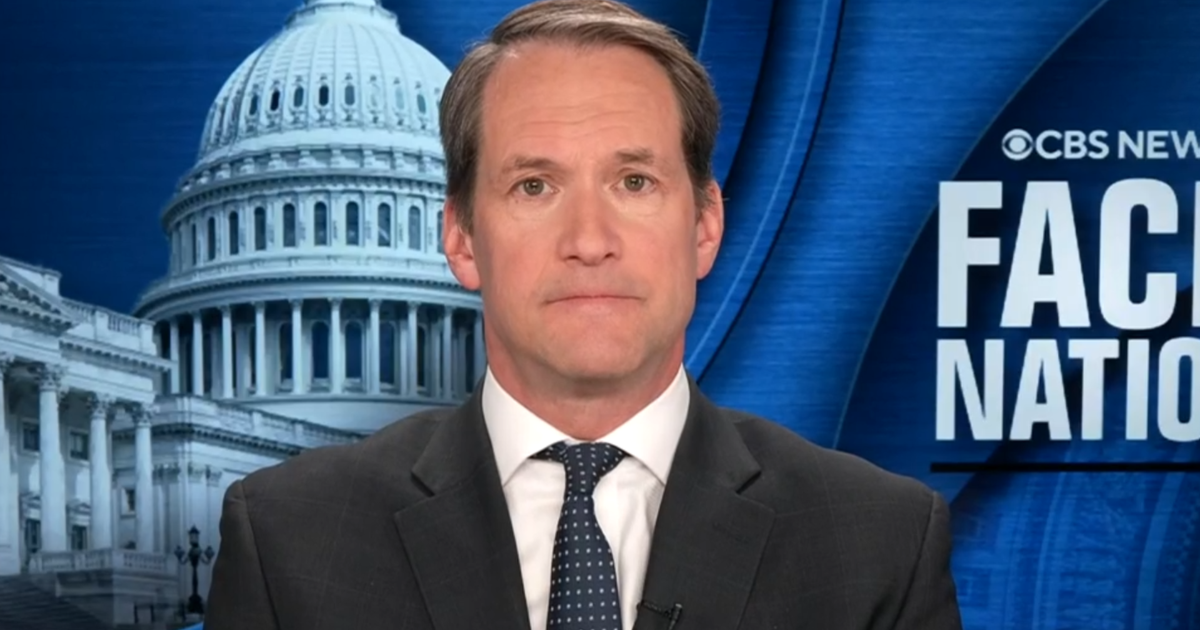
In a revealing interview on “Face the Nation,” Connecticut Representative Jim Himes laid bare the deepening political divide over immigration enforcement that has brought parts of the federal government to a standstill. The top Democrat on the House Intelligence Committee didn’t mince words when explaining his party’s position: this isn’t about being anti-enforcement or pro-illegal immigration—it’s about holding Immigration and Customs Enforcement (ICE) accountable to the same standards as any other American police force. When host Margaret Brennan pressed him on what Democrats gained from the shutdown, given that ICE continues to operate with existing funding, Himes made it clear that the fight is far from over. The issue, he emphasized, isn’t just a political game of chess—it’s about fundamental American values. Democrats are demanding that ICE agents act like proper law enforcement officers, not like military special forces conducting raids in a war zone. The images of heavily armed agents dressed like Navy SEALs conducting operations in American cities, combined with reports of two American citizens being killed and doors being knocked down without warrants, have struck a nerve with voters. Himes believes the vast majority of Americans share Democrats’ concerns that something has gone badly wrong with how immigration enforcement is being conducted.
Constitutional Questions and the Power of the Purse
The interview took a constitutional turn when Brennan asked about the President’s decision to redirect existing funding to pay TSA agents during the shutdown. Himes didn’t hesitate in his assessment: what the President is doing is illegal. Drawing on one of Congress’s most fundamental powers—the power of the purse—Himes pointed out that this administration has consistently overstepped its constitutional boundaries. As he put it, any American who paid attention in fourth-grade civics class knows that Congress, not the President, controls federal spending. The irony of the situation isn’t lost on anyone. While Himes insists the President is acting illegally by paying TSA agents, he also believes those workers should never have been held hostage in the first place. The real problem, in his view, is that House Speaker Mike Johnson rejected a bipartisan deal that came out of the Senate unanimously—a deal that would have funded government workers while allowing time to address the thorny issues around ICE reform. Instead, Johnson and House Republicans mocked their Senate counterparts and refused to compromise, leaving federal workers caught in the middle and forcing the President to take actions of questionable legality just to keep airports functioning.
Democratic Unity Under Pressure
The unity within the Democratic Party isn’t as solid as leadership might hope. Three House Democrats broke ranks and voted for Speaker Johnson’s version of the funding bill, which included no new accountability measures for ICE. Among them was Congresswoman Marie Gluesenkamp Perez, who argued that it’s simply wrong not to pay people for their work and that Democrats had set unattainable goals. Her criticism stung: she accused her party of prioritizing “ideological purity” over the wellbeing of working people, especially since the White House had already agreed to some reforms like body cameras for ICE agents. Himes pushed back firmly against this characterization. What Democrats are asking for, he insisted, isn’t extreme or ideologically pure—it’s basic adherence to the law. They want ICE agents to wear identification badges like every other police officer. They want warrants before doors get kicked in. They want agents to stop dressing like they’re conducting military operations in Fallujah when they’re actually working in Minneapolis. These aren’t radical leftist demands; they’re the baseline expectations Americans have for any law enforcement agency operating on U.S. soil. Where Himes did find common ground with Gluesenkamp Perez was on a broader point: America needs to stop using government shutdowns as a legislative weapon. The practice of threatening to withhold paychecks from TSA agents, Agriculture Department workers, and other federal employees whenever one party wants to force the other’s hand has become far too normalized. It’s beneath the dignity of a great nation, Himes argued, even as he maintained that in this particular case, Democrats are on the right side of public opinion.
International Crisis: Iran, Russia, and Presidential Credibility
The conversation shifted to international affairs, where Himes made an explosive claim: he believes the President is “flat out lying” about negotiations with Iran. With oil prices climbing to $112 per barrel and stock market futures down 2%, Himes suggested the President simply fabricated the claim that his administration is negotiating with Iran to calm financial markets. The reality, according to Himes, is that Iran now holds tremendous leverage. By controlling the Strait of Hormuz and driving up gasoline prices by more than a dollar per gallon, Iran has realized it holds the reins in this confrontation. Even more concerning were Himes’s observations about the Russia-Iran alliance. Ukrainian President Zelensky recently claimed that Russia is providing satellite imagery of U.S. military bases to Iran, along with signals intelligence and electronic intelligence. When asked if he had evidence of Russia actively helping Iran in its conflict with the United States, Himes had to be careful given his access to classified information. But he made it clear he wouldn’t argue with Zelensky’s assessment. The Congressman painted a disturbing picture of interconnected threats: America has spent four years helping Ukraine inflict heavy losses on Russia, so naturally Putin is looking for ways to strike back. Meanwhile, the administration is allowing Iran to sell billions of dollars worth of oil to China, which Iran then uses to buy Russian drones. Russia sells its own oil to fund its war in Ukraine and to help Iran attack U.S. troops. It’s a circular flow of money and weapons that Himes described as so absurd you couldn’t make it up in a Hollywood script.
Questioning the Official Narrative on Russia-Iran Cooperation
Secretary of State Marco Rubio has downplayed the significance of Russian assistance to Iran, claiming it’s not making a meaningful difference on the battlefield. Himes strongly disagreed, suggesting that Rubio—as “one of the chief cheerleaders of this war”—has a vested interest in minimizing problems as the American public begins to view the conflict as another catastrophic quagmire. The Russians have capabilities that are making a real difference, Himes argued, including relatively basic satellite technology that can be used to locate American aircraft carriers. The fact that U.S. military bases in the region are currently “supposedly uninhabitable” should tell us everything we need to know about whether Russian assistance matters. Himes’s comments revealed the depth of partisan division even on matters of national security. Where the Secretary of State sees manageable challenges, the ranking Democrat on the House Intelligence Committee sees strategic failures and growing threats. This divergence in threat assessment between the administration and congressional Democrats suggests deeper problems with how information is being shared and interpreted across the government. When members of Congress with access to classified intelligence publicly contradict the Secretary of State’s assessments, it raises serious questions about whether the American people are getting an accurate picture of the dangers facing U.S. forces abroad.
Corruption at Home: A Test of Democratic Principles
In the interview’s closing moments, Brennan confronted Himes with an uncomfortable question about corruption within his own party. Florida Democrat Sheila Cherfilus-McCormick has been found guilty on 25 ethics charges related to stealing millions of dollars in COVID relief money. With Democrats making corruption a central campaign theme against the President and his allies, Brennan asked whether Cherfilus-McCormick should resign or be expelled. Himes’s answer was measured but pointed. He expressed hope that his colleague would choose to resign, thereby avoiding a floor vote that would force every member to take a public position. However, he acknowledged the political reality: if she doesn’t resign voluntarily, there will be a vote, and members of both parties will find reasons to support or oppose expulsion based on their political calculations. He drew a parallel to Republicans who found reasons to defend George Santos despite his numerous ethical lapses. Himes emphasized that at a time when the nation is dealing with international conflicts and economic pressures from high gas prices, Congress shouldn’t have to spend time on such matters. But he also stressed something more important: both parties must be consistent in punishing ethical lapses within their own ranks. It’s a principle that sounds simple but has proven maddeningly difficult for either party to follow in practice. The real test of Democratic credibility on corruption, Himes suggested, will be whether they hold their own members to the same standards they demand of their opponents. This interview captured a moment of acute political tension, with battles raging on multiple fronts: constitutional authority, immigration policy, international conflicts, and internal party ethics. Representative Himes’s willingness to call the President a liar while simultaneously hoping for the resignation of a fellow Democrat illustrated the complex position in which opposition party leaders find themselves—defending principles while navigating political realities, criticizing the administration while managing their own internal divisions, and trying to hold the moral high ground while their own members face serious ethics charges.