


Trump Orders Second Aircraft Carrier to Middle East as Iran Nuclear Negotiations Continue
Escalating Military Pressure on Iran
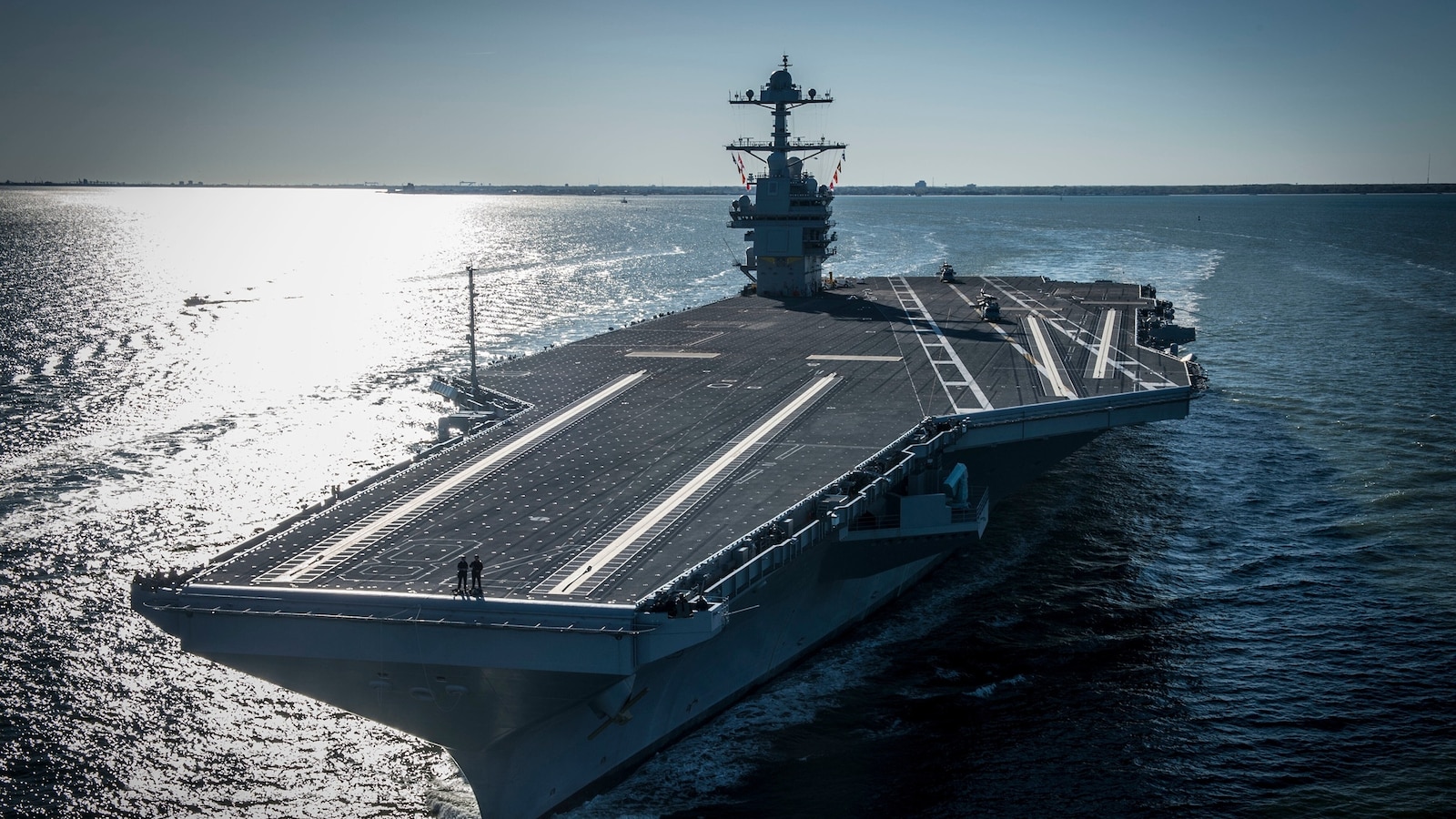
President Donald Trump announced on Friday that the USS Gerald R. Ford, one of America’s most advanced aircraft carriers, would soon be deployed to the Middle East as part of an escalating show of force toward Iran. Speaking to reporters as he prepared to depart the White House for North Carolina, Trump made it clear that this deployment is directly tied to ongoing negotiations with Iran over its nuclear and ballistic missile programs. The President’s comments underscored the delicate balance between diplomatic efforts and military preparedness that has characterized his administration’s approach to Iran. Trump explained that the deployment is essentially a contingency plan—if negotiations succeed, the carrier’s mission could be shortened, but if talks fail, the United States will need a robust military presence in the region. “Well, in case we don’t make a deal, we’ll need it,” Trump told reporters, adding that the carrier would join another American vessel already stationed in the area, creating what he described as “a very big force.” The announcement represents a significant escalation in regional tensions and demonstrates the administration’s willingness to back diplomatic efforts with substantial military power.
The Gerald R. Ford’s Journey and Capabilities
The USS Gerald R. Ford represents the cutting edge of American naval power and has had quite a journey over recent months. According to three U.S. officials, the Ford carrier strike group, which includes three accompanying destroyers, is expected to leave the Caribbean and head toward the Middle East in the coming days. The carrier originally left its home port in Norfolk, Virginia, in late June for what was planned as a seven-month deployment to Europe. However, those plans changed dramatically in late October when the Trump administration redirected the vessel to the Caribbean as part of a major military buildup aimed at countering South American drug cartels. The Ford is the world’s largest aircraft carrier and features state-of-the-art systems that make it one of the most formidable military assets on the planet. Its presence in the Caribbean had been seen as putting pressure on the then-Venezuelan government under Nicolas Maduro, and aircraft from the carrier even participated in the January 3 raid in Caracas that led to Maduro’s capture. Now, the carrier and its crew, who were informed of their new deployment on Thursday, will once again cross the Atlantic and Mediterranean for what could become a ten-month deployment—far longer than originally planned. The extended deployment raises questions about crew readiness and morale, but also demonstrates the flexibility and reach of American military power.
Trump’s Confident but Cautious Messaging
Throughout his comments to reporters, President Trump projected confidence about the negotiations while simultaneously issuing stark warnings about the consequences of failure. When asked about his level of confidence in the talks’ success, Trump’s response was characteristically direct: “I think they’ll be successful and if they’re not, it’s going to be a bad day for Iran. Very bad.” This dual-track messaging—optimism paired with intimidation—has become a hallmark of Trump’s negotiating style on the international stage. When pressed by reporters about whether he had set a deadline for Iran to reach an agreement, Trump remained deliberately vague, saying only, “In my mind I do, yeah.” This ambiguity may be tactical, allowing the administration to maintain flexibility while keeping pressure on Iranian negotiators who cannot be certain of their timeline. Perhaps most significantly, when asked about regime change in Iran, Trump didn’t shy away from the controversial topic, stating, “Well, it seems like that would be the best thing that could happen.” However, when reporters followed up asking who he would want to see take over in such a scenario, Trump declined to elaborate, saying only, “There are people.” These comments are likely to inflame tensions further and raise concerns among critics who worry about the administration’s ultimate intentions toward Iran beyond the nuclear issue.
Regional Military Buildup and Strategic Implications
The deployment of the Ford means that two American aircraft carriers will soon be operating in the Middle East simultaneously, as it will join the USS Abraham Lincoln carrier strike group already in the region. Having two carrier strike groups in one theater represents a massive concentration of American military power and sends an unmistakable message to Iran and its regional allies. Each carrier strike group typically includes not just the carrier itself but also guided-missile cruisers, destroyers, and submarines, along with the carrier’s air wing of dozens of aircraft capable of conducting a wide range of missions. This level of military presence gives American commanders extensive options for both defensive and offensive operations, from enforcing no-fly zones to conducting precision strikes against high-value targets. The decision to deploy a second carrier came after Trump mentioned in an earlier interview with Axios that he was considering such a move if negotiations with Iran did not succeed. The fact that he has now followed through on this consideration suggests that the administration either sees the talks as stalling or wants to significantly increase pressure to achieve a breakthrough. Regional allies, including Israel and Saudi Arabia, will likely welcome the increased American military presence as a deterrent to Iranian aggression, while Iran and its proxies may view it as a provocation that justifies their own military preparations.
Impact on Other U.S. Military Operations
The redeployment of the USS Gerald R. Ford to the Middle East doesn’t occur in a vacuum and will have ripple effects on other American military operations around the world. Most immediately, it affects U.S. Southern Command’s operations in the Caribbean and Central America, where the Ford had been playing a key role in counter-narcotics efforts and applying pressure on unstable governments. A spokesperson for Southern Command attempted to downplay the impact, issuing a statement saying, “While force posture evolves, our operational capability does not,” and adding that “SOUTHCOM forces remain fully ready to project power, defend themselves, and protect U.S. interests in the region.” However, the reality is that the departure of the world’s largest aircraft carrier and its strike group represents a significant reduction in visible American power in the region. The extended deployment also raises questions about naval readiness more broadly, as the Ford was originally scheduled for a seven-month deployment but may now be away from its home port for ten months or longer. This extended absence can place strain on both the ship’s crew and the vessel itself, potentially affecting maintenance schedules and personnel retention. The Navy will need to carefully balance the urgent demands of the Middle East situation against the long-term health of its force and the needs of other global regions where American interests may be threatened.
The Road Ahead: Diplomacy Backed by Force
President Trump’s announcement encapsulates the fundamental tension in American foreign policy: the relationship between diplomatic engagement and military deterrence. The administration is clearly pursuing negotiations with Iran over its nuclear program and ballistic missiles, but it’s doing so while dramatically increasing military pressure through carrier deployments and public threats. This approach can be effective in bringing adversaries to the negotiating table and encouraging them to make concessions, but it also carries significant risks of miscalculation and unintended escalation. As the Ford makes its way across the Atlantic and through the Mediterranean in the coming days, the world will be watching to see whether Trump’s pressure tactics yield a diplomatic breakthrough or lead to a dangerous confrontation. The President’s comments suggesting that regime change “would be the best thing that could happen” in Iran add another layer of complexity, as they suggest American goals may extend beyond the nuclear issue to fundamental change in Iran’s government. How Iran responds to this increased pressure—whether with restraint and engagement or with defiance and potential military provocations of its own—will largely determine whether Trump’s gambit succeeds or backfires. For now, American sailors aboard the Ford and the Lincoln are preparing for what could be a tense and potentially dangerous deployment in one of the world’s most volatile regions, serving as the tip of the spear in a high-stakes geopolitical confrontation.