


UN Peacekeepers Under Fire: The Escalating Crisis in Southern Lebanon
A Dangerous Mission Becomes Even More Perilous
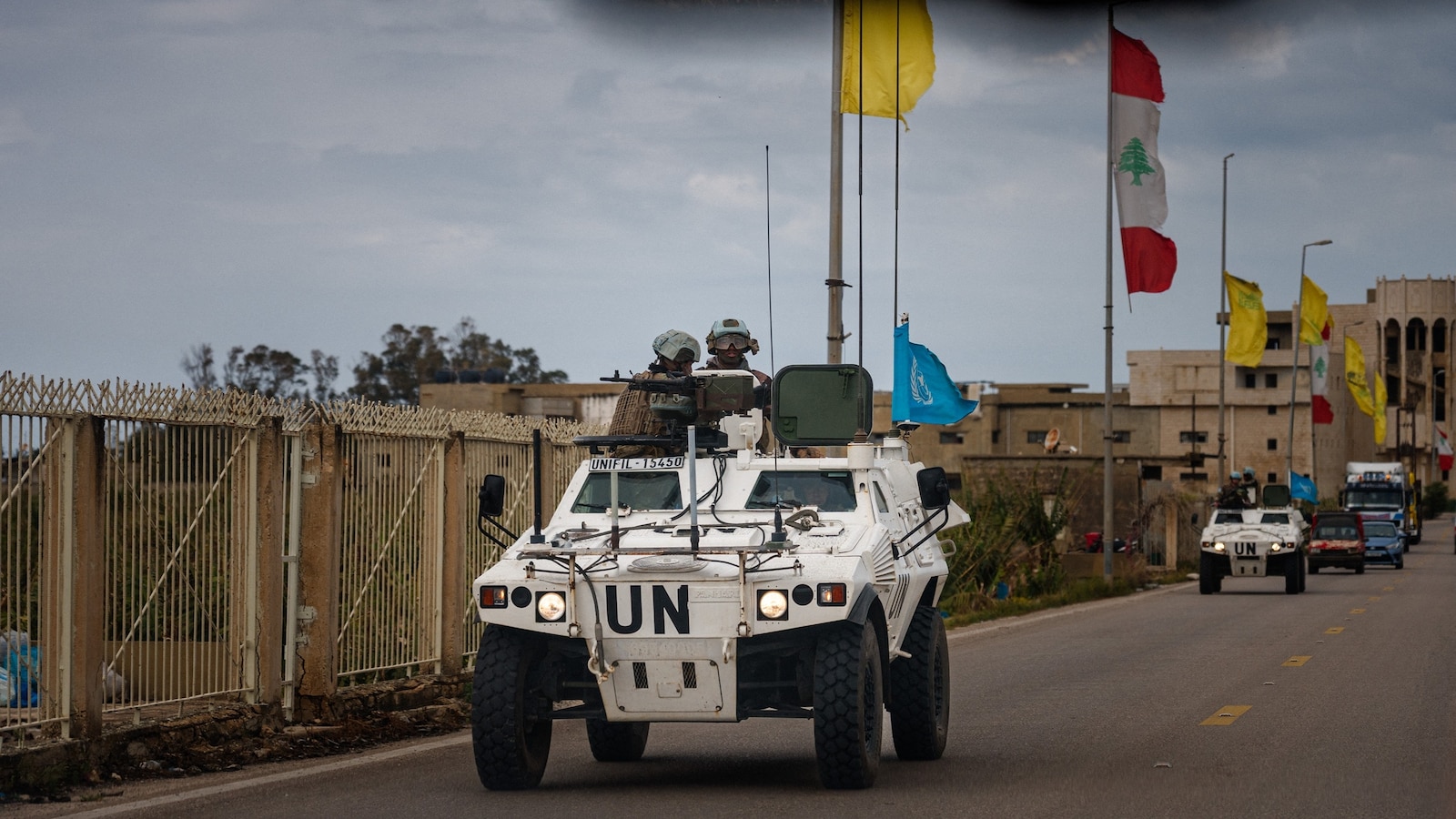
The situation for United Nations peacekeepers stationed in southern Lebanon has taken a dramatic turn for the worse. Since hostilities resumed in late February between Israel and the Iranian-backed Hezbollah militia, UN forces have found themselves in the crossfire approximately 20 times, according to UNIFIL (United Nations Interim Force in Lebanon) spokesperson Kandice Ardiel. These brave men and women, comprising roughly 7,500 personnel from 48 different countries, originally deployed to monitor peace between the warring parties and support the Lebanese Armed Forces. Instead, they’ve become unintended casualties in a conflict that shows no signs of abating. Four peacekeepers have been wounded so far—three with minor injuries and one seriously hurt, though now stable. The fact that UNIFIL’s own headquarters in the coastal city of Naqoura has been repeatedly struck by bullets, shrapnel, and rocket fragments illustrates just how dangerous the environment has become for those trying to keep the peace.
What makes this situation particularly troubling is the indiscriminate nature of the violence. According to preliminary analysis of the approximately 20 firing incidents recorded since February 28, about 60% came from unknown sources, 25% were attributed to the Israel Defense Forces, and 15% to non-state actors on the Lebanese side—most likely Hezbollah. The Israel Defense Forces acknowledged responsibility for at least one incident on March 6, when an Israeli tank mistakenly fired on a UNIFIL position, wounding Ghanaian peacekeepers. Meanwhile, Hezbollah has not claimed responsibility for any attacks on UN forces. This uncertainty about who is shooting at peacekeepers makes an already dangerous mission even more unpredictable and frightening for those serving under the UN banner. These personnel came to Lebanon to facilitate peace, not to become targets themselves, yet they find themselves dodging fire from multiple directions in a conflict where the lines between combatants and bystanders have become dangerously blurred.
The Cycle of Violence Continues
The current round of fighting represents just the latest chapter in a long and tragic story of conflict in the region. The recent escalation began with the joint U.S.-Israeli attack on Iran in late February, which prompted Hezbollah to join the fray on March 2 by firing projectiles into northern Israel, apparently in support of their Iranian patrons. Hezbollah leader Naim Qassem justified these attacks as a response to what he called Israeli “transgressions” and “excessive” violations of the November 2024 ceasefire agreement between Israel and Hezbollah. That brief ceasefire had offered only limited respite from violence that intensified following the October 7, 2023, Hamas attack on southern Israel and the subsequent war in Gaza, which Hezbollah joined in solidarity with Hamas.
The human cost of this renewed conflict has been staggering. According to the Israel Defense Forces, Hezbollah has fired over 2,000 rockets and drones toward northern Israel during the current fighting, including one that killed a 27-year-old Israeli woman on Tuesday. On the Lebanese side, the toll has been far greater. More than 1,000 people have been killed by Israeli attacks in Lebanon during this latest round of fighting, according to the country’s health ministry. Additionally, more than one million people in Lebanon have been displaced by Israel’s offensive and evacuation orders, according to UN data. These aren’t just statistics—they represent families torn apart, homes destroyed, lives forever changed, and entire communities scattered to the winds. The displacement of one million people is particularly devastating for Lebanon, a small country already struggling with economic crisis and political instability.
Israel’s Aggressive Response and Its Consequences
Israel’s reaction to Hezbollah’s renewed attacks has been swift and overwhelming. Israeli Defense Minister Israel Katz instructed the IDF to “accelerate the destruction of Lebanese homes in the line of contact villages” to eliminate threats to Israeli communities, specifically referencing the model used in Beit Hanoun and Rafah during operations against Hamas in Gaza—a comparison that carries ominous implications given the extensive destruction in those areas. Katz deployed thousands of additional troops into southern Lebanon with the stated goal of seizing territory up to the Litani River to create what he termed a “defensive buffer.” This operation has included the systematic destruction of several bridges along the Litani River, which Katz claimed were being used by Hezbollah for military purposes.
The destruction of these bridges has had serious consequences beyond the immediate military objectives. UNIFIL spokesperson Ardiel described these bridges as “vital arteries” whose loss would significantly complicate both UNIFIL and Lebanese Armed Forces efforts in the area. While peacekeepers remain well-prepared and supplied for their daily activities, they depend on these critical infrastructure links for essential logistical movements, including troop rotations. The destruction of civilian infrastructure also impacts the Lebanese population, making it harder for humanitarian aid to reach those who need it and for displaced civilians to move to safer areas. It’s worth noting that even before this latest escalation, Israeli forces had retained control of five positions on Lebanese territory despite the 2024 ceasefire deal, and continued strikes against alleged Hezbollah targets throughout Lebanon. While Hezbollah vocally criticized this continued Israeli presence and attacks, they initially did not retaliate—a restraint that has now clearly ended.
UNIFIL’s Historic Mission and Current Challenges
To understand the current crisis, it’s important to know UNIFIL’s long history in the region. The force was first deployed to Lebanon back in 1978, tasked with monitoring the ceasefire that ended an Israeli incursion into the southern part of the country. Since 2006, following a major conflict between the IDF and Hezbollah, UNIFIL’s mandate expanded significantly under UN Security Council resolution 1701. The peacekeepers were now tasked with monitoring the cessation of cross-border hostilities and supporting what was supposed to be a Hezbollah withdrawal from the area, with the Lebanese Armed Forces redeploying in its place. Unfortunately, this plan was never fully realized, and Hezbollah maintained its presence and influence in southern Lebanon.
The US-brokered 2024 ceasefire between Israel and Hezbollah restated UNIFIL’s role in supporting the Lebanese Armed Forces’ disarmament of all non-state armed groups—primarily Hezbollah—south of the Litani River. In January, the LAF claimed to have achieved the first phase of this disarmament plan. However, Hezbollah’s daily rocket fire toward Israel since early March clearly undermines those claims, suggesting that the group’s military capabilities remain largely intact. This puts UNIFIL in an impossible position: they’re mandated to support a disarmament process that hasn’t actually happened, while trying to monitor a ceasefire that both sides routinely violate, all while coming under fire themselves from unknown sources. It’s a mission that requires extraordinary courage and commitment from personnel who remain in harm’s way despite having every reason to withdraw.
Adapting to an Impossible Situation
Despite the dangers, UNIFIL peacekeepers remain at all their positions throughout southern Lebanon, though their ability to fulfill their mission has been severely compromised. Spokesperson Ardiel explained that due to the volatile and dangerous security situation, the force’s movements are now heavily restricted. They’re no longer conducting patrols the way they used to, which means their monitoring capabilities are significantly more limited than before. The patrols that do occur are now focused on areas immediately around UN positions, primarily to ensure peacekeepers’ safety and to discourage armed groups from using UN positions as cover for their military activities—a practice that would put peacekeepers at even greater risk.
Ardiel credited UNIFIL’s security measures for keeping casualties relatively low given the frequency of attacks, but acknowledged the constant danger faced by personnel. The fact that even the force’s headquarters has been hit multiple times—including by what was likely a Hezbollah rocket on Monday—demonstrates that nowhere is truly safe for these peacekeepers. Despite these restrictions and dangers, UNIFIL troops have managed to facilitate the safe movement of approximately 100 civilians from particularly dangerous areas, showing that even in the worst circumstances, they continue to make a difference in protecting innocent lives. Ardiel also urged all actors in the conflict to avoid harm to civilians and damage to civilian infrastructure, though whether any party will heed this plea remains to be seen.
Looking Forward: An Uncertain Future
The situation in southern Lebanon presents a sobering picture of how quickly fragile peace can collapse and how those tasked with preserving it can become victims themselves. The roughly 7,500 peacekeepers from 48 countries serving with UNIFIL came to Lebanon to prevent exactly the kind of violence that now surrounds them daily. They represent the international community’s commitment to peace in a region that has known far too much war, yet they find themselves dodging bullets and rockets, unsure sometimes of who is even firing at them. The courage required to remain at their posts under such circumstances, knowing that their headquarters has been hit repeatedly and that four of their colleagues have already been wounded, cannot be overstated.
As the conflict continues with no clear end in sight, the international community faces difficult questions about UNIFIL’s future. Can peacekeepers effectively fulfill their mandate when both sides in the conflict continue fighting and when they themselves become targets? Should additional protections be put in place, or should the force be withdrawn to protect these brave men and women from further harm? What good is a peace monitoring mission when there is no peace to monitor? These questions have no easy answers. What is clear is that the people of Lebanon and northern Israel—civilians who simply want to live their lives in peace—continue to pay the highest price, with over a thousand Lebanese killed, a million displaced, and Israeli communities living under constant rocket fire. Until the underlying political issues are addressed and both sides commit genuinely to peace rather than merely temporary ceasefires, the violence will likely continue, and UNIFIL peacekeepers will remain caught in the middle, doing their best to protect civilians and document violations while hoping they don’t become the next casualties in this long and bitter conflict.