
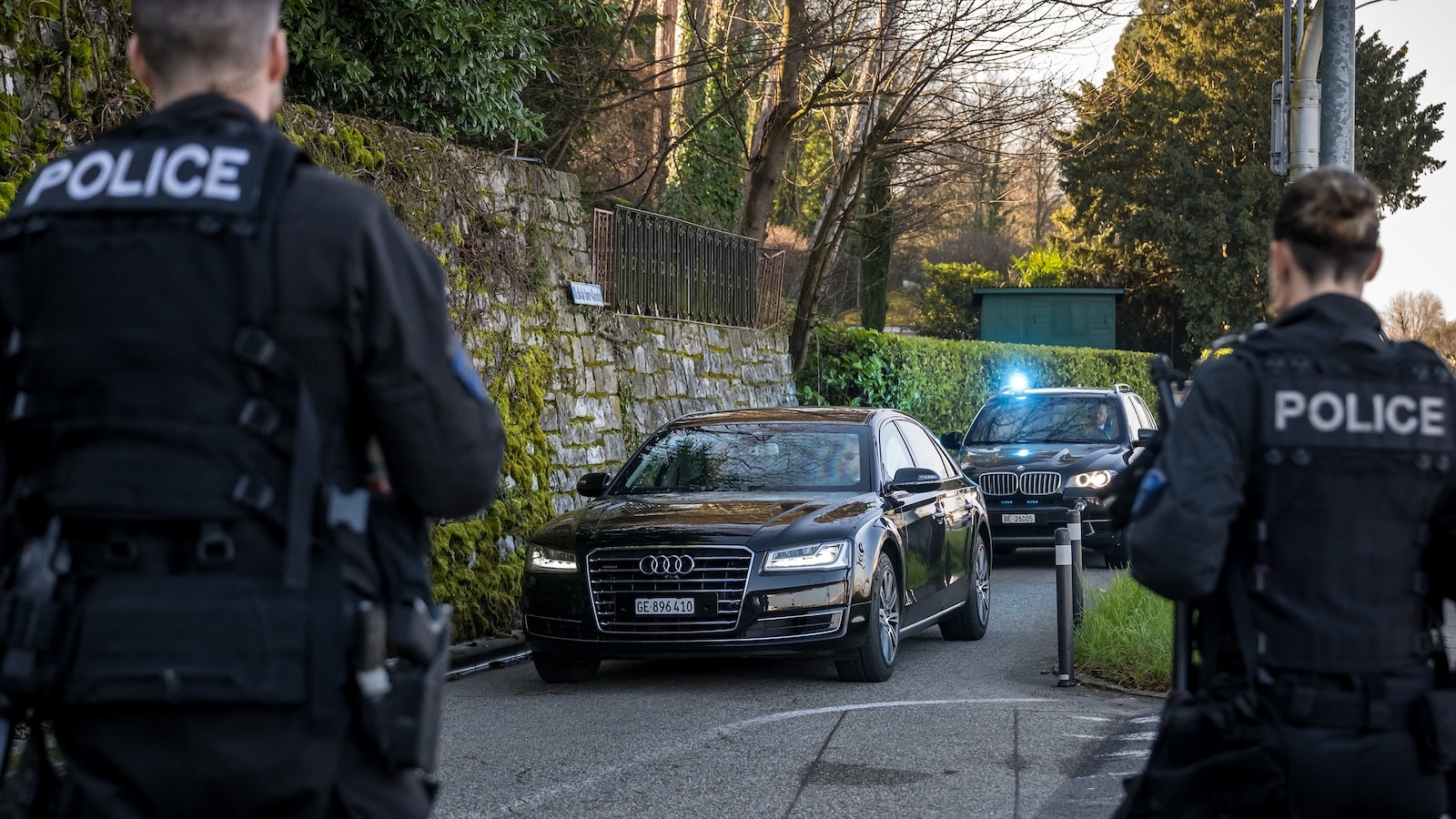

High-Stakes Nuclear Negotiations Between U.S. and Iran Resume in Geneva
Critical Third Round of Talks Amid Growing Military Tensions
The diplomatic world turned its attention to Geneva this Thursday as American and Iranian officials sat down for their third round of nuclear negotiations – talks that could significantly influence President Donald Trump’s decision on whether to pursue military action against Iran. The stakes couldn’t be higher: the White House has drawn a hard line, insisting that Iran must completely halt all uranium enrichment activities. During his State of the Union address earlier in the week, Trump claimed that the United States had “obliterated” Iran’s nuclear program during military strikes conducted in June, while warning that Tehran was now attempting to restart these operations. The atmosphere surrounding these discussions is tense, made even more so by the substantial American military buildup currently underway in the Middle East. However, despite this show of force and the very real possibility of military intervention, the Trump administration has remained tight-lipped about specific plans or the exact reasons that might justify potential strikes against Iranian targets.
America’s Position: Diplomacy Preferred, But Nuclear Threats Taken Seriously
U.S. Secretary of State Marco Rubio made the administration’s position clear during his recent trip to St. Kitts and Nevis, characterizing Iran as a “very great threat” to American interests while simultaneously expressing the president’s preference for resolving the situation through diplomatic channels rather than military force. Rubio’s assessment of Iran’s nuclear activities painted a concerning picture of a nation deliberately working to restore capabilities that had been destroyed. According to the Secretary of State, while Iran isn’t actively enriching uranium at this moment, the country is systematically rebuilding the infrastructure and components necessary to eventually resume enrichment activities. This perspective adds urgency to the Geneva negotiations, as it suggests a closing window of opportunity for a diplomatic solution before Iran potentially regains nuclear capabilities that the U.S. finds unacceptable.
Representing the United States in these crucial talks are Steve Witkoff, the White House’s special envoy to the Middle East, and Jared Kushner, President Trump’s son-in-law. This delegation choice has raised some eyebrows in Washington, particularly because these same two individuals have been tasked with leading several other high-stakes international negotiations, including discussions related to Russia’s ongoing war in Ukraine. The concentration of such critical diplomatic responsibilities in the hands of just two people has prompted criticism from some quarters, including Senator Thom Tillis, a Republican from North Carolina, who questioned whether it’s sustainable or effective for the same pair of negotiators to manage such a demanding workload across multiple dangerous global flashpoints. Tillis described the approach as “suspect” and argued that it doesn’t project the kind of “steady, strong leadership” that the world needs from the United States during these particularly perilous times.
Iran’s Stance: Nuclear Weapons Rejected, But Peaceful Technology Rights Defended
Iran’s Foreign Minister, Abbas Araghchi, offered insights into his country’s position both before and during the negotiations. Prior to the talks, Araghchi emphasized that any successful outcome would depend entirely on whether the other side – meaning the United States – demonstrates genuine seriousness and avoids sending contradictory signals through inconsistent behavior and statements. His message suggested that Iran has grown frustrated with what it perceives as mixed messages from Washington. In a more detailed statement shared on social media, Araghchi articulated what he called Iran’s “crystal clear” fundamental convictions: while Iran will “under no circumstances ever develop a nuclear weapon,” the country equally refuses to surrender what it considers its sovereign right to utilize peaceful nuclear technology for the benefit of its citizens. This position essentially agrees with the goal of preventing Iranian nuclear weapons while leaving the door open for some level of civilian nuclear program – a nuanced stance that may or may not align with the White House’s demand for a complete cessation of all enrichment activities.
Iranian President Masoud Pezeshkian echoed this cautiously optimistic tone in public remarks delivered in the Iranian city of Sari. Expressing a “positive outlook” on the negotiations, Pezeshkian articulated his hope that Iran could “move beyond this ‘neither war nor peace’ situation” – a phrase that perfectly captures the limbo in which the two nations have existed, caught between open conflict and normalized relations. The Iranian president suggested that escaping this uncomfortable middle ground would enable his country to address other challenges and remove various obstacles to its progress and development much more effectively.
The Reality on the Ground: Conflicting Accounts of Iran’s Nuclear Capabilities
Despite President Trump’s assertion that Iran’s nuclear program had been completely “obliterated” during the June strikes, significant questions remain about the actual current state of Iran’s nuclear infrastructure and materials. Senior Israeli officials, speaking to media outlets in July, indicated that some enriched uranium likely survived the American strikes, suggesting that the damage, while extensive, may not have been as total as the White House claimed. This discrepancy matters enormously because it affects both the urgency of the current negotiations and the baseline from which any agreement must start. Adding another layer of concern, Steve Witkoff stated in a Fox News interview that aired recently that Iran was “probably a week away from having industrial-grade, bomb-making material,” describing this proximity as “really dangerous.” These varying assessments – from complete obliteration to near-term weapon capability – illustrate the uncertainty surrounding Iran’s actual nuclear status and underscore why these Geneva talks carry such weight.
Mediation Efforts and the Path Forward
Oman has played a crucial role as mediator in these indirect talks, with Foreign Minister Badr al-Busaidi facilitating communication between the two sides. At midday on Thursday, al-Busaidi announced that the talks had temporarily broken off but would resume later that same day. In his social media update, the Omani diplomat struck a cautiously positive note, saying that participants had been “exchanging creative and positive ideas” and expressing hope for additional progress. This characterization suggests that despite the enormous gaps between the American and Iranian positions, the conversation has at least been constructive rather than confrontational, with both sides apparently willing to explore innovative solutions rather than simply restating entrenched positions.
The diplomatic dance happening in Geneva represents perhaps the best opportunity to avoid a military confrontation that could destabilize the entire Middle East region. The American military buildup – including the deployment of the USS Gerald R. Ford aircraft carrier and other substantial assets – serves as both leverage for negotiators and preparation for potential military action should talks fail. For ordinary people in both countries, the outcome of these discussions could mean the difference between continued peace and a devastating conflict. Iranians, already struggling with economic sanctions and international isolation, hope for relief that might come with a diplomatic breakthrough. Americans, meanwhile, watch anxiously as their leaders navigate these treacherous diplomatic waters, aware that miscalculation could lead to another Middle Eastern military engagement with unpredictable consequences. The coming days will reveal whether creative diplomacy can bridge the gap between Washington’s insistence on complete denuclearization and Tehran’s determination to maintain what it views as sovereign rights to peaceful nuclear technology.