


Israeli President’s Visit to Australia Sparks Controversy Amid Social Division
A Mission of Comfort Meets Political Turbulence
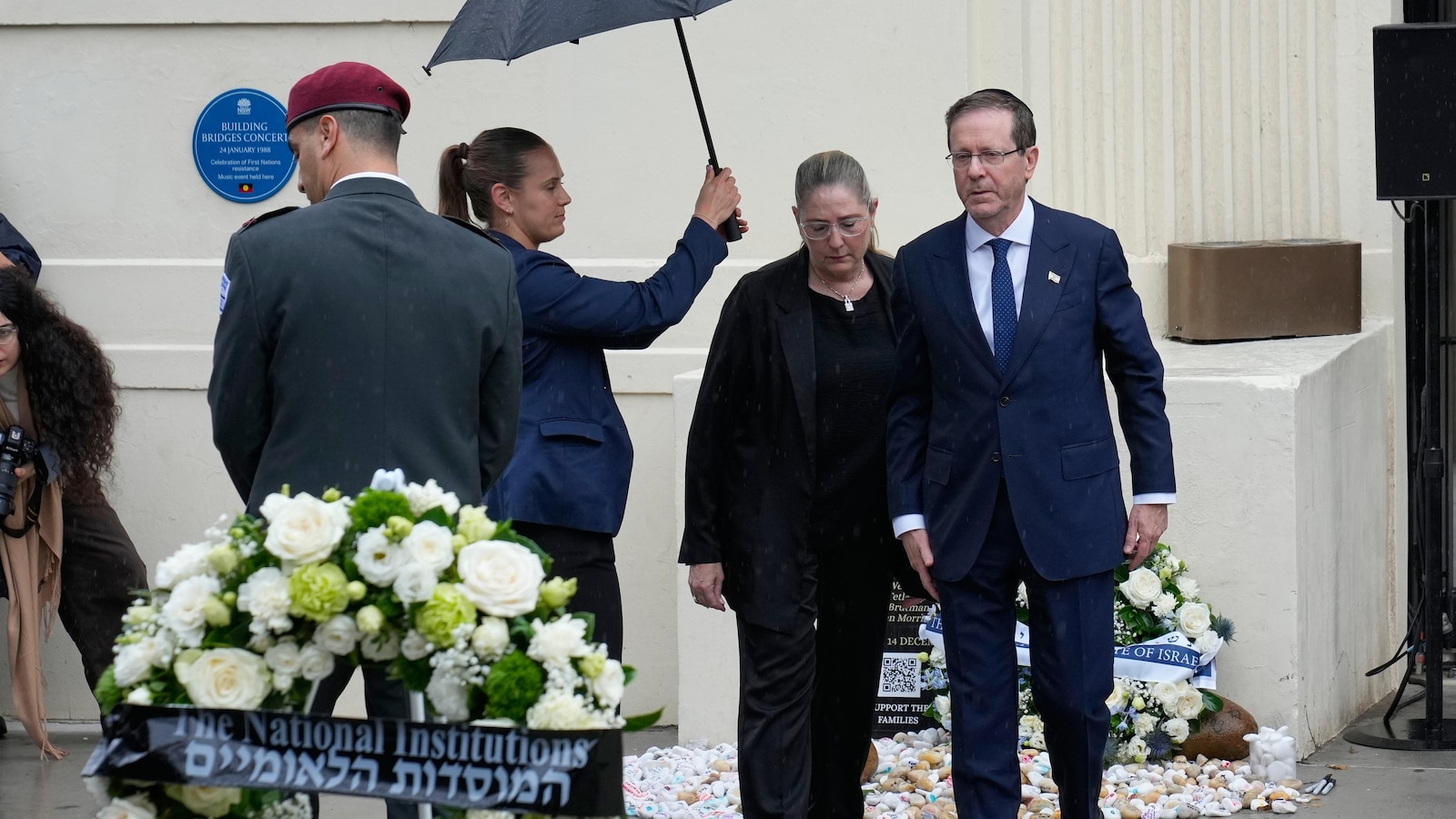
Israeli President Isaac Herzog’s four-day visit to Australia, beginning Monday, represents a complex intersection of humanitarian compassion and geopolitical controversy. Officially, Herzog is traveling to Melbourne, Sydney, and Canberra to offer support and solidarity to Australia’s Jewish community, which remains traumatized following the devastating antisemitic attack at Sydney’s Bondi Beach that claimed 15 innocent lives. The December 14 shooting, allegedly carried out by two gunmen inspired by the Islamic State group, shook the nation and left the Jewish community in mourning. However, Herzog’s visit has ignited fierce debate across Australian society, with critics arguing that his presence may actually deepen existing divisions rather than heal them. The president, who holds a largely ceremonial role as Israel’s head of state, is only the third Israeli president to visit Australia, following Reuven Rivlin’s 2020 visit and Herzog’s own father Chaim Herzog’s trip in 1986. While Jewish community leaders warmly welcome his arrival, others have called for his arrest on suspicion of inciting genocide in Gaza, setting the stage for what promises to be a highly charged diplomatic visit.
Diplomatic Relations Under Strain
The backdrop to Herzog’s visit is a bilateral relationship between Israel and Australia that has deteriorated significantly in recent years, particularly since the Israel-Hamas war began in 2023. The rift widened dramatically when Australian Prime Minister Anthony Albanese’s government joined France, Britain, and Canada in recognizing a Palestinian state—a decision that infuriated Israeli Prime Minister Benjamin Netanyahu. The tension reached a boiling point immediately after the Bondi Beach attack when Netanyahu took to social media to blame Albanese directly, claiming that “your call for a Palestinian state pours fuel on the antisemitic fire.” Netanyahu has consistently attempted to connect international calls for Palestinian statehood and criticism of Israel’s Gaza military operations to the global rise in antisemitic incidents. This accusation prompted a sharp exchange between the two leaders, with Albanese accusing Netanyahu of being “in denial” about the humanitarian crisis in Gaza, while Netanyahu dismissed the Australian leader as a “weak politician who betrayed Israel and abandoned Australia’s Jews.” The public war of words has alarmed Australian Jewish leaders, who have appealed to both men to restore “diplomatic norms” to what had been decades of friendly relations. Albanese has emphasized that the invitation to Herzog came at the request of Jewish community leaders, not as a government initiative, attempting to frame the visit as a humanitarian gesture rather than a political endorsement.
Jewish Community’s Perspective and Expectations
For Australia’s Jewish community, particularly the 85% who live in Sydney and Melbourne, Herzog’s visit represents a desperately needed source of comfort and validation during an extraordinarily difficult period. Alex Ryvchin, co-CEO of the Executive Council of Australian Jewry, expressed that the community “warmly anticipates” the president’s arrival, describing it as an opportunity to “lift the spirits of a pained community.” Ryvchin praised Herzog as “a patriot and a person of dignity and compassion” whose office transcends party politics, noting that the president has unfortunately had extensive experience comforting families, police, and first responders after terrorist attacks. The Jewish community hopes Herzog’s visit will lead to a “much-needed recalibration of bilateral relations between two historic allies.” This sentiment reflects deeper frustrations within the community, as leaders like Ryvchin have accused Albanese’s center-left Labor government of inadequately addressing the increase in antisemitic incidents since October 2023. Herzog himself told the Associated Press that the “primary reason” for his visit is to stand with Australia’s Jewish community as the representative of all Israelis, stating: “From thousands of miles away in Israel, we feel the deep pain of our Jewish Australian sisters and brothers. I am coming to show them our love and support at this devastating time.” Beyond the immediate comfort mission, Herzog sees the visit as a chance to “reinvigorate relations” between the two nations, dispel “lies and misinformation” about Israel, and reignite longstanding bipartisan support for Israeli-Australian ties.
Voices of Opposition and Calls for Arrest
Not everyone in Australia views Herzog’s visit as beneficial or appropriate. Human rights lawyer Chris Sidoti has been particularly vocal in his criticism, calling the invitation a “crazy idea” and warning that bringing “one of the most divisive figures in the world to Australia will undermine social cohesion, it will not rebuild it. It will increase division, it will not bring about national unity.” Sidoti’s opposition carries particular weight as he served as one of three experts appointed by the U.N.’s Human Rights Council to an inquiry that reported in September that Herzog, Netanyahu, and former Defense Minister Yoav Gallant had incited the commission of genocide in Gaza. While these findings carry no legal consequences and Israel has rejected genocide allegations as antisemitic “blood libel,” Sidoti and other lawyers have suggested that Australian police could potentially arrest Herzog on suspicion of inciting genocide—a crime under both Australian and international law. The Australian Federal Police have declined to comment on this possibility. Even within Albanese’s own government, there are dissenting voices. Ed Husic, a Muslim lawmaker and vocal critic of Israel’s conduct in Gaza, stated he was “very uncomfortable” with Herzog’s visit and “concerned that a figure like that doesn’t necessarily enhance social cohesion.” Some state government Labor Party lawmakers have announced they will join protests organized by the Palestine Action Group, whose organizer Josh Lees declared: “We need to send a clear message to our government and to the world … we are fundamentally opposed to this tour, which is designed to normalize genocide.”
Security Preparations and Public Safety Concerns
The controversial nature of Herzog’s visit has prompted extensive security preparations across Australia’s major cities. New South Wales Premier Chris Minns has made clear that a heightened police response is necessary to ensure public safety during what he described as an unprecedented convergence of “thousands of mourners and thousands of protesters as well as a visiting head of state all in the same city at the same time.” In response to the Bondi shooting, the New South Wales state parliament expedited legislation that increases police powers to arrest protesters in the aftermath of declared terrorist attacks. This legislative change reflects the seriousness with which authorities are treating the potential for unrest during Herzog’s visit. Minns defended the security measures as standard practice for any international city, explaining that “geographical restrictions” would be applied “so that the two groups don’t meet and as a result there’s not a major confrontation.” Protest rallies are expected to follow Herzog throughout his journey across Sydney, Melbourne, and Canberra, creating logistical challenges for law enforcement agencies tasked with protecting both the visiting dignitary and citizens exercising their democratic right to demonstrate. The tension between maintaining public order and allowing legitimate political expression will be tested as Australia hosts a leader who represents healing for some and complicity in alleged war crimes for others.
The Broader Implications for Australia’s Social Fabric
Herzog’s visit to Australia serves as a microcosm of the global divisions created by the Israel-Hamas conflict and its impact on diaspora communities far from the Middle East. The president himself holds a unique position in Israeli politics—as a former head of Israel’s centrist Labor Party and onetime rival of Netanyahu, he now occupies a role meant to serve as a unifier and moral compass for all Israelis, while maintaining good working relations with the current prime minister. His ceremonial position theoretically places him above partisan politics, which is precisely why Jewish community leaders saw him as an appropriate figure to provide comfort. However, the reality on the ground in Australia demonstrates that no Israeli official, regardless of their formal role, can escape the political controversies surrounding their nation’s policies. The visit highlights how events in Gaza have reverberated through multicultural societies like Australia, straining relationships between communities that previously coexisted peacefully. Prime Minister Albanese’s call for people to “recognize the solemn nature of the engagement that President Herzog will have with the community of Bondi in particular, and bear that in mind by the way that they respond over coming weeks” represents an appeal for empathy and restraint that may prove difficult to achieve in the current climate. As Australia navigates this sensitive moment, the ultimate question remains whether Herzog’s visit will be remembered as a necessary gesture of solidarity with a grieving community or as a divisive episode that further fractured an already polarized society. The answer will likely depend on one’s perspective regarding the broader Israeli-Palestinian conflict and whether ceremonial compassion can ever be truly separated from political context.