


The Remarkable Comeback of the World’s Rarest Primate
A Species on the Edge of Oblivion
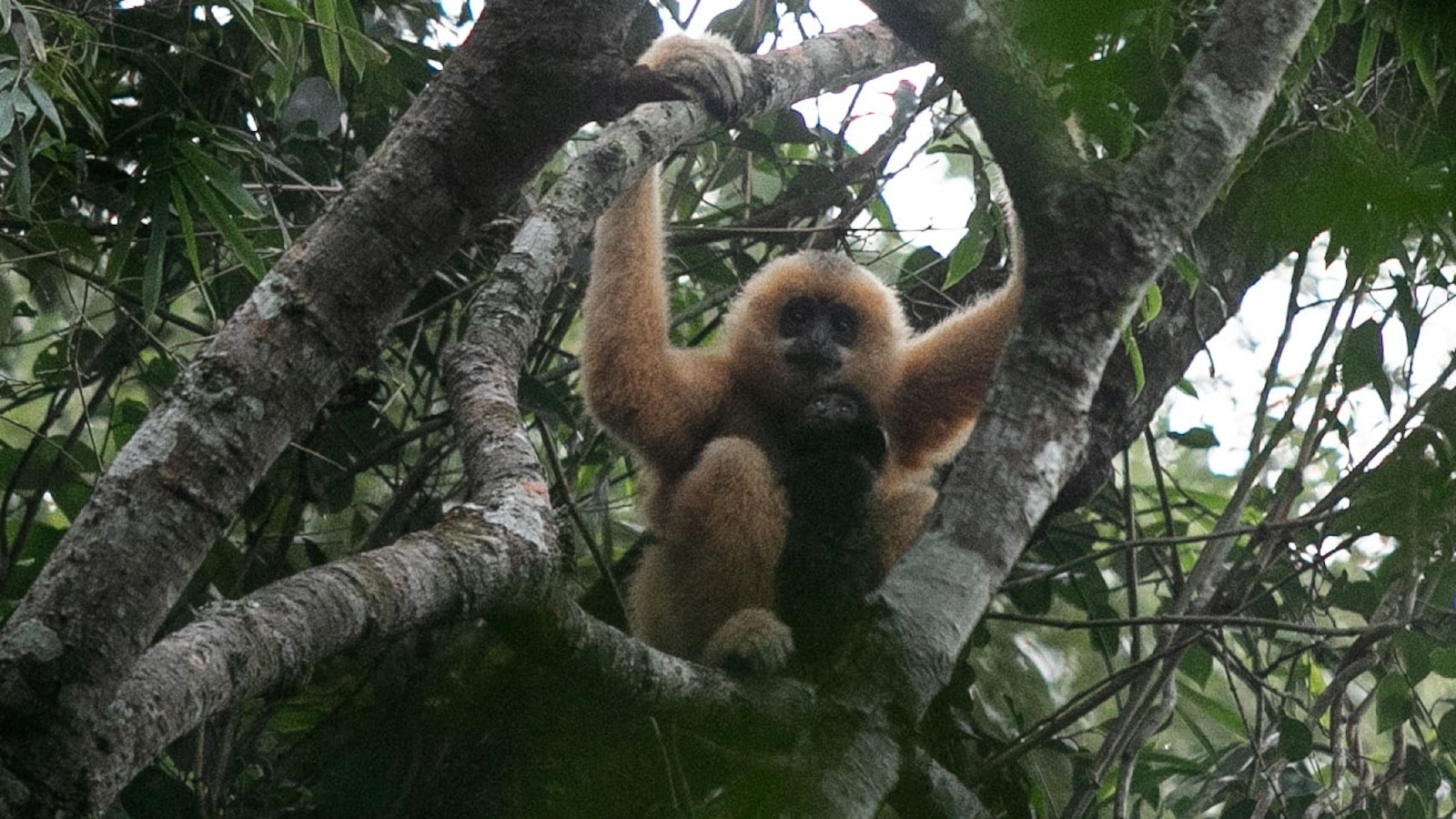
In the vast tapestry of Earth’s biodiversity, few stories are as dramatic as that of the Hainan gibbon. Once teetering on the precipice of extinction with just 13 individuals remaining in 2003, this critically endangered primate has staged what scientists are calling a “mysterious” comeback. Found exclusively on Hainan Island in the South China Sea, these remarkable creatures have nearly tripled their population over the past two decades, reaching an estimated 42 individuals today. This seemingly modest number represents a monumental achievement in conservation biology, especially considering that the species was reduced from approximately 2,000 individuals in the 1950s due to devastating habitat loss from deforestation and relentless hunting pressure. The Hainan gibbon’s journey from abundance to near-annihilation and back again offers both hope and critical lessons for conservationists working to protect other threatened species around the world. Today, the last surviving population clings to existence in a single forest patch within the Bawangling National Nature Reserve, part of the Hainan Tropical Rainforest, making every individual precious beyond measure.
Unraveling the Genetic Mystery
What makes the Hainan gibbon’s recovery particularly puzzling to scientists is that it defies conventional understanding of population genetics. When a species’ numbers plummet to such critically low levels, scientists expect to see the damaging effects of inbreeding and what’s known as “genetic load”—an accumulation of harmful mutations that typically plague small, isolated populations. With the smallest effective population size and lowest genetic diversity compared to other threatened primate species, the Hainan gibbon should theoretically have been doomed by its own genetic limitations. However, groundbreaking research published in Science Advances has revealed something entirely unexpected. By analyzing fecal samples from 18 wild gibbons and examining four museum specimens, researchers discovered that the modern population actually displays remarkably high local genomic recombination, beneficial functional variations, and surprisingly low genetic load. This counterintuitive finding sent scientists searching for answers in the species’ ancient past, leading them to uncover a fascinating story written in the gibbons’ DNA that stretches back tens of thousands of years.
An Ancient Legacy Preserved in DNA
The key to understanding the Hainan gibbon’s resilience lies not in recent history but in events that occurred during the Last Glacial Maximum, the coldest and most expansive phase of the last Ice Age that gripped the planet between 20,000 and 26,000 years ago. During this period, the gibbon population experienced what geneticists call a “bottleneck”—a dramatic reduction in numbers that normally results in severe loss of genetic diversity. However, what happened afterward proved crucial to the species’ long-term survival. Following this ancient population crash, the gibbons experienced a prolonged expansion period lasting for millennia. During this expansion, something remarkable occurred: two long-separated genetic lineages within the species came back together and remixed their genetic material. This ancient reunion of distinct genetic lines created a more diverse and robust genetic foundation that would prove invaluable thousands of years later. The remixing of these ancestral lineages essentially provided the modern gibbon population with a genetic safety net, supporting their overall genetic health and enabling the population regrowth we’re witnessing today despite their perilously small numbers.
Ecological Importance Beyond Their Numbers
The Hainan gibbon’s significance extends far beyond their rarity or the scientific curiosity their genetics inspire. These arboreal frugivores—tree-dwelling animals whose diet consists primarily of fruit—play an absolutely essential role in maintaining the health and balance of Hainan Island’s forest ecosystems. As they move through the forest canopy consuming fruit, they act as nature’s gardeners, dispersing seeds across wide areas and ensuring the regeneration and diversity of the forest. Their feeding patterns and movements also help maintain canopy balance, influencing which tree species thrive and how the forest structure develops over time. According to the International Union for Conservation of Nature, losing the Hainan gibbon would mean losing not just the world’s rarest ape and primate, as designated by the Zoological Society of London, but also losing a keystone species whose absence would ripple through the entire ecosystem. The fact that one gibbon family was spotted living outside the conservation park in 2019 and has been thriving thanks to conservation efforts and community education programs offers a glimmer of hope that these ecological engineers might one day reclaim more of their historical range.
Conservation Challenges and Community Engagement
The path forward for Hainan gibbon conservation is neither simple nor assured, despite the encouraging population trend of recent years. The species was listed as critically endangered on the IUCN’s Red List of Threatened Species in 2015 and was reclassified as critically depleted as of 2023, reflecting both the severity of their situation and the specific nature of their population challenges. The Zoological Society of London, which has been deeply involved in conservation efforts, emphasizes that long-term recovery will require intensive and sustained conservation management strategies. One of the most complex challenges involves reducing potential conflicts of interest between local communities and the gibbon population. As human populations expand and economic development continues on Hainan Island, the pressures on gibbon habitat intensify. Local communities may face difficult choices between economic opportunities and gibbon conservation, making community education and engagement absolutely critical. The success story of the gibbon family thriving outside the conservation park, as reported by the New England Primate Conservancy, demonstrates that when communities are educated about and invested in gibbon conservation, coexistence becomes possible.
Hope for the Future and Broader Implications
The Hainan gibbon’s story offers profound hope not only for this single species but for conservation efforts worldwide. Their recovery from just 13 individuals to 42 over two decades proves that with proper protection, habitat preservation, and community support, even species standing at the very edge of extinction can pull back from the brink. The genetic research revealing their unexpected resilience also provides valuable insights that could inform conservation strategies for other critically endangered species. Understanding that ancient genetic events can influence modern population recovery potential may help scientists identify which species have hidden genetic strengths that could support recovery efforts. However, this success story also comes with important caveats and continued challenges. The population remains extremely small and confined to a single location, making it vulnerable to catastrophic events such as disease outbreaks, natural disasters, or rapid environmental changes. Expanding the gibbon’s range beyond the current reserve, as evidenced by the family living outside the protected area, will be essential for long-term viability. This will require ongoing collaboration between scientists, conservation organizations, government agencies, and local communities to balance human needs with gibbon habitat requirements. The mystery of the Hainan gibbon’s rebound may have been partially solved through genetic analysis, but ensuring that this rebound continues into a full recovery remains an ongoing challenge that will require dedication, resources, and hope for years to come.