


Deadly Drone Strike on Ukrainian Train Sparks Terror Accusations and Starlink Controversy
A Horrific Attack on Civilians
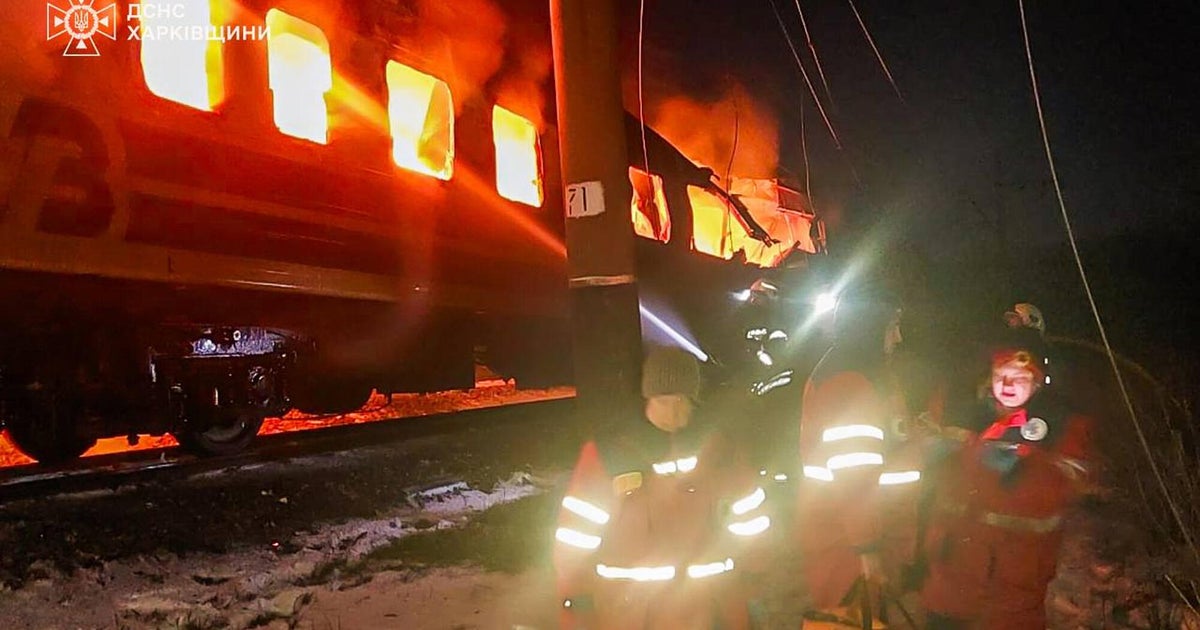
On a seemingly ordinary Tuesday, tragedy struck in Ukraine’s eastern Kharkiv region when a Russian drone attack turned a routine train journey into a nightmare. At least five people lost their lives when drones slammed into a passenger train carrying 291 civilians, igniting fires and chaos. The attack targeted both the engine and a passenger car, forcing emergency evacuations as flames consumed parts of the train. Ukrainian President Volodymyr Zelenskyy didn’t mince words in his response, calling the strike “purely an act of terrorism” and emphasizing that any civilized nation would view such an attack on civilian transportation with the same horror. Deputy Prime Minister Oleksiy Kuleba provided additional details, stating that preliminary investigations suggested three Iranian-made Shahed attack drones were responsible for the devastation. He echoed Zelenskyy’s sentiments, firmly declaring this a “direct act of Russian terror against civilians” with absolutely no military justification or target involved. As firefighters worked frantically to extinguish the flames and rescue workers combed through the wreckage, the human cost of this strike became painfully clear—innocent people simply trying to travel through their own country had become casualties of war.
Russia’s Denial and the Pattern of Civilian Targeting
The Russian government, maintaining its standard position, routinely denies deliberately targeting civilian infrastructure throughout this conflict. However, neither the Kremlin nor Russian military officials offered any specific response to these latest allegations about intentionally striking a passenger train filled with civilians. This silence speaks volumes, particularly as strikes on Ukrainian civilians and critical infrastructure have dramatically intensified in recent months. The pattern has become disturbingly familiar: attacks on power stations, residential buildings, hospitals, schools, and now passenger trains—all structures that should be protected under international humanitarian law. What makes these attacks even more concerning is that experts have observed Russia adapting and refining its offensive capabilities specifically to evade Ukraine’s air defense systems. The evolution of these tactics suggests a deliberate effort to make civilian-area strikes more effective, raising serious questions about targeting priorities and respect for civilian life. The international community has repeatedly condemned such attacks, yet they continue with alarming regularity, each incident adding to the mounting civilian death toll and the destruction of Ukraine’s infrastructure.
Declining Defense Effectiveness and Escalating Threats
The numbers tell a sobering story about Ukraine’s increasingly difficult defensive position. According to the Ukraine Air War Monitor journal, there was an 18% decline in Ukraine’s drone interception rate over the past year—a significant drop that translates directly into more successful Russian strikes and more Ukrainian casualties. Oleksii Balesta, Ukraine’s Deputy Minister for Development of Communities and Territories, explained to CBS News that Russia has been deploying larger drones in substantially higher quantities, dramatically increasing the lethality of their strikes. This isn’t just about more drones; it’s about more sophisticated, harder-to-stop weapons being used in overwhelming numbers. The night of the train attack alone saw 165 Russian-launched drones targeting various locations across Ukraine, resulting in at least 11 deaths and dozens of wounded civilians. This represents a fundamental shift in the nature of the aerial threat Ukraine faces. Where air defense systems might have previously intercepted a higher percentage of incoming threats, the sheer volume combined with improved Russian tactics is allowing more strikes to reach their targets. For ordinary Ukrainians, this means increased danger in their daily lives—even routine activities like taking a train become potentially life-threatening endeavors.
The Starlink Controversy and Precision Strikes
Perhaps the most explosive aspect of this tragedy involves allegations about how the Russians achieved such precision in hitting a moving train. According to a recent report from the Washington, D.C.-based Institute for the Study of War, Russia has been using Starlink satellite systems to more accurately strike targets throughout Ukraine. This technology, owned and operated by Elon Musk’s SpaceX company, was originally provided to Ukraine to maintain communications during the war. Now, experts suggest Russia has found ways to exploit the same technology for deadly purposes. Polish Foreign Minister Radosław Sikorski directly raised this concern with Musk himself, posting on Musk’s own social media platform X, asking the businessman to “stop the Russians from using Starlinks to target Ukrainian cities.” Two Ukrainian defense analysts specifically suggested the train might have been hit by Shahed drones equipped with SpaceX technology. Olena Kryzhanivska, a defense analyst, told CBS News that “Russia has started using Starlink on other drones, and now is using it on Shaheds as well,” adding that the attack “was not surprising at all. It was expected.” Serhiy Beskrestnov, a Ukrainian military analyst specializing in drone warfare, pointed out the suspicious precision of the strike, noting that it wasn’t the locomotive that was hit, but rather “the center of the train,” suggesting the Russian drone pilot attacked a passenger car “intentionally and consciously” using what he described as “Shaheds with online control.”
Musk’s Response and Unanswered Questions
Elon Musk’s response to these serious allegations was characteristically combative and dismissive. Rather than addressing the substantive concerns about potential Russian misuse of Starlink technology, Musk called Polish Foreign Minister Sikorski a “drooling imbecile” and insisted that Starlink’s terms of service “do not allow for offensive military use, as it is a civilian commercial system.” He also pointed out that Ukraine itself uses the Starlink system for military communications, seemingly attempting to create a moral equivalence between Ukraine’s defensive communications and Russia’s alleged use of the technology to target civilians. However, this response left many critical questions unanswered. SpaceX did not respond to CBS News requests for comment on the specific claims that Starlink technology may have been used in the drone strike on the train or by Russian forces more broadly to target civilian infrastructure throughout Ukraine. The technical questions are significant: How exactly is Russia obtaining access to Starlink systems? Are there sufficient safeguards to prevent unauthorized military use? Can SpaceX detect and prevent such usage? The humanitarian implications are even more pressing, as the technology designed to help Ukrainians stay connected may now be contributing to their deaths.
The Vulnerability of Civilian Infrastructure and What Lies Ahead
The train attack highlights the particular vulnerability of Ukraine’s civilian infrastructure and the difficult defensive challenges the country faces. As Kryzhanivska explained, trains make easy targets for precision-guided weapons, and “the territory of Ukraine is not targeted evenly with air defense systems and mobile fire units.” There are no established protocols for train crews facing approaching drones—should they stop the train or keep moving? What protective measures can possibly be taken when passengers are exposed in moving vehicles? These are questions that no peacetime society should have to answer, yet they’ve become part of Ukraine’s daily reality. The broader implications extend beyond trains to all civilian infrastructure and transportation networks. If Russia can successfully strike a moving train with precision, few civilian targets are truly safe. As this war continues, the civilian population bears an increasingly heavy burden, with ordinary activities becoming fraught with danger. The international community’s response to such strikes, the effectiveness of sanctions, and the provision of more sophisticated air defense systems to Ukraine will all play crucial roles in determining whether attacks like this become even more common or whether Ukraine can better protect its civilian population from such acts of terror.