

Danish Veterans Stage Silent Protest Against Trump’s Greenland Remarks
A Powerful Display of Hurt and Betrayal
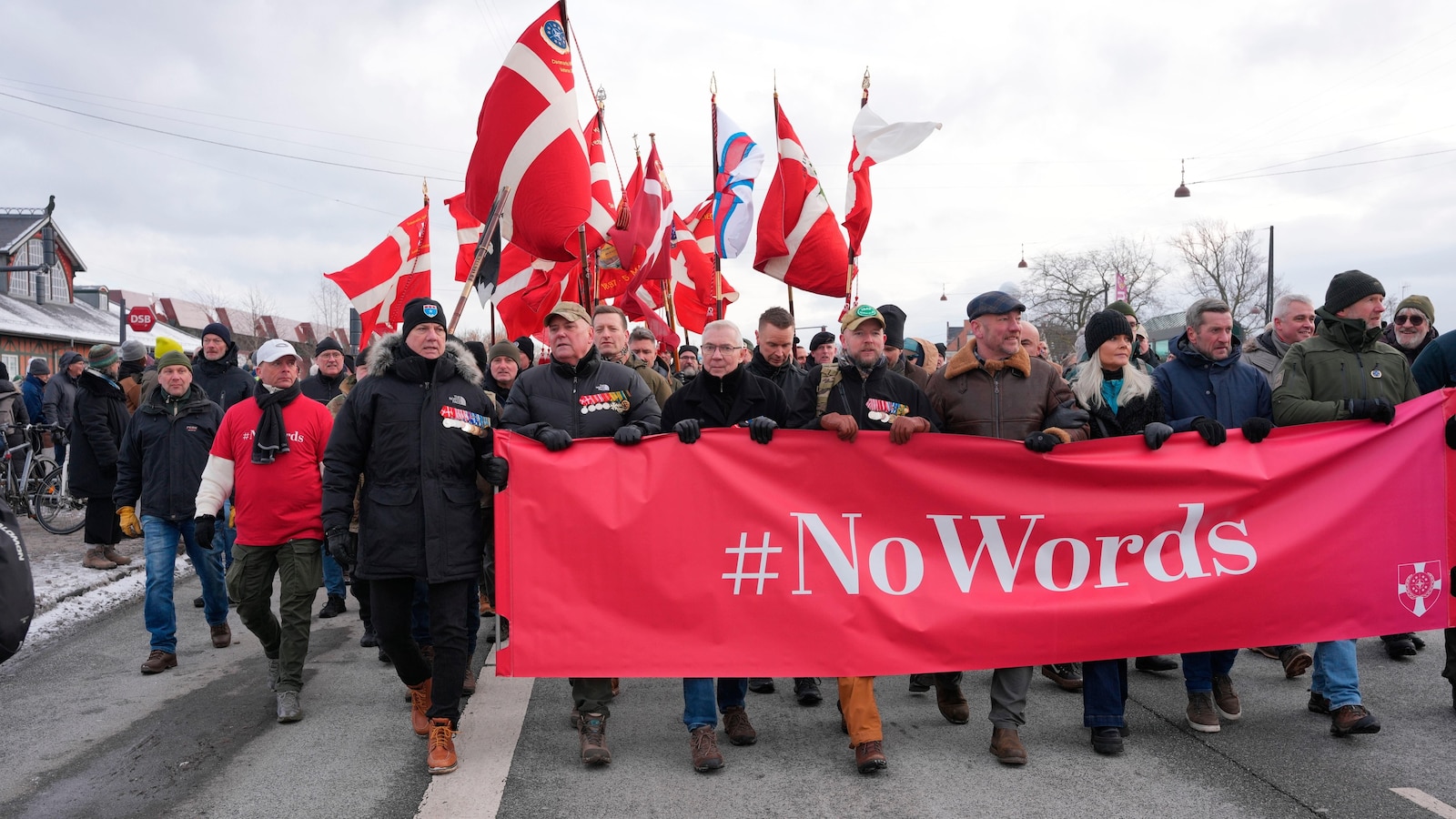
In a moving demonstration of dignified protest, hundreds of Danish military veterans who once fought shoulder-to-shoulder with American forces, joined by thousands of their supporters, gathered outside the U.S. Embassy in Copenhagen on Saturday. Their silent vigil came in response to President Trump’s renewed push to acquire Greenland and his dismissive comments about the combat contributions of allied forces, particularly Danish troops. The protesters began their solemn march at Kastellet, a historic fortress in Copenhagen that still serves as an active military site, carrying large Danish flags through the streets to the embassy. The organizing group, Danish Veterans & Veteran Support, issued a powerful statement expressing the deep pain felt by those who had answered America’s call to arms: “Denmark has always stood side by side with the USA — and we have showed up in the world’s crisis zones when the USA has asked us to. We feel let down and ridiculed by the Trump Administration, which is deliberately disregarding Denmark’s combat side by side with the USA.” Their words captured a sentiment of profound disappointment from soldiers who had believed in the unbreakable bond forged between allies on the battlefield.
Honoring the Fallen with 52 Flags
The emotional centerpiece of the protest was a ceremonial tribute to Denmark’s ultimate sacrifice in recent conflicts. Before beginning their minutes of silence, the protesters planted 52 Danish flags outside the embassy gates—each one bearing the name of a Danish serviceman who never returned home from Afghanistan or Iraq. As an organizer solemnly read each fallen soldier’s name aloud, the gravity of Denmark’s commitment became impossible to ignore. Some in the crowd were moved to tears, remembering comrades lost and battles fought in what they believed was a shared mission with their American allies. The statement from the organizing veterans’ group captured this anguish perfectly: “Words cannot describe how much it hurts us that Denmark’s contributions and sacrifices in the fight for democracy, peace and freedom are being forgotten in the White House.” For these veterans, Trump’s comments weren’t just political rhetoric—they were a personal dismissal of their friends’ deaths and their own service, a painful erasure of memories that many still carry with them daily in the form of physical injuries, psychological trauma, and grief for those who didn’t make it home.
The Breaking Point: Dismissive Words from the White House
The protest was sparked by a series of inflammatory statements from President Trump regarding Greenland and allied military contributions. During the World Economic Forum in Davos, Switzerland, Trump told Fox Business Network: “We’ve never needed them, we have never really asked anything of them. You know, they’ll say they sent some troops to Afghanistan, or this or that, and they did — they stayed a little back, a little off the front lines.” For Danish veterans who had served in some of the most dangerous regions of Afghanistan and Iraq, these words were a slap in the face. Carsten Rasmussen, a 65-year-old veteran and president of the Danish Veterans Association, spoke to the depth of anger and betrayal felt by his fellow servicemembers: “They have a feeling that they’ve been betrayed. And of course, they are angered by this. They deployed. They fought with the Americans. They fought with the Brits. They fought together. They bled together, and as you have heard here in front of the American embassy today, 52 of them never returned.” The reality contradicts Trump’s characterization entirely—Denmark suffered the highest per capita death toll among all coalition forces in Afghanistan, with 44 soldiers killed there and eight more in Iraq, a staggering loss for a nation of fewer than six million people.
The Human Cost Beyond the Numbers
Beyond the fallen, Søren Knudsen, another 65-year-old Danish veteran, emphasized the ongoing suffering of survivors. Many Danish soldiers returned home missing limbs, their bodies forever marked by their service in conflicts they joined at America’s request. Others battle invisible wounds—post-traumatic stress disorder and other psychological conditions that haunt them long after they’ve left the battlefield. “We have some who are suffering from PTSD or the like. And we have a lot of veterans who are luckily not suffering from anything, but they are still feeling offended by the statements,” Knudsen explained, adding, “Hence, very importantly, we wanted to give this message.” The message was clear: whether physically injured or not, all Danish veterans felt personally wounded by the dismissal of their service. These were men and women who had put their lives on the line based on a fundamental belief in the NATO alliance and the special relationship between Denmark and the United States. They had trusted that their sacrifices would be remembered and honored, that the blood spilled together would cement an unbreakable bond between nations. Trump’s words shattered that trust, leaving many feeling that their service—and the lives of their fallen comrades—had been rendered meaningless by political expediency.
Adding Insult to Injury: The Flag Incident
If Trump’s words weren’t hurtful enough, an incident earlier in the week added fuel to the fire and likely swelled the protest’s numbers significantly. On Tuesday, 44 Danish flags—one for each soldier killed in Afghanistan—had been respectfully placed in front of the U.S. Embassy as a quiet memorial and statement. Embassy staff removed these tributes, an action that many Danes saw as an additional insult to their fallen heroes. Rasmussen estimated that this incident alone probably added “a few thousand people” to Saturday’s demonstration, transforming what might have been a veterans-only gathering into a broader public expression of national hurt and frustration. The State Department later attempted to explain the removal, stating that as a general policy, guard staff remove items left behind after demonstrations and other “legitimate exercises of free speech,” and that the flags had been returned to those who placed them. While this may have been standard protocol, the timing and context made the action seem tone-deaf at best and deliberately disrespectful at worst, especially given the symbolic significance of those specific flags and what they represented.
The Broader Context: Greenland and Alliance Strain
The veterans’ anger wasn’t solely about Trump’s dismissive comments regarding their military service. They were also deeply troubled by the administration’s approach to Greenland, the semi-autonomous Danish territory that Trump has repeatedly expressed interest in purchasing or otherwise acquiring. The Danish veterans see this as a fundamental disregard for the right of Greenland’s people to self-determination, as well as an insult to Denmark’s sovereignty as a NATO ally. Trump’s claim that Denmark is incapable of protecting Western security interests in the strategically important Arctic region particularly stung, given Denmark’s long-standing commitment to the NATO alliance and its track record of showing up when called upon. For these veterans, the Greenland issue and the dismissal of their combat contributions are interconnected symptoms of a broader problem: an American administration that seems willing to discard decades of alliance, sacrifice, and mutual support in favor of transactional politics and bombastic rhetoric. The silent protest outside the embassy was their way of reminding both the American government and the world that alliances are built on more than convenience—they’re built on shared values, mutual respect, and the bonds formed when soldiers from different nations fight and die together for common causes. Their message, delivered without words but with the powerful symbolism of 52 flags bearing the names of the dead, was that some things should transcend politics, and the memory of those who gave their lives in common cause should be among them.