


A Teenager’s Bold Bid: Vermont’s 14-Year-Old Gubernatorial Candidate
From Legislative Page to Political Pioneer
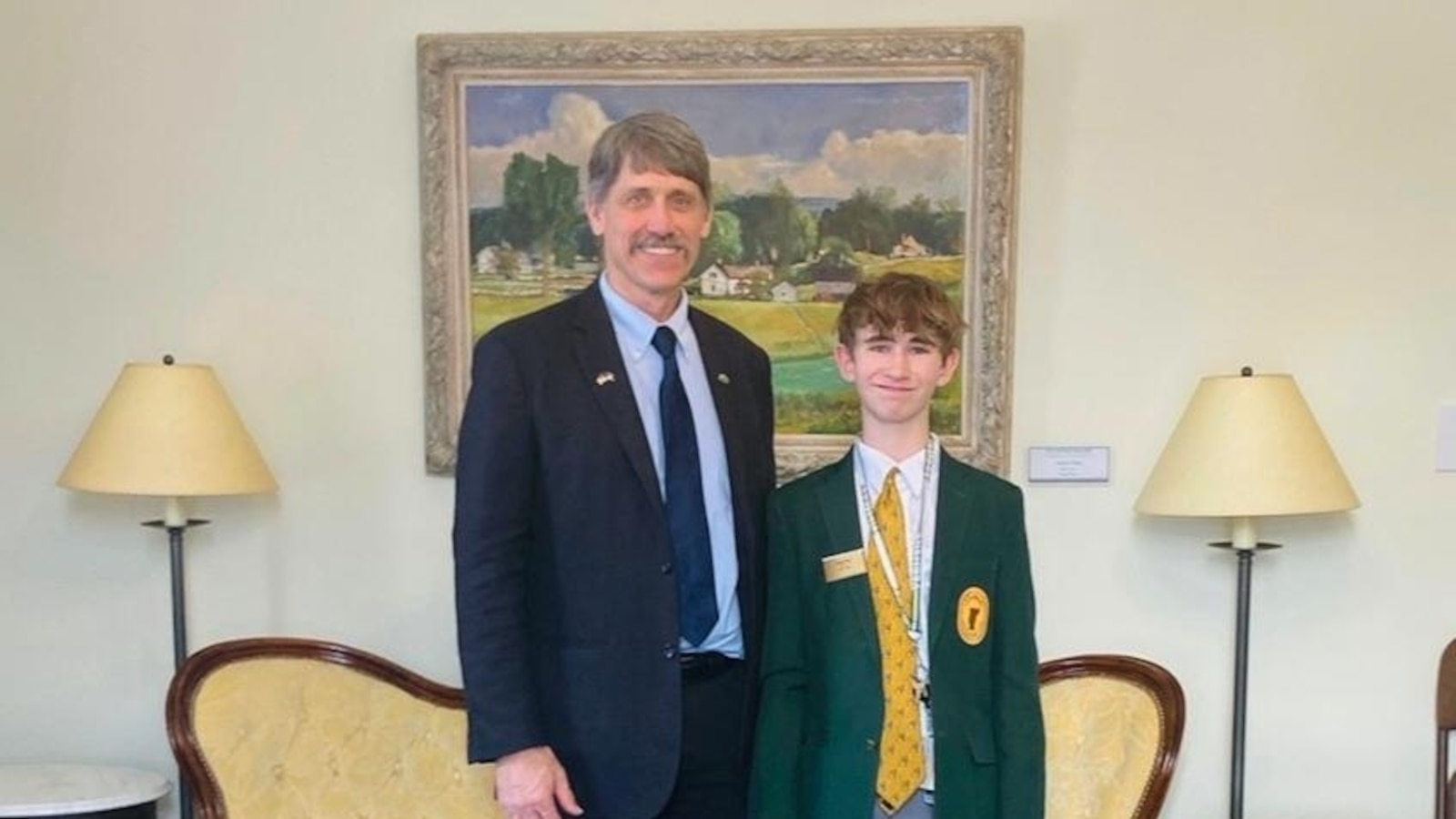
In a remarkable display of youthful ambition and civic engagement, Dean Roy, a 14-year-old freshman at Stowe High School in Vermont, is making history as the first candidate under 18 to appear on the state’s general election ballot for governor. When Roy reflects on the origins of his political aspirations, he points to his eighth-grade year—which was just last year. His experience working as a legislative page at the Vermont Statehouse ignited a passion for public service that quickly evolved into something far more ambitious than most teenagers could imagine. While his peers might be preoccupied with typical adolescent concerns, Roy has set his sights firmly on the governor’s office, determined to prove that age should not be a barrier to political participation and leadership.
Roy’s path to the ballot wasn’t through traditional party channels. Learning from the experience of another young candidate, Ethan Sonneborn, who sought the Democratic nomination in 2018 as an eighth-grader but finished last in a four-way primary, Roy took a different approach. He created his own political organization, the Freedom and Unity party, securing his position in the general election through this third-party route. This strategic decision demonstrates a level of political savvy that belies his age. Vermont’s unique constitutional landscape made this possible—the state sets no minimum age requirement for gubernatorial candidates, asking only that they have resided in the state for four years. This quirk in Vermont’s constitution has opened a door that remains firmly closed in nearly every other state in the nation, where minimum age requirements for governor typically hover around 30 years old.
The Constitutional Debate and Educational Perspective
The legal and constitutional implications of Roy’s candidacy have sparked interesting discussions among Vermont’s legal scholars and political observers. Peter Teachout, a professor at Vermont Law and Graduate School, offers a scholarly interpretation that differs somewhat from Roy’s understanding of the state constitution. Teachout references a section of the document discussing voter qualifications, which specifies an age requirement of 18 years. He provocatively notes that, in theory, even a 4-year-old could run for governor under the current constitutional framework, though he quickly dismisses any real concern about such scenarios. His assessment of Roy’s chances is pragmatic, if not slightly dismissive: “Vermonters can be a little cantankerous and provocative just for the fun of it, but it is not something they are likely to support in this context.” This perspective reflects a broader skepticism about whether voters will actually support such a young candidate when it comes time to cast their ballots.
However, those who know Roy best paint a different picture of his candidacy and its significance. James Carpenter, Roy’s former history teacher, describes his former student as an “old soul” possessed of endless curiosity and genuine political passion. Carpenter emphasizes that Roy’s campaign is no publicity stunt or teenage whim—it’s a serious endeavor driven by authentic concern for Vermont’s future. “It just really shows what type of kid Dean is. He’s very earnest in what he’s doing. There’s no gimmick behind this,” Carpenter explains, highlighting Roy’s unique combination of youthful optimism and unusual pragmatism. This endorsement from an educator who has observed Roy’s intellectual development carries particular weight, suggesting that dismissing his candidacy as mere adolescent fantasy might overlook the genuine civic engagement and political awareness he represents. While most 14-year-olds aren’t typically concerned with the intricacies of property taxes or healthcare policy, Roy has demonstrated both interest and knowledge in these complex issues.
Policy Priorities and Practical Considerations
Despite his youth, Roy has developed concrete policy positions and identified specific priorities for Vermont’s future. Housing stands out as the most important issue facing the state in his view—a position that aligns with concerns expressed by many adult Vermont residents struggling with affordability and availability in the state’s housing market. His ability to identify and articulate this pressing concern demonstrates an awareness of real issues affecting Vermonters’ daily lives. Beyond housing, Roy has also thought carefully about the practical logistics of serving as governor while still being school-age. His proposed solutions include taking online classes and completing homework at night after work, showing that he’s considered the real-world implications of his ambitions. Whether these arrangements would prove practical or sufficient is certainly debatable, but the fact that he’s thought through these challenges speaks to a level of seriousness about his candidacy.
Roy’s political identity reflects a growing trend among younger Americans—a rejection of traditional party labels and affiliations. He says he doesn’t identify with either major party, positioning himself as an independent voice focused on issues rather than partisan ideology. His campaign messaging on social media captures this outsider perspective: “I know it sounds crazy, a 14-year-old running for governor, but honestly, look at the people in charge right now. They’ve been doing this forever and things still aren’t working.” This critique of career politicians and establishment politics resonates with a broader frustration many Americans feel about their political system, regardless of age. It’s a message that has proven effective for various candidates across the political spectrum in recent years, though coming from a 14-year-old, it takes on a particularly pointed quality.
Official Responses and Age Versus Experience
Current Vermont Governor Phil Scott, a Republican, has responded to Roy’s candidacy with a carefully balanced statement that acknowledges the positive aspects of youthful political engagement while raising legitimate questions about readiness for executive office. Through his press secretary Amanda Wheeler, Scott expressed that “he believes it’s important for our youth to get involved,” showing respect for Roy’s civic participation. However, Scott also voiced concerns that are shared by many observers: “But the Governor also believes that a teenager may not be best suited to serve in that role given the lack of experience and lived perspectives youth have at that point in their lives.” This response captures the central tension in Roy’s candidacy—the balance between encouraging youth participation in democracy and acknowledging that certain positions may require life experience, judgment, and perspective that typically come with age.
Roy directly challenges this age-based skepticism, arguing forcefully that age should not determine whether a candidate is qualified to run for office. “What I’m aiming for is that these career politicians look at me and they say, ‘Oh my God, he actually has a chance to disrupt things,'” he explains. His goal isn’t necessarily victory in November—he admits that he doesn’t expect to win—but rather to disrupt the political status quo and demonstrate that young people deserve a voice in shaping their future. “If I can get people to think that I am a threat to them, then I know that’s been a success,” Roy says. “Because what I want is to show them that the youth have a voice. We’re gonna make change. The future is now.” This framing positions his candidacy as the opening salvo in a broader movement rather than a one-time oddity, suggesting that win or lose, Roy hopes to inspire other young people to engage more actively in politics and governance.
A Movement Beyond One Candidate
The broader significance of Roy’s campaign extends well beyond the question of whether a 14-year-old should or could serve as Vermont’s governor. His candidacy represents a growing impatience among young people with the pace of change on issues that will profoundly affect their futures, from climate change to housing affordability to healthcare access. Roy explicitly frames his run as the beginning of a movement: “What I do expect is to start the movement, and get more young people to come in behind me and say, ‘Yeah, we also want to make change.'” This perspective suggests that he views his campaign as a catalyst for greater youth political engagement rather than simply a personal ambition to hold office. In an era when young people are often criticized for political apathy or dismissed as too focused on social media and entertainment, Roy’s serious engagement with policy issues and the political process offers a counter-narrative.
The reaction to Roy’s candidacy—ranging from legal scholars’ bemused skepticism to his teacher’s enthusiastic support—reflects broader societal debates about youth, experience, and political participation. While nearly all other states have recognized minimum age requirements as necessary guardrails for executive office (with Kansas specifically adding such requirements after six teenagers ran for governor in 2018), Vermont’s approach allows for these occasional test cases. Whether the state will eventually follow others in establishing age requirements, or whether Roy’s campaign will indeed spark a movement of increased youth political engagement, remains to be seen. What seems certain is that Dean Roy has already succeeded in sparking conversations about who gets to participate in politics, what qualifications truly matter for leadership, and how we can better engage young people in shaping the policies that will define their futures. Regardless of the November election results, this 14-year-old from Stowe has already made his mark on Vermont’s political landscape and provided a thought-provoking example of civic engagement for young people across the country.