


A New Beginning: The Birth That Could Save Both a People and the Amazon Rainforest
The Miracle That Defied Extinction
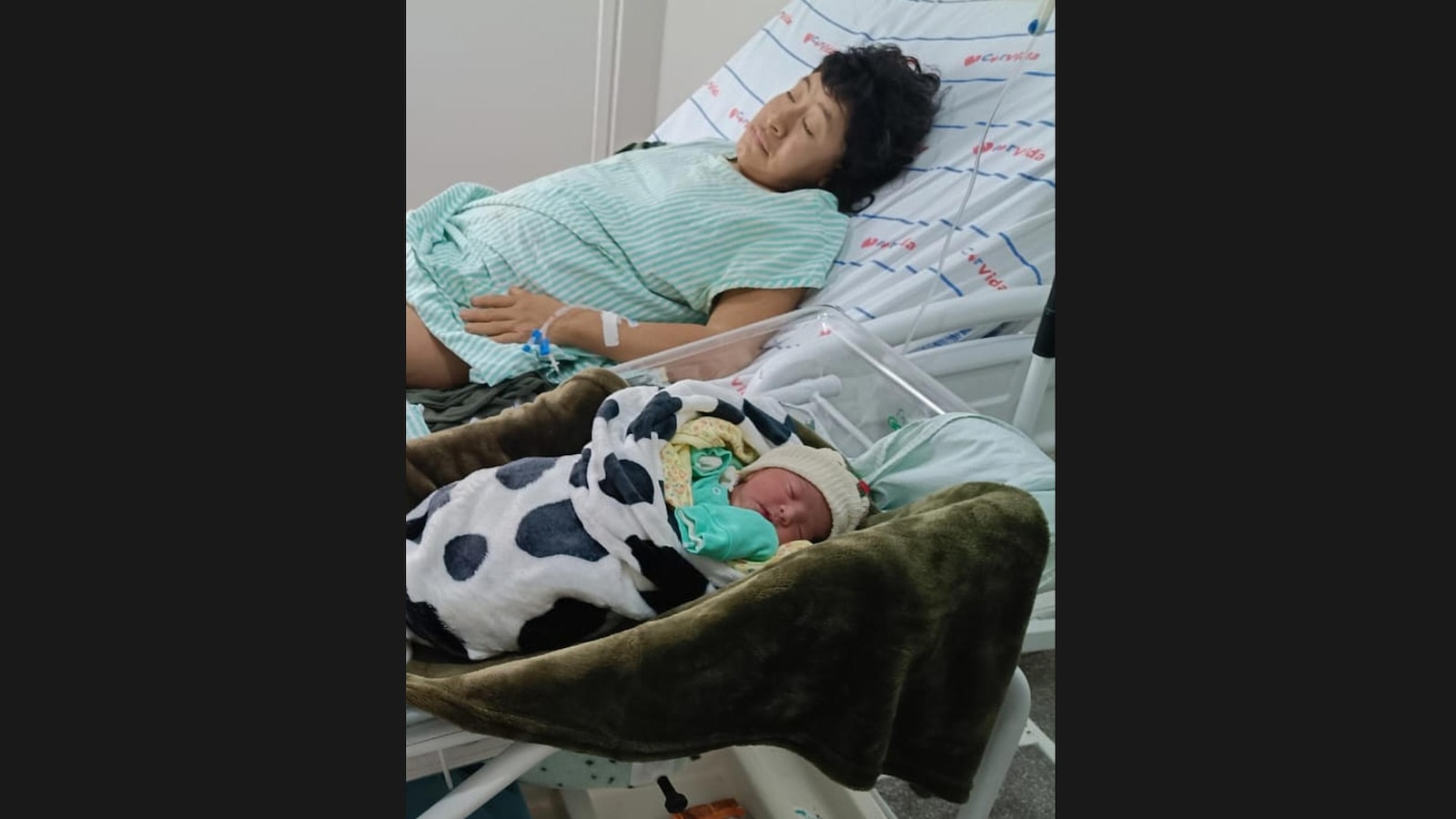
In the vast expanse of the Amazon rainforest, where towering trees meet endless skies, three women have been living as the last remnants of their entire civilization. Pugapia, along with her daughters Aiga and Babawru, represented the final survivors of the Akuntsu people—an Indigenous group nearly erased from existence by violence and greed. For years, these women lived with the unbearable knowledge that they were watching their culture, language, and heritage slowly fade into history. The world had prepared itself for the inevitable: the complete disappearance of the Akuntsu people. But last December, something extraordinary happened that nobody had dared to hope for. Babawru, the youngest of the three women who is believed to be in her forties, gave birth to a baby boy named Akyp. This single birth represents far more than just the arrival of a new life—it symbolizes an unexpected lifeline thrown to a drowning culture, a flicker of hope in what seemed like an inevitable darkness. According to Joenia Wapichana, who leads Brazil’s Indigenous protection agency Funai, this child embodies the resistance and resilience of Indigenous peoples everywhere. His existence proves that even in the face of genocide and near-total destruction, life finds a way to persist, and with it, the crucial mission of protecting the land that sustains both people and planet.
The Vital Connection Between Indigenous Survival and Environmental Protection
The birth of baby Akyp carries significance that extends far beyond his immediate family and tribe. His arrival has profound implications for the Amazon rainforest itself, which stands as one of the planet’s most critical defenses against climate change. Scientists and environmental experts have long recognized that Indigenous territories serve as the most effective guardians of the Amazon, the world’s largest rainforest and a vital regulator of global climate patterns. The numbers tell a compelling story: according to a 2022 analysis conducted by MapBiomas, a network of organizations that tracks land use patterns across Brazil, Indigenous territories have lost only about 1% of their native vegetation over the past thirty years. Compare this to private lands throughout the country, which have suffered a devastating 20% loss of native forest cover during the same period. In Rondonia state, where the Akuntsu make their home, the statistics are even more alarming—approximately 40% of the native forest has been completely cleared away. What remains standing is largely confined to conservation areas and Indigenous territories. When viewed from satellites orbiting high above Earth, the Akuntsu’s protected land appears as a precious island of green, completely surrounded by a sea of cattle pastures, soy plantations, and corn fields. This stark visual contrast demonstrates the critical role that Indigenous peoples play in preserving not just their own heritage, but the natural ecosystems that regulate weather patterns, store carbon, and support biodiversity across the entire planet.
A Dark History of Violence and Displacement
To understand the miracle of Akyp’s birth, one must first understand the horror that nearly destroyed his people entirely. The story of the Akuntsu’s near-extinction begins in the 1970s, during Brazil’s military regime, when the government launched an aggressive campaign to develop and occupy the Amazon rainforest. Around the same time, an ambitious infrastructure program, partially financed by the World Bank, actively encouraged Brazilians from other parts of the country to migrate to the Amazon region. One of the key components of this program was the paving of a major highway that cut directly through Rondonia state. The promise made to settlers was simple but deadly in its consequences: clear the forest for agriculture and you’ll receive official land titles. The unspoken corollary was equally clear—if Indigenous people were found living on the land, settlers risked losing their claims. This created a perverse incentive that fueled horrific violence against Indigenous communities. Throughout the 1980s, Rondonia’s population more than doubled as waves of migrants arrived seeking their fortune. Ranchers seeking to expand their holdings hired gunmen to eliminate the Indigenous “obstacle” to their land claims. The Akuntsu became targets of these violent attacks. When Funai agents made first contact with the surviving Akuntsu in 1995, they found only seven people alive—the remnants of a community that experts believe had numbered around twenty individuals just a decade earlier. The agents discovered evidence of the brutal assault that had devastated the community, and the survivors, some still bearing gunshot wounds in their bodies, shared their traumatic memories of what had happened to their people.
Living in the Shadow of Genocide
The aftermath of the massacre fundamentally shaped how the surviving Akuntsu women viewed their world and their future. The last Akuntsu man died in 2017, leaving Babawru, her mother Pugapia, and her sister Aiga as the sole carriers of their people’s heritage, language, and cultural memory. These women, whose exact ages remain uncertain, made a conscious choice to maintain their isolation from the non-Indigenous world, showing little interest in the society that had brought such devastation to their people. In 2006, Funai took the important step of granting territorial protection to the Akuntsu by establishing the Rio Omere Indigenous Land. This protected territory is now shared with another small Indigenous group called the Kanoe. The relationship between the Akuntsu and Kanoe is complex and delicate—the two groups were once enemies, and they maintain distinct cultures, traditions, and languages that create barriers to easy communication. Their interactions are usually mediated by government officials who help bridge the cultural and linguistic gaps. Despite these challenges, the two groups have found ways to cooperate and even exchange knowledge. According to Amanda Villa, an anthropologist with the Observatory of Isolated Peoples, the Akuntsu women have come to depend on Kanoe men for tasks their culture considers masculine responsibilities, such as hunting and clearing agricultural fields. The spiritual traditions of both groups have also intermingled—the current Kanoe spiritual leader, for example, learned his practices from the late Akuntsu patriarch before his death.
A Decision Reversed: From Despair to Hope
Given the trauma the Akuntsu women had endured, they had made a collective decision that seemed entirely rational under the circumstances: they would not become mothers. This wasn’t simply about the absence of Akuntsu men in their community—it reflected a deeper, more profound assessment of their reality. The women believed their world had become fundamentally disorganized and broken, unsuitable conditions for bringing new life into existence. As Villa explained, this decision can be traced directly to the violent context they had survived. The women held what might be described as a catastrophic understanding of their situation. They believed they could not responsibly bring children into a world without Akuntsu men who could not only perform but also teach the tasks their culture considered essential male responsibilities, including hunting and shamanic practices. This is why Babawru’s pregnancy came as such a shock—to her most of all. Carolina Aragon, a linguist who has spent years studying and documenting the Akuntsu language and is the only outsider capable of communicating with the three women, was present during the ultrasound examination that confirmed the pregnancy. According to Aragon, who now translates conversations with the women almost daily through video calls, Babawru was stunned when she learned she was expecting a child. “She said, ‘How can I be pregnant?'” Aragon recalled, noting that Babawru had always been careful to take precautions against pregnancy. The breakdown of social relations that followed the genocide had shaped the women’s worldview for decades, leading them to repeatedly question and reject the possibility of a future for their people. But as Aragon poignantly observed, the future has a way of surprising everyone—and a baby boy was indeed born.
A Future Written in Green
The birth of Akyp represents what researchers and officials are calling a “new chapter” for the Akuntsu people. The women have chosen to welcome this child and adapt their traditions with support from both the Kanoe community and Funai. The fact that the baby is a boy holds particular significance, as it creates the possibility of eventually restoring male roles within Akuntsu culture, including the crucial position of hunter. Those who have worked closely with the three women for years understood that protecting the territory ultimately depended on the Akuntsu’s survival as a people, not just as individuals. They were determined to avoid repeating what happened with Tanaru, an Indigenous man who was discovered after living completely alone and without contact for decades. After Tanaru’s discovery, authorities struggled to maintain protection for his territory, and after his death in 2022, non-Indigenous groups immediately began disputing ownership of the land. Only late last year did the federal government finally secure the area by converting it into a protected conservation unit. Through years of patient, careful work, Funai has managed to secure territorial protection for the Akuntsu and foster productive ties with the Kanoe people. The agency has also arranged for spiritual support from an allied shaman, helping the women feel safe enough to welcome new life into their world after decades dominated by fear and loss. The Akuntsu have deep emotional bonds with the forest and with the birds that fill it with song. Now, they are nurturing bonds with new human life in their world. As Aragon wondered aloud, “What kind of relationship will this boy have with his own territory? I hope it will be the best possible, because he has everything he needs there.” Baby Akyp represents not just the continuation of the Akuntsu bloodline, but the preservation of irreplaceable cultural knowledge, a unique language, and a proven approach to living in harmony with the forest. His existence ensures that the protected territory will remain in Indigenous hands, continuing to serve as a vital green sanctuary amid the surrounding destruction—a small but crucial victory for both cultural survival and environmental protection in an age when both are under unprecedented threat.