

Airport Chaos: Passengers and Workers Unite in Call to End TSA Funding Crisis
Travelers Brace for Extended Delays at Nation’s Busiest Airport
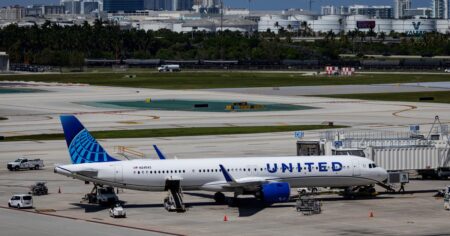
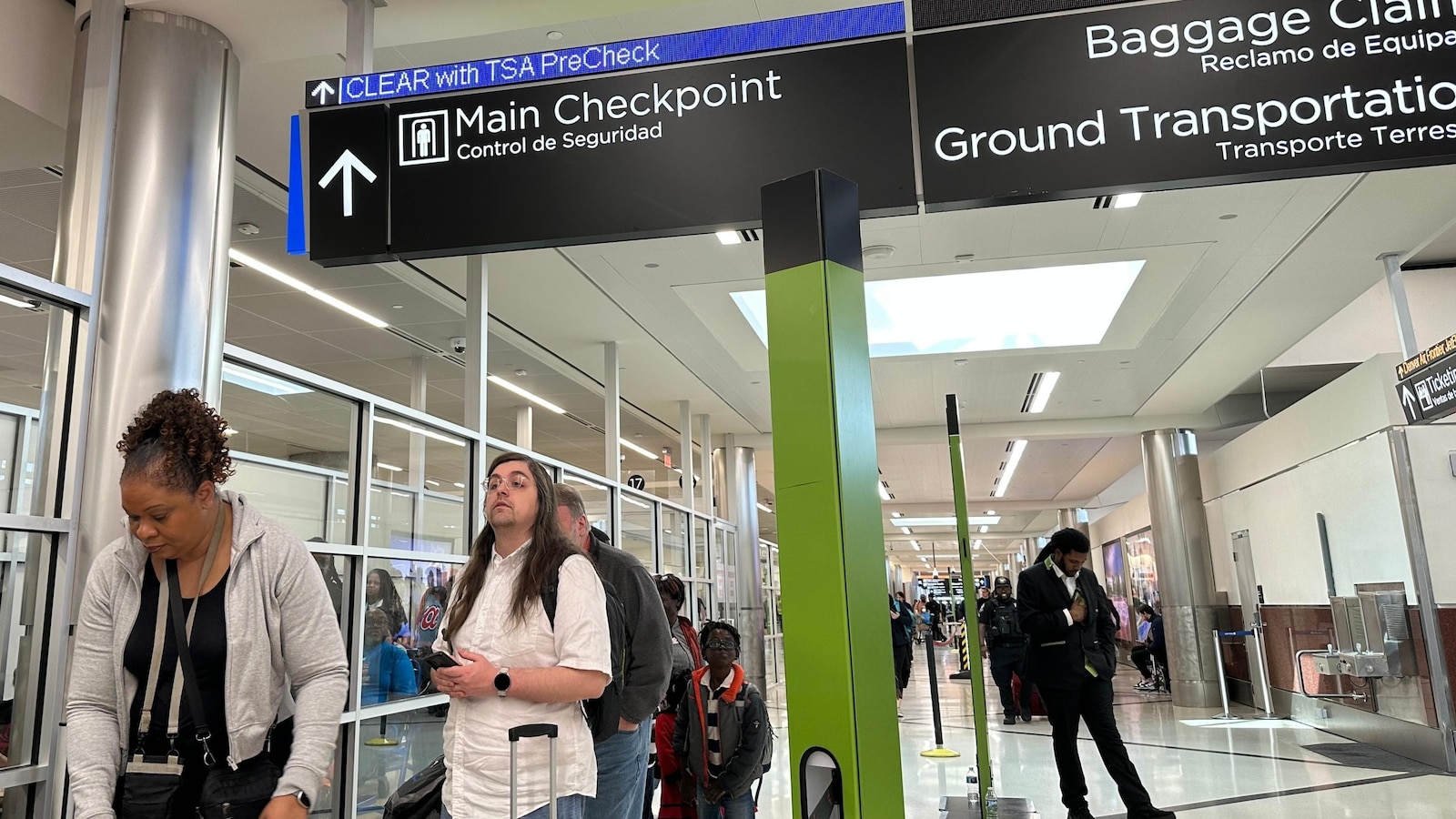
At Hartsfield-Jackson Atlanta International Airport, one of the world’s most bustling aviation hubs, a familiar refrain echoed through the terminals this Saturday: it’s time to pay the Transportation Security Administration workers. The airport, normally a well-oiled machine designed to efficiently move millions of passengers, has become a bottleneck of frustration and anxiety. TSA checkpoints, the critical gateways where passengers and luggage are screened for dangerous items, have become choke points in the system. Spooked by reports of massive delays, travelers are now arriving up to four hours before their flights—a dramatic departure from the standard two-hour recommendation. The ripple effects of the government shutdown have transformed what should be a routine part of air travel into an unpredictable ordeal that’s testing everyone’s patience.
Christian Childress, a private flight attendant from Redwood City, California, offers a unique perspective on the crisis. Though his job often allows him to bypass TSA lines, he regularly experiences commercial air travel and understands both sides of the equation. On Saturday, as he prepared for a leisure trip to Nashville, Tennessee, he arrived nearly three hours before his 1:30 p.m. flight, acknowledging that the shutdown’s effects have been “hit or miss.” His view cuts through the political noise with refreshing clarity: “Issue No. 1 should be paying the people who need to get paid and keeping our air travel system secure. Then they can debate whatever they want to debate about homeland security.” His words capture what many travelers feel—that fundamental services shouldn’t be held hostage to political disagreements, no matter how important those debates might be.
The Political Standoff Behind the Crisis
The TSA officers manning these checkpoints haven’t received a paycheck since the U.S. Department of Homeland Security partially shut down on February 14. The shutdown resulted from a political impasse, with Democrats refusing to fund the agency while other government departments continued operating normally. They demanded changes to immigration enforcement by federal agents following the shooting deaths of Alex Pretti and Renee Good in Minneapolis. As concerns about airport security and mounting delays captured public attention, a funding bill failed to advance in the Senate on Friday when Democrats withheld their support. Senate Democratic leader Chuck Schumer of New York proposed an alternative measure on Saturday to fund only the TSA, though this compromise also appeared unlikely to succeed as lawmakers convened for a rare weekend session. The political calculus is complicated, but for passengers and TSA workers alike, the human cost is becoming increasingly difficult to ignore.
Not all travelers see the situation the same way. Tyrone Williams, a retiree from Ellenwood, an Atlanta suburb, stood in the screening line before his Philadelphia flight and shared his frustration with what he sees as Democratic intransigence. “I don’t want to go between the Democrats and the Republicans, but I think the Democrats are holding everything up because they can’t get their way,” he said. His comments reflect how political affiliations shape perceptions of the crisis, even as everyone experiences the same delays. Meanwhile, President Donald Trump escalated tensions on Saturday by threatening to deploy Immigration and Customs Enforcement agents to airports if congressional Democrats don’t agree to fund the department. In a social media post, Trump claimed he would move “our brilliant and patriotic ICE Agents to the Airports where they will do Security like no one has ever seen before,” with a focus on arresting undocumented immigrants, particularly those from Somalia. The president didn’t elaborate on his plan, leaving it unclear whether there was any imminent strategy to actually implement such a dramatic shift in airport security operations.
Wait Times Swing Wildly as Staffing Shortages Bite
The practical reality on the ground in Atlanta tells its own story. Checkpoint wait times, which surged as high as 90 minutes early Saturday morning, eventually cooled to a more manageable 25 minutes by midmorning—though this was on what’s typically one of the slowest travel days of the week. Staffing shortages have forced airports to close some checkpoints entirely at times, causing wait times to swing dramatically not just in Atlanta but in several other major cities as well. Jackie Donahue of Oldsmar, Florida, exemplified the cautious approach many travelers are now taking. Flying home to Tampa, she joined the checkpoint line at 11 a.m. for a 2:25 p.m. flight—more than three hours early. Despite the inconvenience, the nurse, who was returning from a European river cruise, expressed gratitude for the TSA officers still showing up to work without pay. “We need to thank the people that are here,” she said, recognizing the human dedication behind the system that keeps air travel safe.
The Human Toll on TSA Workers
The vast majority of TSA employees are classified as essential personnel, meaning they’re required to continue working even without pay during government funding lapses. The Department of Homeland Security reported that roughly 50,000 TSA employees would work during this shutdown. By Thursday, about 10 percent of TSA officers nationwide had called out from work, with absentee rates reaching two or three times higher in some locations. These aren’t just statistics—they represent real people facing impossible financial decisions. Union leaders and federal officials acknowledge that TSA officers are under tremendous financial pressure. Airport screeners have experienced an astonishing reality: during the past 171 days, they’ve spent nearly half that time with paychecks delayed by political disputes. This includes 43 days last fall during what became the longest government shutdown in American history, four days earlier this year during a brief funding lapse, and now 36 days and counting in the current shutdown.
An Agency in Crisis Faces Mounting Losses
The sustained financial uncertainty is taking a measurable toll on the TSA workforce. Since this shutdown began, at least 376 officers have quit, according to official figures. This exodus is exacerbating turnover at an agency that already struggles with some of the highest attrition rates and lowest employee morale scores in the entire U.S. government. These departures create a vicious cycle: fewer officers mean longer wait times and more pressure on remaining staff, which in turn motivates more people to leave for more stable employment. The situation raises serious questions about the long-term sustainability of airport security operations if workers continue to be treated as bargaining chips in political negotiations. What Saturday at Hartsfield-Jackson Atlanta International Airport demonstrated is that regardless of political affiliation or travel destination, passengers share a common understanding that the current situation is untenable. The machine that moves millions of people around the world efficiently depends on dedicated workers who deserve to be paid for their service. As the shutdown drags on and the human costs mount, the pressure grows for politicians to find a solution that allows these essential workers to receive their paychecks while lawmakers continue their debates about immigration policy and homeland security on their own timeline.