



How a Simple Phone App Is Helping Save Millions of Species on Our Planet
Connecting Millions of People with Nature Through Technology
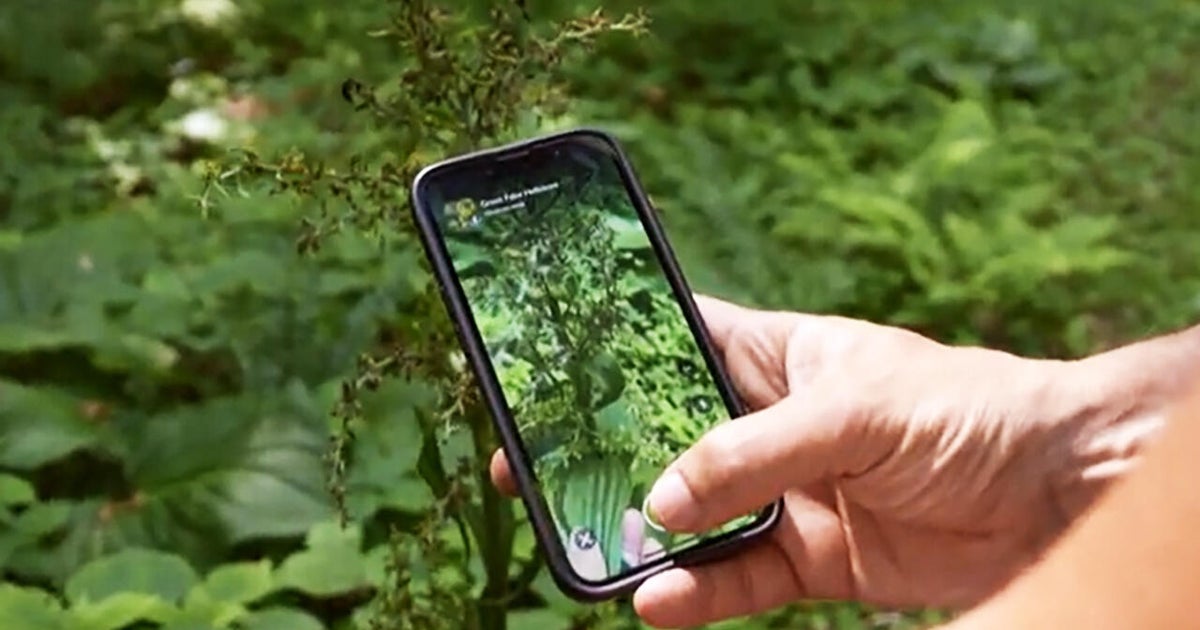
In an age where technology often seems to distance us from the natural world, a remarkable free smartphone application is doing just the opposite—bringing millions of people closer to the incredible biodiversity that surrounds us every day. Our planet teems with an estimated 10 million species of plants, animals, birds, fish, fungi, and insects, yet most of us walk past countless organisms without a second glance or any real understanding of what we’re seeing. Enter iNaturalist, a nonprofit platform that’s revolutionizing how ordinary people interact with and contribute to our understanding of the natural world. With approximately six million people using the app every month, according to executive director Scott Loarie, this digital tool has become an unexpected bridge between amateur nature enthusiasts and the scientific community. What makes iNaturalist particularly special isn’t just its ability to help users identify the living things around them—it’s the app’s remarkable capacity to transform casual observations into valuable scientific data that’s actively helping researchers track, study, and ultimately protect species across the globe.
From Toilet Weasels to Groundbreaking Discoveries
The stories emerging from iNaturalist users read like a collection of delightful nature adventures, proving that scientific discovery doesn’t always happen in sterile laboratories or on expensive research expeditions. One of Loarie’s favorite examples perfectly illustrates this point: a person in the Andes Mountains found their cabin unexpectedly invaded by a weasel and had the presence of mind to grab a camera. Those impromptu photographs, taken of the animal perched on a toilet, turned out to be the very first images ever captured of that particular species. The incident became so popular that #ToiletWeasel actually trended on Twitter, demonstrating how citizen science can capture public imagination in ways that traditional research rarely does. But beyond the entertainment value and viral social media moments, these casual observations represent something far more significant. “Almost every month we get a new species described,” Loarie explains, highlighting how regularly the app contributes to expanding our catalog of Earth’s biodiversity. These aren’t just pretty pictures being shared among nature lovers—each photograph contains embedded information including the exact date and GPS location, transforming a simple snapshot into a legitimate scientific observation that can be verified, studied, and incorporated into our growing understanding of where species live, how they behave, and how their populations are changing over time.
Turning Smartphone Photos into Powerful Scientific Data
What truly sets iNaturalist apart from being just another nature identification app is its ingenious “stealth function”—the way it seamlessly converts everyday observations into research-grade scientific data. Every time someone photographs a butterfly in their backyard, a wildflower on a hiking trail, or a beetle crawling across their patio, that image becomes part of a massive, constantly updating database that scientists around the world can access and analyze. “It’s not just a photo. It has a date, it has a location,” Loarie points out, and this combination of visual identification with precise temporal and spatial data is proving invaluable to researchers. In fact, the impact has been so significant that Loarie can confidently state, “It turns out that most data for most species on the planet now is coming from this little app.” The numbers are staggering: iNaturalist users have collectively made 300 million sightings across all 197 countries on Earth, providing usable data on hundreds of thousands of species every year. This crowdsourced approach to biological monitoring is accomplishing something that would be impossible for professional scientists working alone—creating a real-time, global picture of what’s happening to life on our planet. Traditional scientific surveys are expensive, time-consuming, and necessarily limited in scope, but with millions of citizen scientists equipped with smartphones and curiosity, we’re now able to monitor biodiversity at a scale that was simply unimaginable just a decade ago.
Tracking Threats: Invasive Species and Disappearing Biodiversity
The practical applications of this citizen science data extend far beyond simply cataloging what species exist and where they live. Scientists are using iNaturalist observations to track critical environmental changes, including the movement of invasive species that threaten native ecosystems. The spotted lanternfly provides a perfect case study—this insect arrived from China and is now spreading rapidly across the U.S. East Coast, causing significant agricultural and ecological damage. By analyzing the dates and locations of thousands of iNaturalist sightings, researchers can map exactly how this invasive species is expanding its range over time, information that’s crucial for developing strategies to contain or manage the invasion. But perhaps even more sobering is what the data reveals about species that are disappearing altogether. The app helps scientists identify areas where species were once commonly observed but are now becoming rare or vanishing entirely. “The best predictions now are that we’re going to lose about one in three by the end of the century,” Loarie warns, referring to current extinction rate projections. This raises an important question that many people ask: why should we care about obscure species we’ve never even heard of? Loarie offers a compelling analogy: “The Earth is this plane, that we’re in mid-flight. Every time a species goes extinct, that’s like us popping a rivet off. So, at some point the whole wing is gonna fall off. But we don’t exactly know which rivet, which species extinction is gonna drive that. So, the first thing we need to do is stop popping rivets off.” This metaphor beautifully captures the interconnected nature of ecosystems and why preserving biodiversity, even of seemingly insignificant species, is essential for maintaining the ecological systems that ultimately support human life.
Making Nature Fun: BioBlitzes and Community Engagement
One of iNaturalist’s most appealing features is how it transforms nature observation from a solitary activity into a social, competitive, and genuinely fun experience. The app facilitates “BioBlitz” events—friendly timed competitions where teams race to identify as many different species as possible within a set timeframe, typically one hour. These events bring together people of all ages and expertise levels, from absolute beginners to seasoned naturalists, creating a welcoming environment where everyone can contribute and learn. The social aspect makes the experience more engaging and helps people discover biodiversity they might otherwise overlook when walking alone. A recent BioBlitz held at Martha Stewart’s farm in Bedford, New York, perfectly demonstrated the app’s potential. Despite being hosted at a private residence rather than a pristine wilderness area, participants managed to identify an impressive 458 different species in just one hour. The findings included beautiful moths, assassin bugs, various snails and butterflies, and countless plant species—a remarkable demonstration of how much biodiversity exists even in our everyday surroundings if we simply take the time to look. Loarie reviewed the results with Stewart, noting how “each one of these observations will give us a snapshot of all the different plants and animals that are here, and the kind of habitat that you’ve provided for all these species on your farm.” Even Martha Stewart, who’s lived on her property for over twenty years and knows it intimately, found value in the app: “And yet, the app really teaches me the botanical names, the biological names of the bugs and the butterflies. I learn something new every day!”
Empowering Ordinary People to Become Conservation Heroes
Perhaps the most profound impact of iNaturalist isn’t found in the scientific papers it enables or the species it helps protect, but rather in how it changes the relationship between people and nature. In our modern world, many people feel helpless in the face of environmental challenges—climate change, habitat destruction, and mass extinction can seem like problems too vast for individual action to matter. But iNaturalist offers something powerful: a concrete way for ordinary people to contribute meaningfully to conservation science. “People go like, ‘Wow, I’m actually part of the solution. By me taking this photo, I’m helping science. I’m helping us protect these species that I share the planet with,'” Loarie observes. This sense of purpose and participation never gets old, not for users and not for the team behind the app. The platform succeeds because it makes contributing to science effortless and rewarding—no special training required, no expensive equipment needed, just a smartphone and curiosity about the living world. Every observation matters, whether it comes from an expert biologist or a child photographing their first butterfly. In this way, iNaturalist is democratizing science and conservation, proving that protecting our planet’s incredible biodiversity isn’t just the responsibility of researchers and policymakers—it’s something we can all participate in, one photograph at a time. As our planet faces unprecedented environmental challenges, tools like this offer genuine hope that by connecting people with nature and empowering them to contribute to its protection, we might just save those rivets before the wing falls off.