


The Precarious Balance: U.S.-Iran Tensions and the Shadow of War
Diplomatic Efforts Amid Military Escalation
The world watched with cautious anticipation as American and Iranian negotiators sat across from each other in Geneva on Thursday, attempting to find common ground on one of the most volatile issues in international relations. Yet even as diplomats exchanged proposals in Switzerland, the region itself told a very different story. An unprecedented buildup of U.S. military forces in the Middle East has transformed the strategic landscape, leaving governments, analysts, and ordinary citizens bracing for what could become the second major regional conflict in less than a year. President Donald Trump, during his State of the Union address, drew a clear red line: Iran cannot be permitted to develop nuclear weapons. The Iranian government, meanwhile, has consistently maintained that its nuclear program serves exclusively peaceful purposes. But beneath these familiar talking points lies a deeply troubling reality—the rhetoric from both sides has hardened considerably, and the military machinery is already in motion. Iran has made its position equally clear: any American attack would trigger immediate retaliation against U.S. military installations throughout the region and against Israel itself. According to several analysts who spoke with ABC News, the probability of avoiding a U.S. military strike appears alarmingly low, though the precise nature and scope of such an operation remains shrouded in uncertainty.
Israel’s Readiness and Regional Calculations
Israel finds itself in an unprecedented position of military preparedness, even as the ultimate objectives of potential American military action remain frustratingly vague to outside observers. Danny Yatom, who led Israel’s legendary intelligence service Mossad from 1996 to 1998, characterized the current situation as an opportunity to significantly degrade Iran’s offensive military capabilities. In his assessment, Israel has reached peak readiness—both in terms of defensive systems and offensive strike capabilities—for a potential war with its longtime adversary. This confidence isn’t baseless optimism; it’s rooted in hard-won experience from last summer’s intense 12-day conflict between the two nations, which left the Iranian regime considerably weakened and provided Israeli strategists with valuable intelligence about Iranian vulnerabilities. Yatom candidly acknowledged the profound uncertainty surrounding President Trump’s intentions, noting that “no one except President Trump and maybe even he [doesn’t] know exactly what’s going on.” According to his analysis, three distinct scenarios remain on the table: a comprehensive, large-scale American military campaign against Iran; a more limited, targeted strike operation; or the possibility that ongoing negotiations in Geneva might somehow produce a diplomatic breakthrough. The former intelligence chief was notably pessimistic about the prospects for negotiation, arguing that the positions held by Washington and Tehran are simply too far apart to bridge through conventional diplomacy. The fundamental disagreements run too deep, touching on issues of national sovereignty, regional power dynamics, and existential security concerns that neither side can easily compromise on without facing severe domestic political consequences.
The Nuclear Question and Narrowing American Focus
The specific demands being placed on Iran by the United States have undergone significant evolution in recent days, with the Trump administration appearing to narrow its focus almost exclusively to the nuclear weapons question. ABC News contributor and retired Colonel Steve Ganyard observed this strategic shift, noting that earlier statements from Trump had encompassed a broader range of concerns—including support for Iranian protesters facing brutal government crackdowns, preventing Iran from developing long-range delivery systems and intercontinental ballistic missiles capable of reaching American territory, and stopping the development of medium-range weapons that could threaten Israel or European allies. This narrowing of focus might suggest a more achievable diplomatic objective, but it also reduces American leverage and flexibility in negotiations. Iran, for its part, has maintained a firm stance that it will not completely abandon all nuclear capabilities, insisting on its right under international law to develop nuclear technology for peaceful civilian purposes, including energy generation and medical applications. This position creates a fundamental tension at the heart of negotiations: what the Trump administration might accept as verification of peaceful intent may sound uncomfortably similar to the nuclear agreement negotiated by the Obama administration in 2015—a deal that Trump himself withdrew from and has consistently criticized as inadequate and naive.
The internal situation within Iran adds another layer of complexity to these calculations. As nationwide protests continue to challenge the regime’s authority—with a U.S.-based human rights organization reporting that more than 7,000 people have been killed in the government’s brutal crackdown—Iranian leaders may view nuclear capability as essential to their survival in power. Ganyard pointed to the cautionary tale of Libya’s Muammar Gaddafi, who voluntarily dismantled his nuclear program in 2003 in exchange for international rehabilitation, only to be overthrown and killed by rebel fighters eight years later after Western powers supported an uprising against his rule. For Iran’s leadership, the lesson is clear: nuclear capability, or at least the credible prospect of developing it, provides insurance against regime change efforts and guarantees continued relevance on the world stage. This dynamic makes genuine nuclear disarmament extraordinarily difficult to achieve through negotiation alone, as the regime likely views such weapons as the ultimate guarantee of survival.
Military Buildup and Strategic Implications
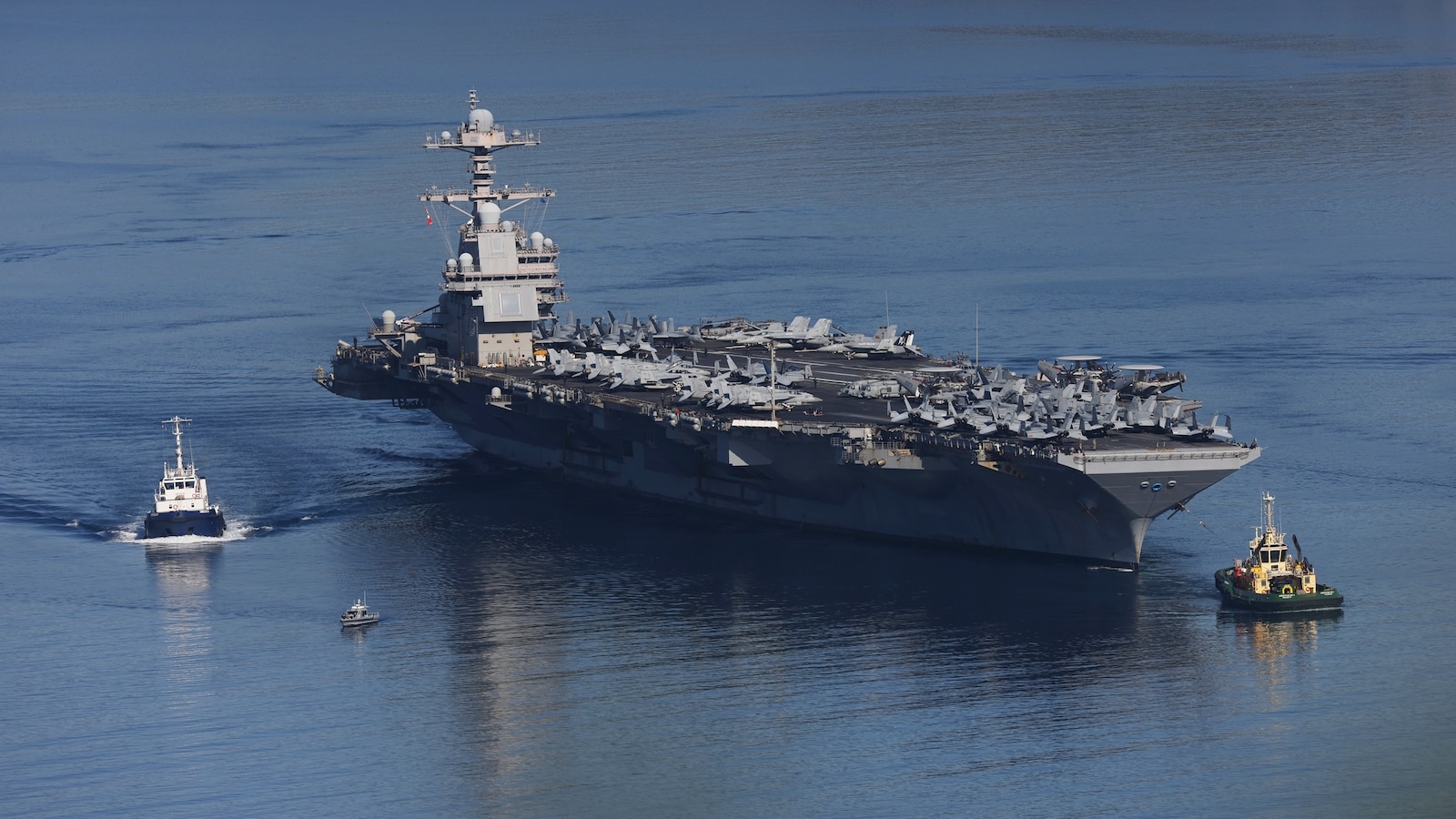
The massive accumulation of American military assets in the Middle East has fundamentally altered the strategic equation in two critical ways. First, it makes a military strike significantly more likely should the Geneva talks collapse without producing an acceptable agreement, as the logistical infrastructure for such an operation is already in place and the political cost of deploying such forces without using them would be substantial. Second, this buildup positions Israel in its strongest defensive—and offensive—posture in recent memory, with American air defense systems supplementing Israel’s own considerable capabilities and reducing the country’s vulnerability to Iranian missile attacks. Yatom emphasized that Israel is “more ready than it was half a year ago during the attack in June,” referring to the 12-day conflict in June 2025 that began with what Israeli officials characterized as a preemptive strike against Iranian nuclear facilities. That conflict, which ended with a ceasefire agreement, provided Israeli military planners with invaluable operational experience and intelligence about Iranian response patterns, defensive capabilities, and strategic vulnerabilities.
The presence of full-scale American armed forces throughout the region means that any Iranian response would need to contend not just with Israeli defenses but with the far more extensive capabilities of the U.S. military. This dispersal of potential targets actually makes Israel’s defensive task somewhat easier, as Iranian missile and drone attacks would likely be directed at multiple targets across a wide geographic area rather than concentrated exclusively on Israeli territory. However, the regional dimension of potential conflict extends beyond just U.S. and Israeli forces. The U.S. Embassy’s decision to order the evacuation of some personnel from Beirut signals concern about Lebanon becoming an active front in any wider conflict. Israel has continued striking Hezbollah targets in Lebanon even after the implementation of a ceasefire agreement on the northern border more than a year ago, with Israeli Defense Forces maintaining control of five key outposts on Lebanese territory. The IDF justifies these continued operations as necessary to prevent Hezbollah from rearming, which they characterize as violations of the ceasefire understandings. Yatom noted Arab media reports suggesting Hezbollah is preparing to join any Iranian attack on Israel, though he emphasized that the militant group’s capabilities have been significantly degraded by sustained Israeli strikes, particularly their capacity to launch long-range ballistic attacks.
Diverging Visions and Uncertain Outcomes
Behind the scenes, a fascinating divergence appears to have emerged between Israeli and American strategic preferences regarding Iran. According to Yatom, Israeli Prime Minister Benjamin Netanyahu favors major U.S. military strikes specifically aimed at toppling Iran’s regime entirely—a maximalist objective that would fundamentally reshape the regional balance of power. However, Israeli officials express deep concern that President Trump might instead accept what they view as an insufficiently robust nuclear agreement that would leave Iran’s nuclear infrastructure largely intact and provide only limited verification mechanisms. The fundamental problem, as Yatom bluntly stated, is that “no one knows President Trump’s intentions, including Netanyahu.” This extraordinary uncertainty persists despite seven meetings between the Israeli prime minister and the American president, none of which have produced public declarations of a joint strategy beyond general commitments to prevent Iran from developing nuclear weapons. The lack of clarity about American intentions creates significant challenges for Israeli military planning and political decision-making, as the government in Jerusalem must prepare for multiple scenarios simultaneously while lacking confidence about which direction Washington will ultimately choose.
Following Thursday’s talks in Geneva, Oman’s foreign minister offered a cautiously optimistic assessment, stating there had been “significant progress” in the negotiations and announcing that discussions would resume after consultations in respective capitals, with technical-level talks scheduled for Vienna the following week. Yet this diplomatic language, familiar to anyone who has followed Middle Eastern peace processes over the decades, may obscure as much as it reveals. Yatom went so far as to describe the prospect of war as a “wonderful opportunity” for Israel’s national security interests—a strikingly candid acknowledgment that at least some elements within the Israeli security establishment view military conflict not as a regrettable last resort but as a potentially beneficial development that could set back Iranian capabilities for years or even decades. As military forces continue their buildup, as diplomats shuttle between capitals, and as ordinary people throughout the region contemplate the possibility of another devastating war, the ultimate decision rests with leaders whose calculations remain opaque even to close allies and experienced intelligence professionals. The coming weeks will reveal whether diplomacy can avert a conflict that many analysts now view as increasingly probable, or whether the Middle East will once again become a theater of war with consequences that will reverberate far beyond the region itself.