

Greece Recovers Powerful WWII Photos of Greek Resistance Fighters’ Final Moments
A Historic Collection Returns Home
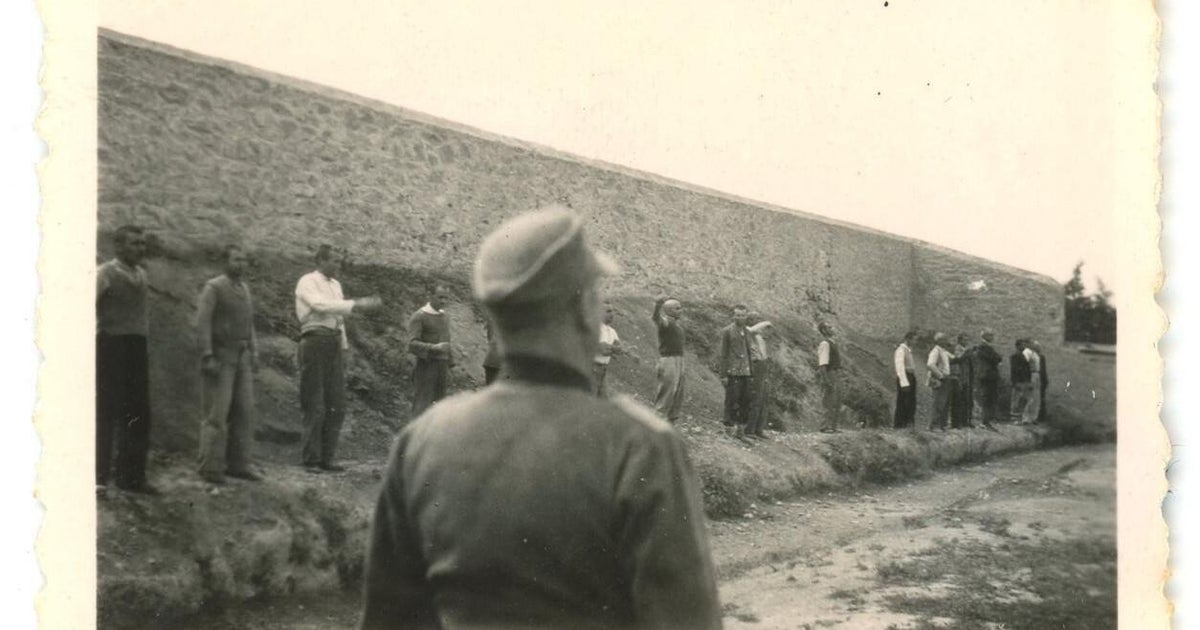
Greece has successfully acquired a remarkable and deeply moving collection of World War II photographs that capture the final moments of 200 Greek men before their execution by German forces in 1944. Culture Minister Lina Mendoni announced on Saturday that the ownership transfer of this significant historical collection has been completed, bringing these powerful images back to Greek soil where they belong. The collection is substantial, comprising 262 photographs, 16 historical documents, and four banknotes from that era. What makes these images particularly haunting is that they were believed to have been taken by a German soldier who had also been stationed in Belgium and France during the war, essentially documenting the atrocity from the perpetrator’s perspective. For decades, these photographs remained hidden from public view, their existence unknown to the families of the victims and historians alike. The images show what the ministry described as “the last moments” of 200 communists who were executed at an Athens shooting range on May 1, 1944, a date that would forever mark one of the darkest chapters in Greece’s wartime history.
The Journey from eBay to National Preservation
The discovery of these photographs began in an unexpected and modern way—through the online marketplace eBay. Twelve of the photographs had appeared on the eBay site Crain’s Militaria earlier this month before being removed, sparking immediate and intense reactions throughout Greece. The appearance of these images on a commercial auction site provoked strong emotions across the country, particularly among the descendants and relatives of the victims who had never seen visual documentation of their loved ones’ final moments. Some of the images had already received bids exceeding $2,000 before Belgian collector Tim de Craen decided to take them down from the auction site. According to France 24, de Craen removed the listings after understanding the sensitive nature of what he possessed. In a statement to Greek newspaper I Kathimerini, he acknowledged, “I fully understand that these photographs are of a particularly sensitive historical nature.” Following the discovery of the photographs online, Greek ministry officials didn’t hesitate to take action. They traveled to Belgium to meet directly with the collector, both to negotiate the acquisition and to verify the authenticity of these historically significant images, ensuring that what they were bringing back to Greece was indeed genuine documentation of this tragic event.
The Historical Context: Occupation and Resistance
To understand the profound significance of these photographs, it’s essential to grasp the historical context in which these executions took place. Greece endured Nazi occupation from 1941 until 1944, a period marked by brutal suppression, resistance, and reprisals. The specific executions documented in these photographs followed the killing of a German general and his staff by communist guerrillas just days earlier. The Nazi forces, following their typical pattern of collective punishment and retaliation, responded with overwhelming and disproportionate force. What makes this particular atrocity even more complex and tragic is that most of the 200 executed men hadn’t been arrested because of their resistance activities during the occupation. Instead, they had been imprisoned years earlier during anti-communist raids conducted by the police of Greek dictator Ioannis Metaxas, who ruled Greece before the Nazi invasion. These men had been political prisoners, held for their beliefs and affiliations, who then became convenient victims when the German forces sought targets for their reprisal executions. Until the emergence of these photographs, the only testimony that existed about the final moments of these 200 victims came from handwritten notes they had courageously thrown out of the trucks that were transporting them to their execution site—desperate messages to the outside world and to their families, perhaps hoping that someone would find them and remember what happened.
What the Photographs Reveal
The images themselves are both heartbreaking and inspiring in what they capture about human dignity in the face of death. One of the photographs shows the condemned men marching through a field, walking toward their fate. Other images show them standing against a wall at the shooting range, the place where their lives would end. But perhaps the most dramatic and emotionally powerful photograph shows several of the men looking defiantly into the camera lens. Rather than showing fear or despair, two of them appear to be singing—an act of defiance and solidarity in their final moments that speaks volumes about their courage and commitment to their beliefs. The expressions on their faces, visible in these newly recovered images, show determination rather than defeat. These weren’t men who went quietly or passively to their deaths; they walked “proudly towards the firing squad,” as one historian noted. The photographs transform what was previously an abstract historical fact into something visceral and real—these were actual people, with faces and names, who chose to face death with dignity rather than beg for mercy from their executioners. The fact that someone, likely a German soldier, took these photographs raises uncomfortable questions about the documentation of atrocities and the perspectives from which history is recorded.
Expert Reactions and Historical Significance
The impact of these photographs on historians and the broader understanding of this period cannot be overstated. Polymeris Voglis, a university professor specializing in social history in Greece, shared his reaction with France 24, stating, “The photographs shocked me.” He explained that although the execution of 200 resistance fighters has long been a well-known historical event in Greece, until now there had been no photographic evidence to document it. This lack of visual proof had left a gap in the historical record, making these images extraordinarily valuable for both historical scholarship and collective memory. Professor Voglis noted the particular power of the photographs that show the faces of the condemned men, remarking on how they reflect “their determination as they walk proudly towards the firing squad.” These images do more than simply prove that an event occurred—they reveal the character and courage of those who died, transforming them from statistics into individuals whose humanity shines through even in these darkest moments. For researchers, educators, and museums, these photographs will provide invaluable resources for teaching future generations about the realities of occupation, resistance, and the human cost of war. They also serve as documentation of Nazi war crimes, adding to the historical record of atrocities committed during World War II.
Remembrance and National Healing
The successful acquisition of this photographic collection represents more than just the recovery of historical artifacts—it’s an act of national remembrance and a form of justice for the victims and their families. For the relatives of those executed on May 1, 1944, these photographs provide something they never had before: visual confirmation of their loved ones’ final moments and, perhaps more importantly, evidence of the courage and dignity with which they faced death. The strong emotions provoked across Greece when these images first appeared on eBay reflect how deeply the wounds of World War II and the Nazi occupation still resonate in Greek society. The fact that the government moved quickly to acquire the collection, sending officials to Belgium to negotiate directly with the collector, demonstrates the importance Greece places on preserving this aspect of its national memory. These photographs will undoubtedly become part of Greece’s historical archives and museums, where they can be properly contextualized and preserved for future generations. They serve as a reminder not only of the brutality of occupation and the cost of resistance but also of the human capacity for courage in the face of certain death. As Greece continues to grapple with its complex 20th-century history, these images provide a powerful and undeniable testimony to a tragic chapter that must never be forgotten. The men in these photographs, who once threw desperate notes from trucks hoping to be remembered, are now immortalized in images that ensure their sacrifice and courage will be known and honored for generations to come.