


Pope Leo XIV Calls for Peace During Palm Sunday Mass Amid Global Conflicts
A Powerful Message of Peace in Troubled Times
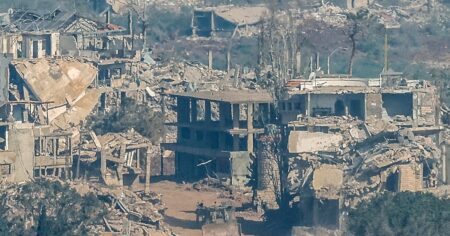
On a sunny Palm Sunday in Rome, Pope Leo XIV stood before a sea of faithful gathered in St. Peter’s Square and delivered a message that resonated far beyond the Vatican walls. With tens of thousands of people listening intently, the pontiff addressed one of humanity’s most troubling questions: Can war ever be justified in God’s name? His answer was clear and unequivocal—no. As the world witnesses the U.S.-Israeli conflict with Iran entering its second month and Russia’s continued military operations in Ukraine, Leo used this sacred occasion to remind believers that God is fundamentally a “king of peace” who stands against violence and beside those who suffer under oppression. In words that were both pastoral and prophetic, he declared that Jesus Christ, the King of Peace, cannot be used to justify warfare, and that God does not hear the prayers of those who wage war but instead rejects them outright.
Religious Justifications for War Under Scrutiny
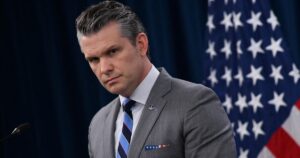
The Pope’s remarks came at a moment when religious rhetoric has been increasingly weaponized to justify military actions across different global conflicts. On various sides of current wars, leaders have invoked divine backing for their military campaigns. In the United States, particularly notable has been Defense Secretary Pete Hegseth’s use of Christian language to frame America’s involvement in the conflict with Iran as a righteous struggle—portraying it as a Christian nation using its military power to defeat its enemies. Meanwhile, across another theater of conflict, Russia’s Orthodox Church has characterized the invasion of Ukraine as nothing less than a “holy war,” positioning their military aggression as a defense against what they perceive as a morally corrupt Western world that has abandoned traditional values. These competing religious narratives make Pope Leo XIV’s message all the more significant, as he speaks with the moral authority of leading the world’s 1.3 billion Catholics and offers a counter-narrative that refuses to baptize violence with holy water.
The Significance of Palm Sunday in the Christian Calendar
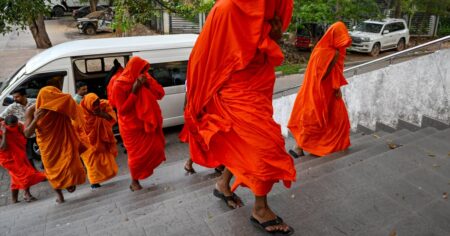
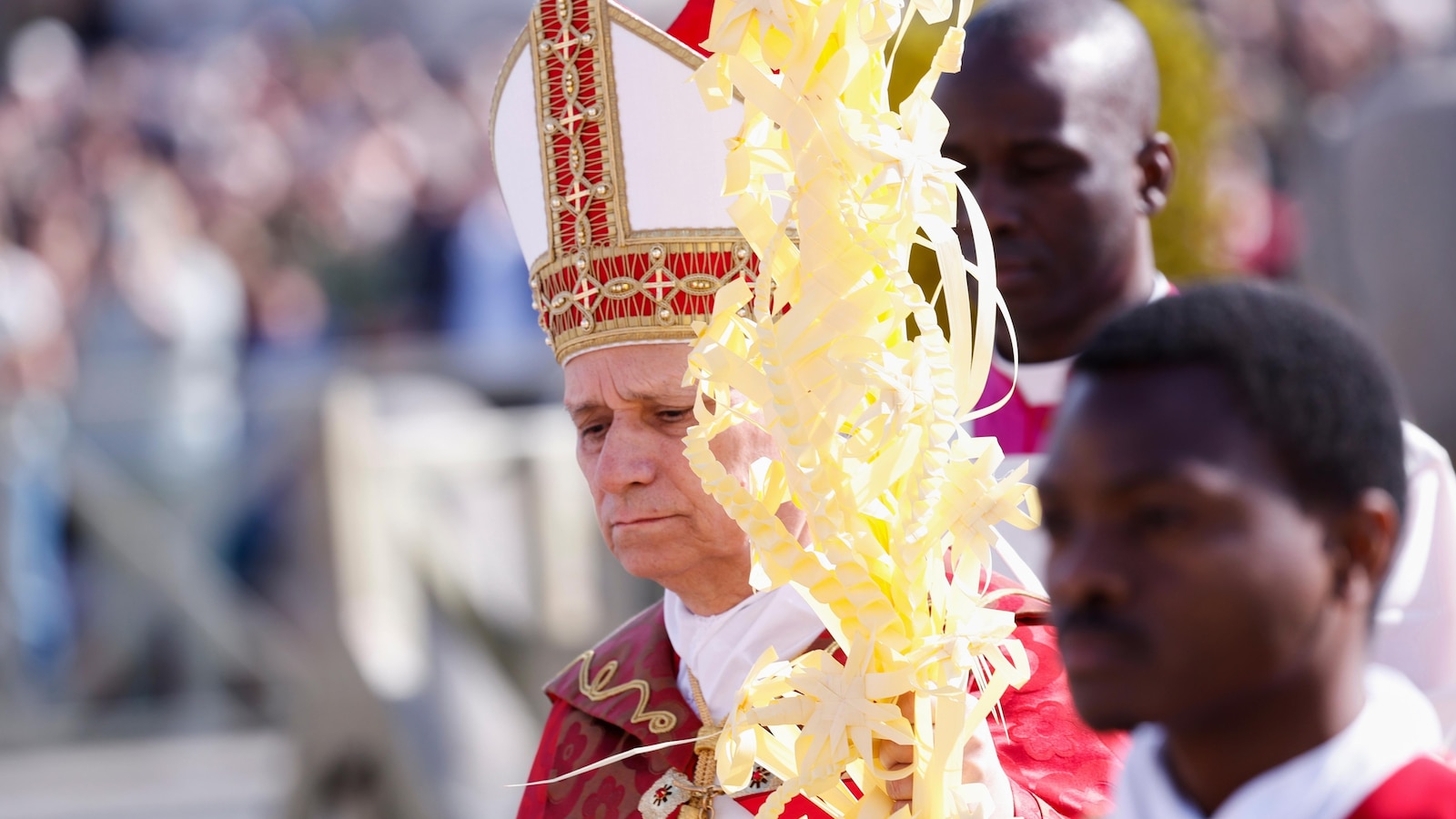
The timing of Pope Leo’s message carried particular weight because Palm Sunday holds deep symbolic meaning in Christian tradition. This day commemorates Jesus Christ’s triumphant entry into Jerusalem during the final week of his earthly life—a moment when crowds welcomed him as a king, laying palm branches and their own cloaks on the road before him. Yet this was a king who rode not on a war horse but on a humble donkey, signaling a radically different kind of kingship. The celebration would lead to the events Christians observe during Holy Week: Jesus’s crucifixion on Good Friday and his resurrection on Easter Sunday. The Mass itself began with a striking visual representation of this history, as cardinals, bishops, priests, and laypeople processed into the square carrying olive branches and palm fronds, some woven into intricate braided designs. They paused at the central obelisk where Pope Leo offered an opening prayer before continuing toward the altar to begin the liturgy, creating a living tableau that connected modern believers to an ancient story.
A Year Since Pope Francis’s Final Days
This Palm Sunday also marked a poignant anniversary for the Catholic Church. Just one year earlier, Pope Francis had been recuperating at the Vatican following a serious five-week hospitalization for double pneumonia. Too weak to preside over the elaborate Holy Week ceremonies himself, he had delegated those duties to other clergy. Yet in a testament to his determination and his love for the faithful, Francis had rallied enough strength by Easter Sunday to appear from the loggia of St. Peter’s Basilica to greet the crowds. In what would become a deeply moving final gesture, he made one last circuit around St. Peter’s Square in the popemobile, waving to those who had supported him throughout his twelve-year pontificate. According to his nurse, Massimiliano Strappetti, who later shared the story with Vatican Media, Pope Francis had expressed gratitude for being brought back to the square for that final blessing. The very next morning, Easter Monday, Francis suffered a stroke and passed away, leaving the Church and the world to mourn a pope who had consistently championed the marginalized and called for a more humble, service-oriented Church.
Pope Leo XIV Returns to Traditional Holy Week Observances
As Pope Leo XIV prepares to lead his first complete Holy Week observance, he is making notable changes to some traditions while maintaining the solemnity of this most important period in the Christian calendar. Of particular interest is his decision to return the Holy Thursday foot-washing ceremony to its traditional location in the Basilica of St. John Lateran, where popes conducted this ritual for decades. This represents a departure from Pope Francis’s practice of taking the ceremony to unconventional locations—prisons, refugee centers, and facilities housing society’s most vulnerable populations. Francis had used these outings to emphasize Jesus’s message of service and humility, often washing the feet not just of Catholics but of Muslims and people of other faiths, asking during his homilies why others suffer while he enjoys comfort. While many praised this as a powerful demonstration of the Church going to “the peripheries” to serve those most in need of God’s love and mercy, some traditionalists had been uncomfortable with the break from established practice. The Vatican has not yet announced who will participate in Pope Leo’s ceremony, though his predecessors Benedict XVI and John Paul II typically washed the feet of twelve priests. The week ahead will also see Pope Leo presiding over the Good Friday procession at the Colosseum, commemorating Christ’s Passion and death, followed by the late-night Easter Vigil on Saturday where he will baptize new Catholics, and culminating in Easter Sunday Mass when he will deliver his blessing to the city and the world.
The Challenge of Religious Leadership in a Divided World
Pope Leo XIV’s Palm Sunday message represents more than just liturgical words spoken during a seasonal celebration—it constitutes a moral challenge to a world increasingly comfortable with invoking divine sanction for human violence. In an era when political leaders readily claim God’s blessing for their military ventures, the Pope’s insistence that God rejects the prayers of warmakers offers a jarring alternative perspective. His words remind believers that the Jesus Christians claim to follow was himself a victim of state violence, executed by the authorities of his day, and that he consistently taught messages of enemy love, peacemaking, and suffering service rather than domination and conquest. As Pope Leo settles into his role as the first American-born pontiff in history, his willingness to speak clearly against religious justifications for war—even when those justifications come from his own nation—demonstrates the independence and moral courage the position demands. Whether his message will influence the policies of nations or the consciences of individual believers remains to be seen, but by taking this stand during Holy Week, when Christians contemplate both the depths of human cruelty and the heights of divine love, Pope Leo has positioned the Catholic Church firmly on the side of peace. As the faithful proceed through the remainder of this sacred week, from the Last Supper remembrance on Thursday through the darkness of Good Friday and finally to the joy of Easter morning, they will carry with them the challenge to reconcile their political loyalties with their religious commitments, and to consider what it truly means to follow the King of Peace in a world still addicted to violence.