



When Space Comes Knocking: A Meteorite’s Unexpected Visit to a Houston Home
A Startling Saturday Night Encounter
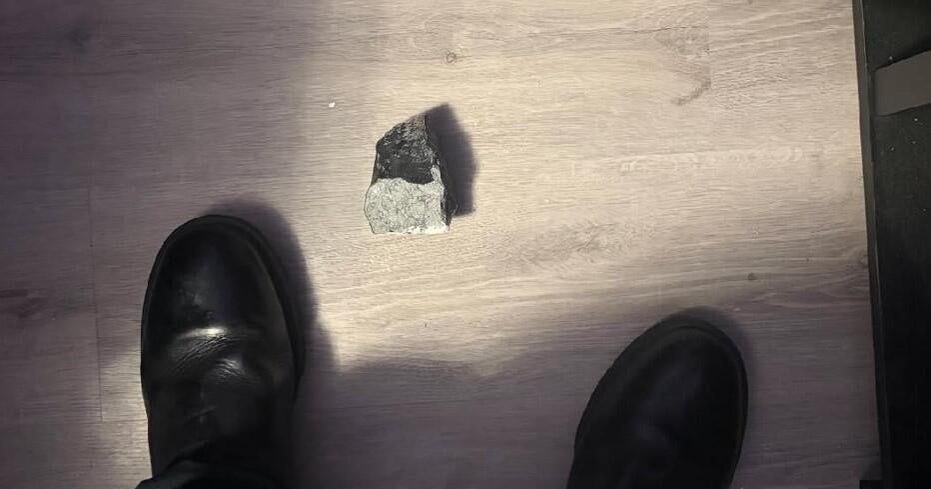
Picture a quiet Saturday evening in suburban Houston, where families are settling in for the weekend, perhaps enjoying dinner or relaxing after a long week. Suddenly, the tranquility is shattered by an otherworldly visitor. In the peaceful neighborhood of Ponderosa Forest, a north Houston suburb, one resident experienced something that most people only see in movies – a meteorite crashing through her home. According to Ponderosa Fire Chief Fred Windisch, what appears to be a genuine space rock tore through the roof of a woman’s house, penetrated two complete stories, and finally came to rest in her kitchen. The meteorite, described by Chief Windisch as being slightly larger than his hand, transformed an ordinary Saturday into an extraordinary encounter with the cosmos. This dramatic event serves as a powerful reminder that we share our planet with a vast universe that occasionally sends unexpected reminders of its presence right to our doorsteps.
NASA’s Analysis of the Cosmic Visitor
The scientific community quickly mobilized to understand this celestial event, with NASA providing detailed information about the meteor’s journey through Earth’s atmosphere. According to the space agency’s official statement shared on social media, the meteor first became visible to observers at an altitude of 49 miles above Stagecoach, located northwest of Houston. This sighting occurred at precisely 4:40 p.m. local time, giving the meteor several hours of travel before its dramatic landing. The meteor was traveling at an absolutely staggering speed of 35,000 miles per hour – a velocity difficult for the human mind to fully comprehend – as it moved in a southeastern direction across the Texas sky. NASA’s tracking data revealed that the meteor eventually broke apart at an altitude of 29 miles above Bammel, an area just west of Cypress Station. The space rock was no small pebble either; NASA estimates that it weighed approximately one ton and measured about three feet in diameter before it began fragmenting. When such a massive object breaks apart in our atmosphere, it doesn’t do so quietly. The fragmentation created a powerful pressure wave that rippled through the air, generating sonic booms that resonated across the region, startling residents who had no idea what was happening above their heads.
Community Reactions and Widespread Phenomenon
The meteorite’s impact wasn’t just a solitary event affecting one household – it created a sensory experience that touched communities across the greater Houston metropolitan area. Residents from various neighborhoods reported hearing unusual sounds that puzzled them in the moments before news of the meteorite spread. According to reports from CBS affiliate KHOU, people throughout Houston described hearing a deep, rumbling sound that many initially compared to distant thunder. What made this comparison particularly unsettling was the fact that the weather that day was perfectly clear, with not a storm cloud in sight. This created a sense of confusion and unease among residents who couldn’t reconcile the thunderous sounds with the cloudless sky above them. Some people took to social media to ask neighbors if they’d heard the strange noises, while others called local authorities to report what they thought might be explosions or other emergencies. This widespread reaction illustrates how connected we all are to celestial events, even when we don’t immediately recognize them for what they are. The sonic booms created by the fragmenting meteor served as an audible announcement of space debris’s arrival, affecting a much larger area than just the immediate impact site.
Part of a Larger Pattern of Celestial Activity
This Houston incident isn’t an isolated occurrence but rather part of a continuing pattern of increased awareness and documentation of meteorite activity across the United States. Just earlier in the same week, another significant asteroid event captured public attention when a space rock weighing approximately seven tons hurtled through Earth’s atmosphere at an even more incredible speed of 45,000 miles per hour. This particular asteroid traveled over multiple states, creating a spectacle visible to potentially millions of people across its path. Looking back even further, last June provided another dramatic example of these cosmic encounters when a brilliantly bright meteor streaked across the southeastern United States. That meteor’s journey ended in a spectacular explosion over Georgia, creating sonic booms similar to those heard in Houston – booms that startled and amazed residents throughout the region. These recurring events suggest that either such incidents are becoming more common, or more likely, our detection and reporting systems have improved significantly, allowing us to better track and document these visitors from space. The pattern also highlights the importance of continued investment in meteor detection and tracking systems, as these objects pose potential risks to populated areas.
Understanding the Science and Significance
Meteorites represent fascinating scientific specimens that offer researchers invaluable insights into the composition and history of our solar system. These space rocks are essentially time capsules, having traveled through space for potentially billions of years before their chance encounter with Earth’s atmosphere. When a meteorite survives its fiery descent through the atmosphere and reaches the ground – as apparently happened in this Houston case – it provides scientists with pristine material from space that hasn’t been contaminated by Earth’s environment. The meteorite that landed in the Ponderosa Forest home will likely undergo extensive analysis to determine its composition, age, and origin. Such studies can reveal information about the early solar system, the formation of planets, and the types of materials that exist in different regions of space. The fact that this particular meteorite penetrated a roof and two floors demonstrates its substantial mass and velocity even after atmospheric entry slowed it down from its original speed. Most meteors completely burn up in the atmosphere, becoming the “shooting stars” we occasionally see streaking across the night sky, so those that actually reach the ground as meteorites are relatively rare and scientifically valuable.
Safety Considerations and Looking Forward
While this Houston incident provides excitement and scientific opportunity, it also raises important questions about safety and preparedness for future meteorite impacts. The homeowner in this case was incredibly fortunate that the meteorite landed in her kitchen rather than in an occupied room, as the impact of even a hand-sized rock traveling at tremendous velocity could have caused serious injury or worse. This event serves as a reminder that meteor impacts, while statistically unlikely to affect any given individual, are nevertheless real risks that deserve attention from emergency management professionals and urban planners. Organizations like NASA continuously work to identify and track larger asteroids that could pose significant threats to populated areas, but smaller objects like this one are much harder to detect in advance. The good news is that Earth’s atmosphere serves as an excellent shield, burning up countless smaller meteors every day and significantly slowing down those that do reach the surface. For residents of areas that experience meteorite falls, experts recommend preserving the impact site and contacting scientific institutions, as these events provide valuable research opportunities. As our understanding of near-Earth objects continues to improve through better telescopes and detection systems, we can hope to have more advance warning of significant meteor events in the future. For now, incidents like this Houston meteorite landing remind us that we live in a dynamic solar system where the boundaries between Earth and space are far more permeable than we usually consider in our daily lives, making every clear night sky a window into an active and occasionally interactive cosmic neighborhood.